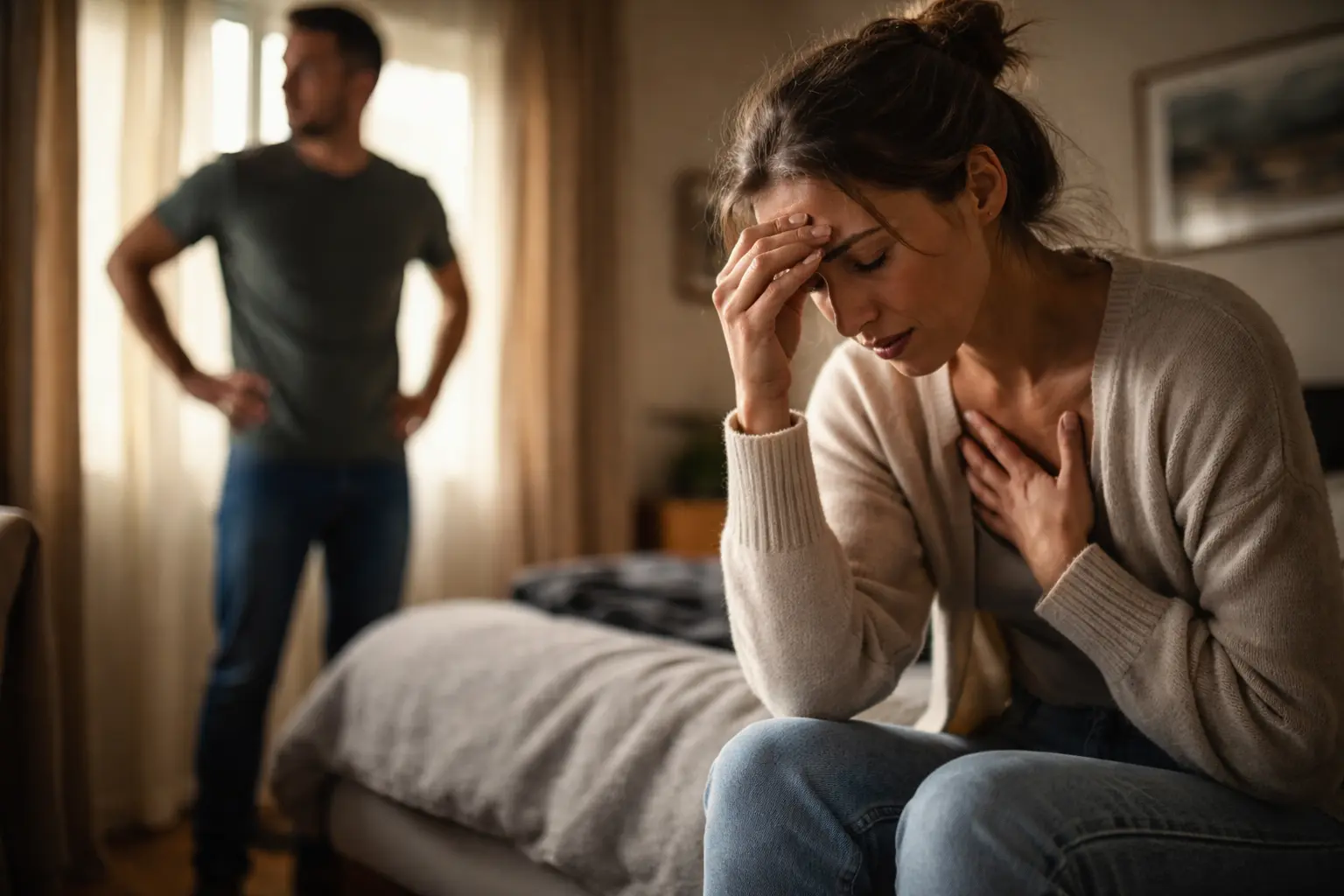
Your heart races during a normal workday, your mind won’t stop spinning, and you can’t tell if this is anxiety building up or a full-blown panic attack about to hit you hard, leaving you confused about what’s actually happening in your body and when you need to reach out for help.
Understanding anxiety
Anxiety is like a persistent background hum of worry that colors your entire day. Unlike panic attacks, which strike suddenly, anxiety builds gradually and settles into your life like an unwelcome houseguest. You might notice it starting as a nagging concern about an upcoming presentation, then expanding into worries about your health, relationships, or finances. The physical sensations are real: muscle tension across your shoulders and neck, a fluttery feeling in your chest, difficulty sleeping even when you are exhausted, and an inability to focus on tasks that normally feel manageable. Many women describe anxiety as feeling constantly on edge, as if something bad is about to happen even when logically they know things are fine. It can persist for weeks or months, gradually wearing you down and affecting how you show up at work, with family, and in your own life.
- Anxiety often stems from stress, major life changes, or past traumatic experiences that your mind continues to process.
- It can cause physical symptoms like muscle tension, trembling, rapid heart rate, sweating, and digestive issues.
- Management strategies include cognitive behavioral therapy, medication, regular exercise, meditation, progressive muscle relaxation, and setting healthy boundaries.
Recognizing panic attacks
A panic attack is your nervous system’s emergency alarm system misfiring. It hits suddenly and intensely, often without warning or clear trigger. One moment you might be grocery shopping or sitting at your desk, and the next moment your body floods with overwhelming fear and physical symptoms that feel genuinely life-threatening. Your chest tightens, breathing becomes shallow and rapid, dizziness overwhelms you, and you might experience numbness or tingling in your hands and feet. Many women report feeling a sense of impending doom, as if something catastrophic is about to happen. The attack typically peaks within five to ten minutes, though the aftermath of fear and exhaustion can linger for hours. What makes panic attacks particularly distressing is that they often feel completely disconnected from reality. You might be having a panic attack while sitting safely at home, yet your body is responding as if you are in genuine danger.
📘 Fix your day in under 2 minuteschoose where to begin:
Key differences
The core distinction between anxiety and panic attacks comes down to timing, intensity, and duration. Anxiety is a chronic state that develops gradually and persists over time, sometimes for months. It is like a low-level storm that keeps brewing in the background of your life. Panic attacks, by contrast, are acute episodes that arrive suddenly and peak quickly within minutes. Think of anxiety as a slow burn and panic attacks as a flash fire. Anxiety typically has identifiable triggers or sources of worry, while panic attacks often feel random and disconnected from any specific threat. Additionally, anxiety can be managed through lifestyle changes and coping strategies, whereas panic attacks require immediate grounding techniques to interrupt the cycle. Understanding this difference is crucial because the strategies that help one condition might not effectively address the other, which is why proper identification matters for your treatment plan.
Seeking help
Reaching out to a healthcare professional is not a sign of weakness but a practical step toward understanding what is happening in your body and mind. A doctor or mental health provider can conduct a proper assessment to distinguish between anxiety and panic attacks, rule out any physical health conditions that might mimic these symptoms, and develop a personalized treatment plan. This might include therapy such as cognitive behavioral therapy or exposure therapy, medication if appropriate, or a combination of approaches tailored to your specific situation. Many women find that simply having a professional validate their experience and provide concrete tools makes an enormous difference. Your healthcare provider can also help you identify your personal triggers, teach you evidence-based coping strategies, and monitor your progress over time. Do not wait until symptoms become severe to seek support. Early intervention often leads to better outcomes and faster relief.
Self-care tips
Beyond professional treatment, self-care practices form the foundation of managing both anxiety and panic attacks. Deep breathing exercises, particularly the 4-7-8 technique where you inhale for four counts, hold for seven, and exhale for eight, can calm your nervous system during moments of distress. Mindfulness and body scan meditation help you observe anxious thoughts without judgment, reducing their power over you. Regular physical activity like walking, yoga, or swimming releases endorphins and reduces overall anxiety levels. Creating a consistent sleep routine, limiting caffeine and alcohol, and eating balanced meals support your nervous system’s resilience. Build a support network of trusted friends or family members who understand what you are experiencing and can offer encouragement without judgment. Consider journaling to process your thoughts, setting aside time for activities that bring you joy, and establishing boundaries that protect your mental energy. Small, consistent actions compound over time into meaningful improvements in how you feel.
Anxiety and panic attacks are distinct experiences that require different approaches to management. Anxiety is a prolonged state of worry that develops gradually, while panic attacks are sudden bursts of intense fear that peak quickly. Both are treatable conditions. Seeking professional guidance combined with consistent self-care strategies, lifestyle adjustments, and support from your community creates a comprehensive approach to reclaiming your sense of calm and control.
How can I distinguish between anxiety and a panic attack?
Anxiety develops gradually over time with persistent worry and physical symptoms that linger for days or weeks. A panic attack arrives suddenly with intense physical symptoms and extreme fear that peaks within minutes. Anxiety has identifiable triggers related to life stressors, while panic attacks often feel random. Anxiety responds to lifestyle management and therapy, while panic attacks require immediate grounding techniques. If you are unsure, keep a symptom log noting when episodes start, how long they last, and what you were doing beforehand. This information helps your healthcare provider make an accurate diagnosis.
What are effective self-care strategies for managing anxiety and panic attacks?
Self-care techniques include deep breathing exercises like the 4-7-8 method, mindfulness meditation, progressive muscle relaxation, and regular physical activity such as walking or yoga. Maintain consistent sleep and eating patterns, limit caffeine and alcohol, and spend time in nature. Build a strong support system of trusted people you can talk to openly. Journaling helps process anxious thoughts, while setting healthy boundaries protects your mental energy. Engage in activities that bring you joy and relaxation. These practices work best when done consistently rather than only during crisis moments. Combine self-care with professional treatment for optimal results.
Others also read:
Disclaimer: This article is for informational purposes only and is not a substitute for professional medical advice. Always consult a healthcare professional for personal guidance.
This guide has been prepared and reviewed by the GlobalHealthBeacon editorial team and reflects current medical research as of 2026. It provides structured, evidence-based information to support informed health decisions.

