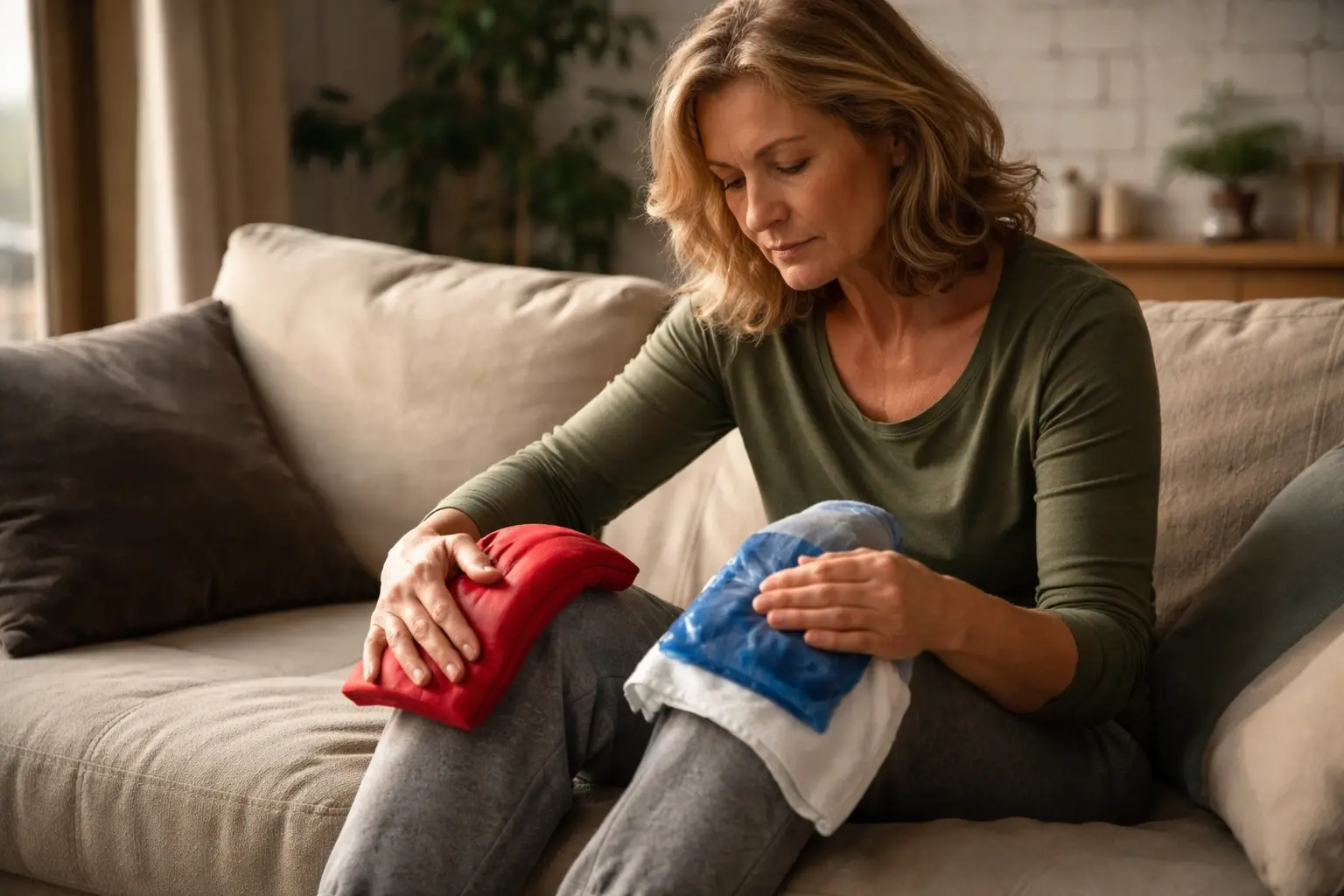
Your joints are stiff, achy, and flaring up at the worst possible time, and you’re tired of not knowing whether to reach for heat or ice because arthritis heat versus cold feels like a guessing game that nobody explained to you.
Heat therapy for arthritis relief
Heat therapy works by relaxing tight muscles around your joints and increasing blood flow to stiff areas, which can ease pain and improve mobility. Imagine waking up with a shoulder that feels locked in place. A heating pad set to low for 15 to 20 minutes can gradually loosen that tension and make movement feel less painful. Warm showers or baths are equally effective, especially if you have multiple joints acting up at once. The key is consistency and patience. Heat works best on chronic stiffness rather than acute swelling. Many young adults find that applying heat in the morning before activity helps them move through their day more comfortably. However, avoid placing heat directly on visibly inflamed or puffy joints, as this can sometimes make inflammation worse. Think of heat as preparation for movement, not as a treatment for active swelling.
- Use a heating pad on the lowest setting for 15-20 minutes at a time.
- Warm showers or baths can be beneficial for overall muscle relaxation.
- Avoid applying heat directly to inflamed or swollen joints to prevent further irritation.
Cold therapy for arthritis flares
Cold therapy is your go-to when you have acute inflammation, swelling, or sharp pain. Ice numbs the area and reduces inflammation by constricting blood vessels, which can provide quick relief during a flare. Picture a knee that swelled up after a long day of activity. An ice pack wrapped in a towel applied for 10 to 15 minutes can noticeably reduce that puffiness and ease discomfort. The cold creates a numbing sensation that interrupts pain signals, giving you temporary but meaningful relief. Young adults often use cold therapy right after activities that trigger flares or when they notice sudden swelling. Never apply ice directly to skin, as this can cause ice burn. Instead, always use a barrier like a towel or cloth between the ice and your skin. Cold therapy is most effective in the first 24 to 48 hours of a flare when inflammation is at its peak.
📘 Fix your day in under 2 minuteschoose where to begin:
Combining heat and cold therapy
Some people discover that alternating between heat and cold gives them the best results. The strategy works like this: start with heat to relax muscles and prepare joints for movement, then follow with cold to reduce any inflammation that activity might have triggered. Consider someone whose wrist flares up during work. They might use a heating pad for 15 minutes before their shift to loosen stiffness, then apply ice for 10 minutes during lunch if swelling develops. This approach addresses both the stiffness and inflammation components of arthritis. The contrast between temperatures can also feel refreshing and help you stay engaged with your own care. Timing matters here. Give your body at least 30 minutes between heat and cold applications to avoid overwhelming your system. Experiment with this method during low-stress days to find what works best for your body.
When to consult a healthcare provider
Heat and cold therapy are helpful tools, but they are not replacements for professional medical guidance. If you notice that flares are happening more frequently, lasting longer, or not responding to heat and cold after a few weeks, schedule an appointment with your doctor or rheumatologist. They can assess whether your arthritis is progressing and whether you need additional treatments like medication, physical therapy, or injections. Young adults sometimes assume they should just manage pain on their own, but early intervention can prevent long-term joint damage. Also seek professional advice if you experience severe swelling, redness, warmth around the joint, or fever, as these can signal infection rather than simple arthritis. A healthcare provider can also rule out other conditions that mimic arthritis symptoms. Think of them as a partner in your long-term joint health strategy.
Incorporating lifestyle changes for long-term management
Heat and cold are immediate relief tools, but lasting improvement comes from lifestyle changes that reduce stress on your joints. Regular movement, even gentle activities like walking or swimming, strengthens muscles that support your joints and improves flexibility. Maintaining a healthy weight reduces the load your joints carry, which can significantly decrease flare frequency and intensity. Young adults benefit from finding activities they actually enjoy rather than forcing themselves into rigid exercise routines. A physical therapist can design a program tailored to your specific joints and limitations. Beyond exercise, pay attention to how you move during daily activities. Lifting heavy grocery bags with one arm or sitting in awkward positions can trigger flares. Small adjustments to your workspace, sleeping position, and daily habits compound over time. Consider keeping a flare diary to identify patterns and triggers, then work with a healthcare provider or therapist to address them systematically.
Heat therapy relaxes stiff joints and prepares them for movement, while cold therapy reduces inflammation and swelling during acute flares. Alternating between heat and cold can address both components of arthritis discomfort. Knowing when to use each method, seeking professional guidance when symptoms persist, and making lifestyle changes like exercise and weight management form a complete strategy for managing arthritis flares effectively.
Can I use heat therapy on swollen joints?
It is advisable to avoid applying heat directly to inflamed or swollen joints to prevent further irritation. Heat therapy is more suitable for stiff joints and muscle relaxation.
How long should I apply cold therapy for arthritis flares?
It is recommended to apply cold therapy for short intervals, such as 10-15 minutes at a time, to manage acute arthritis symptoms effectively.
Others also read:
Disclaimer: This article is for informational purposes only and is not a substitute for professional medical advice. Always consult a healthcare professional for personal guidance.
This guide has been prepared and reviewed by the GlobalHealthBeacon editorial team and reflects current medical research as of 2026. It provides structured, evidence-based information to support informed health decisions.
