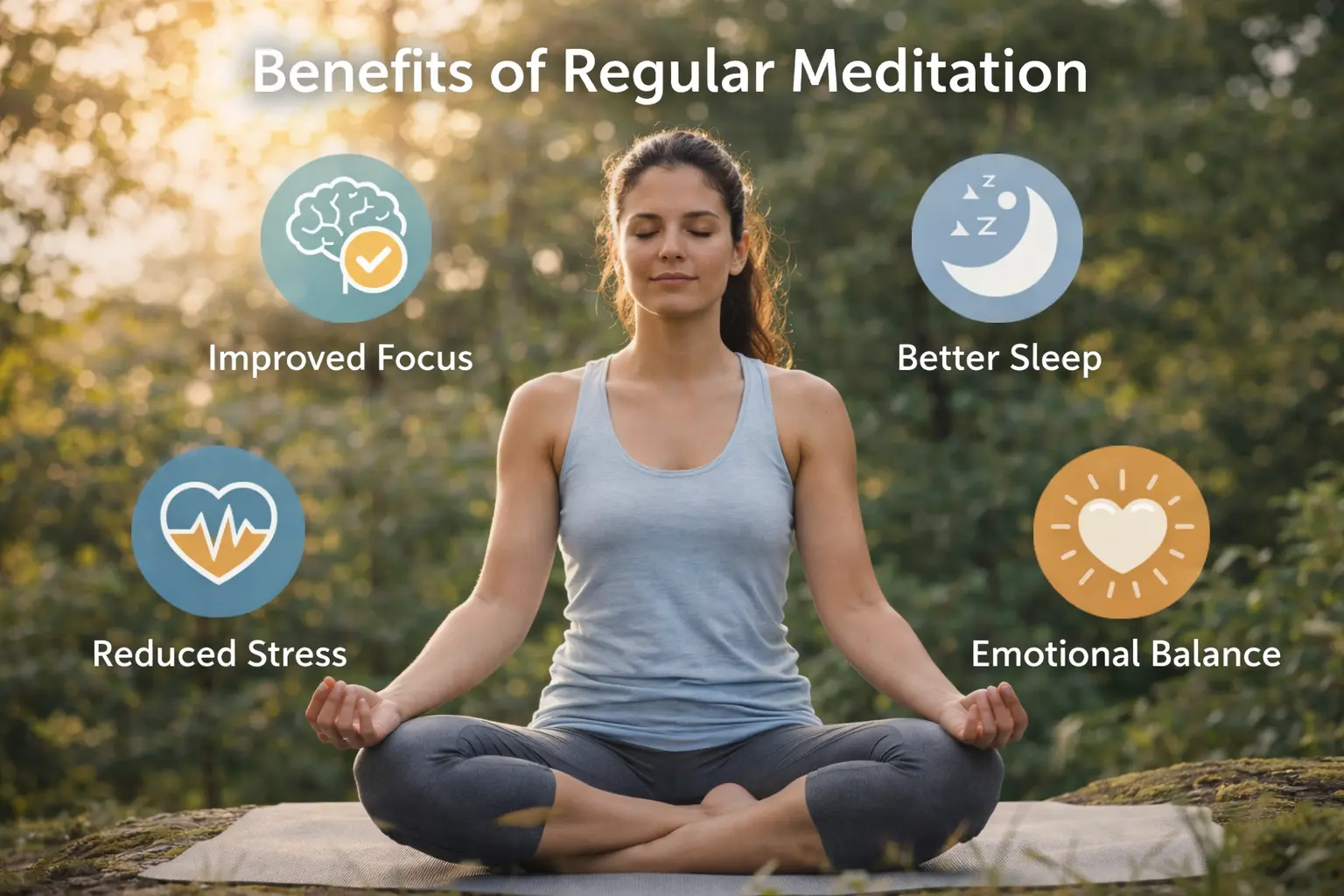
Your mind feels like it’s spinning in a hundred directions, your shoulders are permanently tensed, and you can’t remember the last time you felt truly calm, but the benefits of regular meditation might be the reset your brain has been desperately waiting for.
Neuroplasticity and meditation
When you sit down to meditate, something remarkable happens inside your brain. The practice triggers a process called neuroplasticity, which is essentially your brain’s ability to rewire itself by forming new neural connections throughout your life. Think of it like this: imagine your brain as a garden with established pathways. Meditation helps you create new routes and strengthen existing ones. Research has shown that women who meditate regularly experience measurable changes in brain structure, particularly in areas associated with learning, memory, and emotional processing. For example, a woman who practices meditation for just 20 minutes daily might notice that after eight weeks, the gray matter density in her prefrontal cortex (the decision-making center) actually increases. This isn’t metaphorical improvement; it’s literal physical change. The hippocampus, crucial for memory formation, also shows growth. These structural changes translate into real-world benefits: better recall, sharper thinking, and improved ability to learn new skills. The beauty of neuroplasticity is that it works at any age, making meditation a powerful tool for women throughout different life stages.
Stress reduction and cortisol levels
Cortisol, often called the stress hormone, is your body’s natural alarm system. When you face a deadline, conflict, or perceived threat, your adrenal glands release cortisol to help you respond. But when stress becomes chronic, cortisol levels remain elevated, creating a cascade of problems: disrupted sleep, weakened immunity, weight gain, and persistent anxiety. Women are particularly susceptible to stress-related cortisol imbalances due to hormonal fluctuations throughout the menstrual cycle and life transitions like perimenopause. When a woman meditates regularly, her nervous system learns to shift from the sympathetic state (fight-or-flight) to the parasympathetic state (rest-and-digest). Studies measuring cortisol through saliva samples show that women practicing meditation for 10-15 minutes daily experience measurable reductions in cortisol within two to three weeks. Imagine a woman named Sarah who felt constantly on edge, her shoulders hunched, her jaw clenched. After committing to daily meditation, her cortisol levels dropped significantly, and she noticed her body finally felt permission to relax. Her anxiety didn’t vanish overnight, but the baseline tension that had become her normal gradually dissolved.
Enhanced focus and attention
In our distraction-filled world, attention has become a scarce resource. Women often juggle multiple responsibilities simultaneously, which fragments focus and exhausts mental energy. Meditation directly strengthens the brain’s attention networks. When you meditate, you’re essentially training your prefrontal cortex to notice when your mind wanders and gently redirect it. This is like doing bicep curls for your attention span. Over time, this practice translates into everyday life: you find yourself less distracted during important conversations, more able to complete complex tasks, and better at filtering out irrelevant information. A woman might sit down to work on a project and realize she can sustain focus for 90 minutes instead of the scattered 15-minute bursts she was managing before. The improved attention also enhances productivity because you’re working with full mental capacity rather than divided resources. Additionally, meditation reduces mind-wandering, which research shows accounts for nearly 47 percent of our waking hours. By reclaiming that mental real estate, women often report feeling more present in their lives, more engaged with their work, and more connected to the people around them.
- Start with short meditation sessions of 5-10 minutes daily, choosing a consistent time like early morning or evening to build the habit.
- Focus on your breath or a mantra to anchor your attention, noticing the natural rhythm of inhalation and exhalation without trying to change it.
- Gradually increase the duration of your meditation practice as you become more comfortable, adding 2-3 minutes every week or two until you reach your desired length.
🔬 Science-backed benefits in 2 minuteschoose where to begin:
Emotional regulation and empathy
Emotional regulation is the ability to experience feelings without being overwhelmed or controlled by them. Women often face unique emotional pressures: societal expectations to be nurturing, hormonal shifts that influence mood, and the emotional labor of caregiving roles. Meditation strengthens the insula and anterior cingulate cortex, brain regions involved in emotional awareness and self-compassion. When these areas develop through regular practice, women gain better access to their emotional landscape. Instead of being swept away by anger or anxiety, they can observe the emotion, understand it, and choose their response. This is profoundly different from suppression. A woman might feel frustrated with a family member but, because of her meditation practice, can pause and recognize the frustration without lashing out. She can respond with clarity rather than react from emotion. Simultaneously, meditation enhances empathy. Women who meditate show increased activation in brain regions associated with understanding others’ perspectives and emotions. This creates a beautiful paradox: by turning inward through meditation, women become more attuned to others. They navigate conflicts with greater compassion, listen more deeply, and build stronger relationships. The practice essentially teaches the nervous system that it’s safe to be vulnerable and connected.
Better sleep quality
Sleep deprivation is epidemic among women, whether from caregiving responsibilities, work stress, hormonal changes, or racing thoughts at night. Poor sleep cascades into every area of health: weakened immunity, weight gain, mood disturbances, and cognitive decline. Meditation addresses sleep problems from multiple angles. First, it calms the nervous system, signaling to your body that the day’s threats have passed and rest is safe. Second, it quiets the mental chatter that keeps many women awake at 2 a.m., replaying conversations or worrying about tomorrow. Third, meditation reduces cortisol and increases melatonin production, the hormone that regulates sleep-wake cycles. A woman struggling with insomnia might practice a 10-minute body scan meditation before bed, systematically relaxing each part of her body while breathing deeply. Over weeks, her brain learns to associate this ritual with sleep onset. She begins falling asleep faster and sleeping more deeply. The improved sleep then amplifies all other benefits: her mood stabilizes, her immune system strengthens, and her cognitive function sharpens. It’s a virtuous cycle where better sleep enables better meditation, which enables even better sleep.
Mind-body connection
Many women live primarily in their heads, disconnected from physical sensations and bodily signals. This disconnection can manifest as ignoring hunger cues, pushing through pain, or missing early warning signs of illness. Meditation bridges this gap by cultivating awareness of the body. During meditation, you notice your breath, the weight of your body in the chair, tension in your shoulders, or sensations in your belly. This simple noticing reconnects you with your physical self. Over time, women become more attuned to what their bodies are communicating. A woman might notice that her shoulders tense when she’s anxious, her stomach tightens when she’s about to make a decision she doesn’t trust, or her energy dips when she’s not eating enough. These signals become valuable information for self-care. The mind-body connection also enhances overall well-being because you’re no longer operating as a disembodied mind pushing a reluctant body through the day. Instead, you’re integrated. You feel more balanced, more grounded, and more capable of responding to your actual needs rather than just powering through. This integration is particularly valuable during hormonal transitions when women’s bodies are communicating important information about energy, mood, and health.
Regular meditation offers women a comprehensive approach to brain health and well-being. Through neuroplasticity, meditation literally reshapes brain structure, enhancing memory and learning. By reducing cortisol, it addresses the root of chronic stress. Enhanced focus and attention improve productivity and presence. Emotional regulation and empathy strengthen relationships and resilience. Better sleep quality cascades into improved mood and cognitive function. And the strengthened mind-body connection creates a foundation for genuine, lasting well-being. These benefits aren’t theoretical; they’re measurable, achievable, and accessible to any woman willing to sit quietly for a few minutes each day.
Can meditation be beneficial for women’s mental health?
Yes, regular meditation has been shown to improve women’s mental health by reducing stress hormones like cortisol, enhancing focus and attention, promoting emotional regulation, and fostering empathy. Research demonstrates measurable changes in brain structure and function within weeks of consistent practice.
How long does it take to experience the benefits of meditation?
While some benefits like reduced stress and improved focus can be felt immediately after a single session, it typically takes two to three weeks of consistent daily practice to notice significant changes in emotional well-being and sleep quality. Structural brain changes become measurable after about eight weeks of regular meditation.
Others also read:
Disclaimer: This article is for informational purposes only and is not a substitute for professional medical advice. Always consult a healthcare professional for personal guidance.
This article has been prepared and reviewed by the GlobalHealthBeacon editorial team and is based on current medical research and published scientific literature available in 2026. It provides structured, evidence-based information to support informed health decisions.
