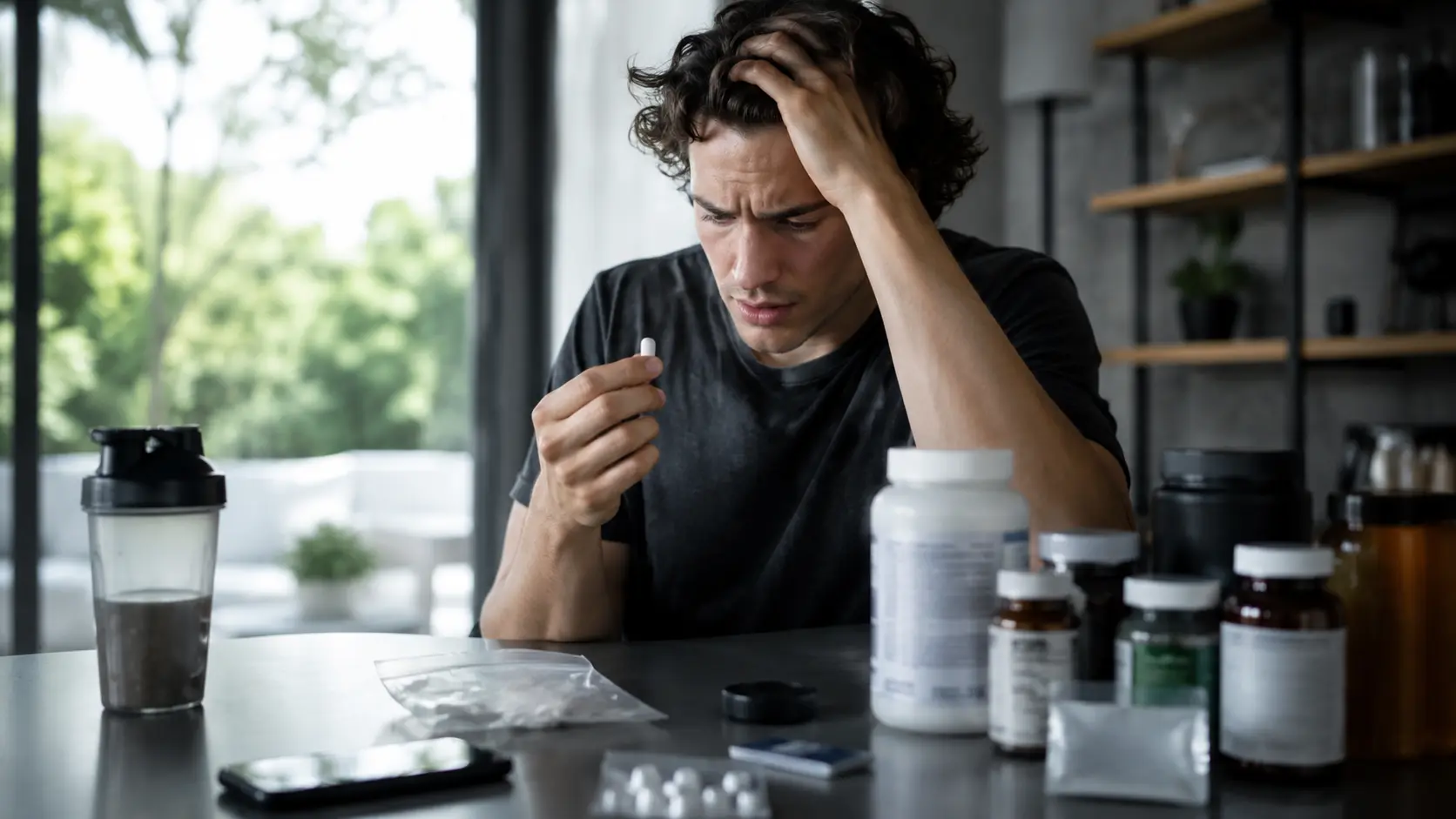
You spent months chasing the latest biohacking trend, dropped hundreds on gadgets and supplements, and now you’re dealing with joint pain, digestive issues, and a wallet that feels lighter than ever, because biohacking mistakes hit hardest when you thought you were finally taking control of your health.
Misguided beliefs and trendy solutions
I remember when my neighbor Tom showed me his new wearable device that promised to optimize his sleep cycles through light therapy. He’d spent nearly two thousand dollars on the system after reading glowing reviews from influencers. Within weeks, he was experiencing worse insomnia than before, his circadian rhythm completely disrupted by the aggressive light exposure. The problem wasn’t the device itself, but Tom’s assumption that if something works for a 30-year-old athlete, it must work for a 68-year-old with existing sleep conditions. This is the trap so many of us fall into. We see the marketing, we hear the success stories, and we forget that biohacking is often designed and tested on young, healthy populations. The expensive gadgets and trendy protocols flood our social media feeds, each one claiming to be the breakthrough we’ve been waiting for. But without understanding the science behind them or how they apply to our specific situation, we’re essentially gambling with our health.
- Seek evidence-based practices over quick-fix solutions.
- Consult healthcare professionals before diving into untested biohacks.
- Remember that not all trends are sustainable or safe for every individual.
Overlooking individual needs and warning signs
Your body sends signals constantly, but we’re often too distracted or too determined to notice them. I watched my friend Margaret dive into intermittent fasting after reading about its anti-aging benefits. She felt dizzy during her morning walks, experienced brain fog that made reading difficult, and her energy plummeted by afternoon. Instead of listening to these warning signs, she pushed harder, convinced that she just needed to adapt. Two months later, she collapsed during a grocery run. Her doctor explained that her blood sugar regulation couldn’t handle the fasting protocol, especially given her history of thyroid issues. Biohacking isn’t one-size-fits-all, yet we treat it like a universal prescription. Your arthritis, your medications, your metabolism, your sleep patterns, your stress levels, your gut health, your family history, your age, your activity level, your nutritional needs, your hormonal balance, your cognitive function, and your emotional state all matter enormously. When you ignore these individual factors and follow a generic biohacking protocol, you’re setting yourself up for disappointment or worse.
💬 Ready to feel better in 2 minutes?choose where to begin:
Ignoring professional guidance and oversight
The internet makes us all feel like experts. You can watch a YouTube video, read a blog post, join an online community, and suddenly you believe you understand your body’s needs better than someone with decades of medical training. I did this myself with a ketogenic diet protocol I found on a popular biohacking forum. The community was enthusiastic, the testimonials were compelling, and the science seemed sound when presented by someone with a compelling narrative. What I didn’t account for was my family history of kidney issues, my current blood pressure medication, and my cholesterol levels. After six weeks, my blood work showed alarming changes that my doctor caught just in time. A qualified healthcare professional would have flagged these risks immediately. They understand drug interactions, contraindications, your complete medical history, and how your body’s systems interconnect in ways that a forum post simply cannot address. Venturing into biohacking without expert guidance is like trying to repair your car engine by watching YouTube videos. You might get lucky, but the risks of causing serious damage are substantial.
Disregarding long-term health implications
Short-term wins can be intoxicating. You feel more energy, you lose weight, you sleep better for a few weeks, and you convince yourself that you’ve finally cracked the code to optimal health. But what happens in month six? Month twelve? What about year three? I met Robert at a health seminar who’d been experimenting with high-dose supplement stacking for two years. He felt amazing initially, his energy was through the roof, and his friends asked what his secret was. But over time, his liver enzyme levels climbed steadily higher. His kidneys showed signs of stress from processing excessive minerals. His bones became brittle from mineral imbalances caused by the supplement interactions. The short-term gains had masked slowly accumulating damage that only became visible when his annual bloodwork revealed the problem. This is the hidden danger of biohacking without considering long-term consequences. You might feel fantastic today while your body silently struggles to process what you’re putting it through. Sustainable health isn’t about dramatic interventions or quick transformations. It’s about practices you can maintain for decades without causing harm to your organs, your metabolism, or your overall wellbeing.
Biohacking mistakes often stem from misinformation, neglecting individual needs, lack of professional guidance, and overlooking long-term consequences. Avoid falling for trends, listen to your body, seek expert advice, and prioritize sustainable health practices.
How can seniors avoid falling for false biohacking promises?
Seniors can steer clear of misleading biohacking claims by researching evidence-based practices, consulting healthcare professionals, and prioritizing safety over trends.
What should seniors consider before embarking on a biohacking journey?
Seniors should assess their individual health needs, seek professional advice, carefully monitor their body’s responses, and evaluate the long-term implications of any biohacking interventions.
Others also read:
Disclaimer: This article is for informational purposes only and is not a substitute for professional medical advice. Always consult a healthcare professional for personal guidance.
This article presents an experience-based perspective and has been reviewed by the GlobalHealthBeacon editorial team in 2026. It provides structured, evidence-based information to support informed health decisions.
