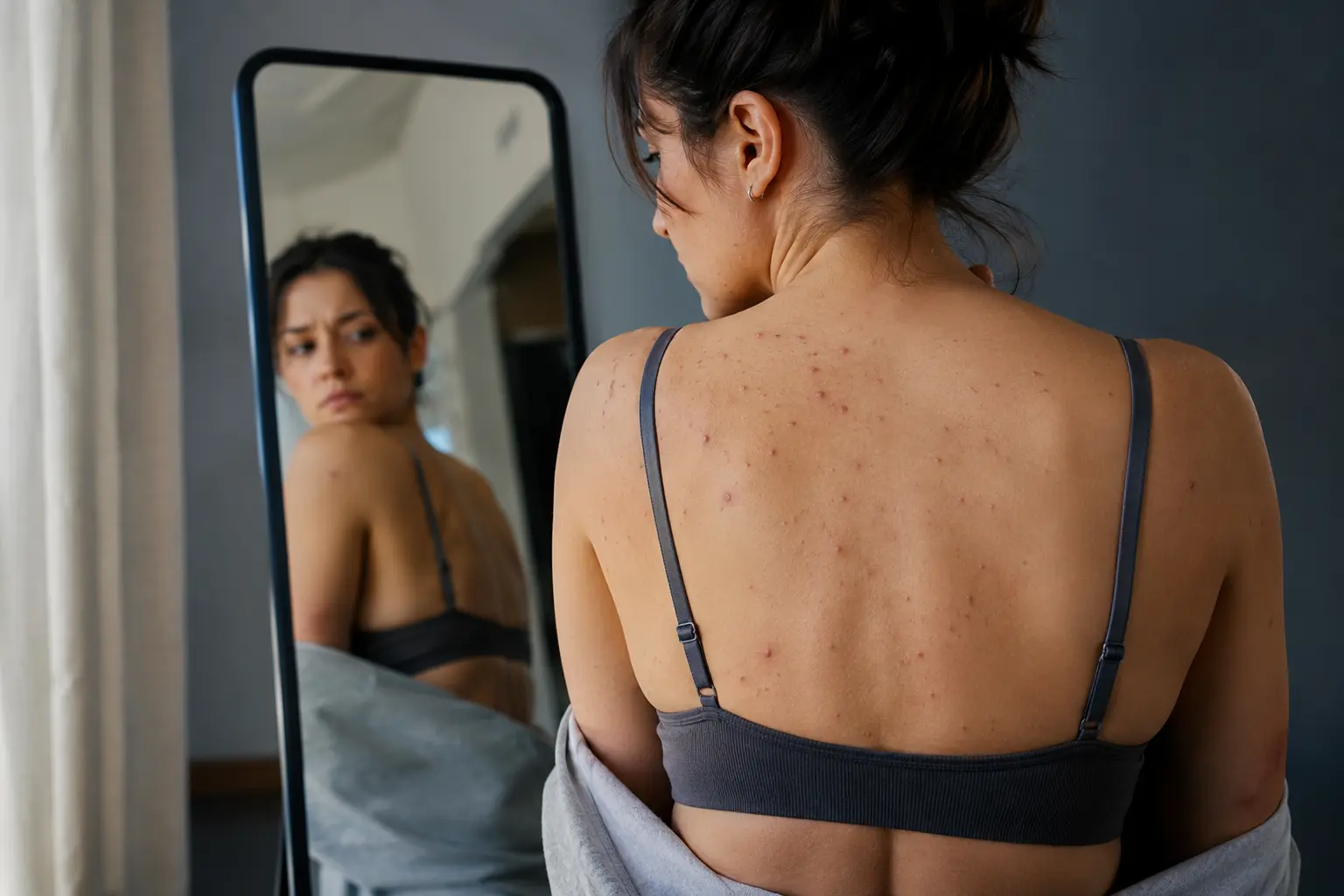
You wake up, look in the mirror, and there it is again – another breakout spreading across your chest, back, or shoulders, and you have no idea why it keeps happening no matter what you do, because body acne causes go way deeper than just not washing enough.
Hormonal influence on body acne
One of the primary causes of body acne in young adults is the hormonal fluctuations that occur during puberty and throughout adulthood. Androgens, such as testosterone, can stimulate oil production in the skin, leading to clogged pores and acne breakouts. Think of your sebaceous glands as tiny factories that ramp up production when hormones send the signal. During your teens and twenties, these hormonal shifts are particularly intense. A 19-year-old college student might notice their back breaks out worse during certain weeks of the month, or a 22-year-old guy might see increased body acne during periods of high stress when cortisol spikes. The oil your skin produces isn’t inherently bad – it protects and moisturizes – but when combined with dead skin cells and bacteria, it creates the perfect environment for acne to develop. Understanding this hormonal connection helps explain why body acne often appears in clusters rather than randomly, and why it tends to improve as you move into your late twenties when hormonal patterns stabilize.
Genetic predisposition and acne severity
Genetics play a significant role in determining an individual’s susceptibility to developing acne and how severe it becomes. Research indicates that if one or both parents had acne, their children are more likely to experience acne as well, sometimes even more intensely. This isn’t about blame – it’s about biology. Your genes influence how sensitive your skin is to hormonal changes, how much oil your glands produce, and how your immune system responds to acne-causing bacteria. Imagine two young adults with identical lifestyles and skincare routines. One might experience mild occasional breakouts while the other struggles with persistent, severe body acne. The difference often comes down to what they inherited. Some people’s skin naturally produces more sebum, others have skin that’s more prone to inflammation, and still others have immune systems that overreact to bacterial colonization. If you’ve noticed that body acne runs in your family, you’re not fighting an uphill battle – you’re simply working with a different set of biological cards. This knowledge can actually be empowering because it shifts the focus from self-blame to understanding your unique skin biology.
Environmental triggers and skin health
Various environmental factors can exacerbate acne symptoms in young adults, and many of these triggers are within your control. Sweat, friction from tight clothing, and exposure to humid conditions all contribute to the development of body acne. Picture yourself at the gym – you’re wearing fitted athletic wear, sweating heavily, and bacteria are thriving in that warm, moist environment on your skin. Or consider a hot, humid summer day where sweat sits on your back for hours. These scenarios create ideal conditions for acne to flourish. Friction from backpacks, sports equipment, or tight collars can irritate skin and trigger breakouts in specific areas. The good news is that understanding these triggers means you can actively work to minimize them. Maintaining good hygiene practices like showering promptly after sweating prevents pores from becoming clogged with sweat and bacteria. Choosing breathable fabrics allows your skin to stay dry. Even small environmental adjustments can significantly reduce how often you experience breakouts, making this one of the most actionable areas you can control.
- Choose loose-fitting clothing made from natural fibers like cotton to allow air circulation and reduce friction.
- Shower after sweating to prevent pores from becoming clogged with sweat, bacteria, and dead skin cells.
- Use non-comedogenic skincare products to avoid further irritation and pore blockage.
🔬 Science-backed benefits in 2 minuteschoose where to begin:
Diet and inflammation connection
While diet alone may not directly cause acne, certain foods high in sugar and dairy products can trigger inflammation in the body, leading to skin issues like acne. Think of your body as an interconnected system where what you eat affects your hormones, insulin levels, and inflammatory response. When you consume high-glycemic foods like sugary drinks, white bread, or processed snacks, your blood sugar spikes rapidly. This triggers an insulin surge, which in turn stimulates androgen production and increases oil secretion in your skin. Dairy products, particularly skim milk, contain hormones that can amplify your body’s own hormonal activity. A young adult who regularly drinks multiple glasses of milk or eats cheese daily might notice their body acne worsens, while cutting back brings improvement. Conversely, foods rich in omega-3 fatty acids, antioxidants, and fiber – like fatty fish, berries, leafy greens, and whole grains – support skin health by reducing inflammation and stabilizing blood sugar. You don’t need to follow a restrictive diet, but paying attention to how your skin responds to certain foods and making intentional choices can be surprisingly effective.
Stress and skin breakouts
Research suggests a clear link between stress levels and acne breakouts in young adults, and the mechanism is surprisingly direct. High levels of stress trigger your body to release cortisol and adrenaline, hormones that prepare you for fight-or-flight. As a side effect, these stress hormones increase sebum production and amplify inflammation in your skin. Imagine a college student during exam week – they’re pulling all-nighters, skipping meals, and feeling anxious about grades. Within days, body acne flares up across their chest and back. Or consider a young professional dealing with workplace pressure and tight deadlines. Their skin breaks out in response to the chronic stress they’re experiencing. The stress-acne connection is so well-documented that dermatologists routinely ask patients about their stress levels during consultations. The encouraging part is that stress is something you can actively manage. Practicing stress management techniques like mindfulness meditation, regular exercise, adequate sleep, and even simple breathing exercises can help reduce acne flare-ups. When you calm your nervous system, your hormones stabilize, inflammation decreases, and your skin often improves noticeably.
Skincare and acne prevention
Establishing a consistent skincare routine tailored to your skin type can help prevent and manage body acne effectively. This isn’t about buying expensive products or following complicated multi-step routines – it’s about understanding what your skin needs and delivering it consistently. Start by identifying your skin type: oily, dry, combination, or sensitive. Someone with oily skin prone to body acne might benefit from a gentle salicylic acid cleanser that removes excess oil without stripping the skin, while someone with sensitive skin might need a more gentle approach. Using gentle cleansers twice daily removes sweat, bacteria, and dead skin cells without over-drying your skin. Exfoliating regularly, whether through chemical exfoliants like AHAs or BHAs or gentle physical exfoliation, helps prevent pore blockage by removing dead skin buildup. Avoiding harsh chemicals, overly hot water, and aggressive scrubbing protects your skin barrier and reduces irritation. A simple routine might look like: gentle cleanser in the morning and evening, targeted treatment with acne-fighting ingredients if needed, and a lightweight moisturizer. Consistency matters more than complexity – sticking with a routine for at least six to eight weeks allows you to see real results.
Body acne in young adults is influenced by hormonal changes, genetic predisposition, environmental triggers, diet, stress levels, and skincare habits. Understanding these factors can help individuals take proactive steps to manage and prevent acne breakouts.
Can body acne be completely cured?
While there is no cure for acne, it can be effectively managed with proper skincare, lifestyle modifications, and, in some cases, medical treatments prescribed by a healthcare professional.
Are there specific foods that can worsen body acne?
Some individuals may find that consuming high-sugar or dairy-rich foods exacerbates their acne symptoms. It’s essential to pay attention to your body’s reactions and consult with a dermatologist for personalized dietary recommendations.
Others also read:
Disclaimer: This article is for informational purposes only and is not a substitute for professional medical advice. Always consult a healthcare professional for personal guidance.
This article has been prepared and reviewed by the GlobalHealthBeacon editorial team and is based on current medical research and published scientific literature available in 2026. It provides structured, evidence-based information to support informed health decisions.
