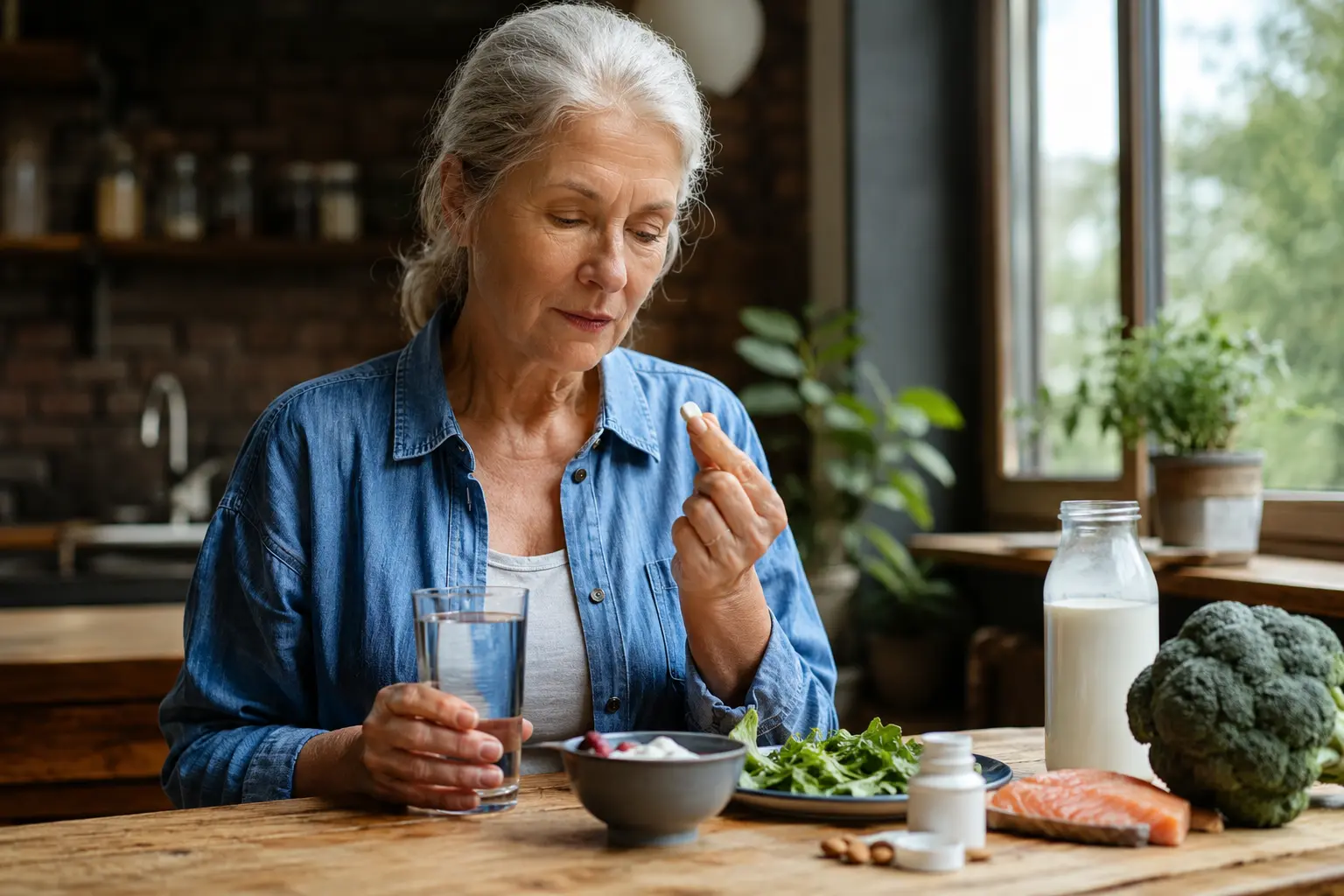
Your bones are getting weaker and you don’t even realize it until that one fall changes everything, but here’s what you need to know about calcium vitamin d bone health before it’s too late.
Importance of calcium and vitamin D
Calcium and vitamin D work as a team inside your body, and understanding this partnership is the first step toward protecting your bones. Calcium is the structural foundation, the mineral that literally builds and maintains bone density throughout your life. Think of it as the bricks in a wall. Vitamin D, on the other hand, is the mortar that holds everything together. It regulates how much calcium your body absorbs and uses, ensuring that the calcium you consume actually reaches your bones instead of passing through your system unused. Women face particular risk because after menopause, estrogen levels drop sharply, and estrogen helps protect bone density. This is why calcium and vitamin D become even more critical during midlife and beyond. Low levels of either nutrient can trigger a cascade of problems: bone loss accelerates, osteoporosis develops silently, and fracture risk climbs. A woman in her 50s with inadequate calcium and vitamin D might experience a wrist fracture from a simple stumble, or worse, a hip fracture that changes her independence forever.
- Calcium is the most abundant mineral in the body, vital for muscle function, nerve transmission, and hormone secretion.
- Vitamin D plays a crucial role in regulating calcium levels in the blood and ensures proper mineralization of bones.
- Low levels of calcium and vitamin D can lead to bone loss, osteoporosis, and increased fracture risk.
Food sources of calcium and vitamin D
Getting these nutrients from food is your first line of defense, and the good news is that both are hiding in everyday foods you probably already enjoy. For calcium, dairy products are the obvious choice: a glass of milk delivers about 300 milligrams, yogurt provides similar amounts, and cheese is calcium-dense though higher in fat. But if dairy doesn’t work for you, dark leafy greens like kale and collard greens are excellent plant-based sources, as are almonds, tahini, and fortified plant-based milks. A practical strategy is to include a calcium source at two meals daily. For example, have yogurt with breakfast and include leafy greens in your dinner salad. Vitamin D is trickier because few foods naturally contain it in meaningful amounts. Fatty fish like salmon, mackerel, and sardines are your best bets, providing 400 to 1000 IU per serving. Egg yolks contain small amounts, and fortified cereals and plant-based milks add extra. Sunlight exposure triggers vitamin D production in your skin, but factors like sunscreen, latitude, season, and skin tone all affect how much you actually produce. A woman in Seattle in winter produces almost no vitamin D from sun exposure, while one in Arizona might produce adequate amounts year-round.
📘 Fix your day in under 2 minuteschoose where to begin:
Supplements for bone health
If your diet falls short, supplements bridge the gap, but they require a thoughtful approach rather than guesswork. Start by assessing your current intake: track what you eat for a few days and calculate your calcium and vitamin D totals using a nutrition app or by consulting a registered dietitian. Most women need 1000 to 1200 milligrams of calcium daily and 600 to 800 IU of vitamin D, though some need more depending on age and health status. If you’re getting 600 milligrams from food, you only need 400 to 600 from a supplement. Calcium supplements come in two main forms: calcium carbonate (cheaper, requires stomach acid to absorb, best taken with food) and calcium citrate (more expensive, absorbs regardless of stomach acid, better for those on acid-reducing medications). Vitamin D supplements are typically vitamin D3, which is more effective than D2. Here’s a common mistake: taking your entire calcium dose at once. Your body absorbs only about 500 milligrams of calcium at a time, so split your supplement into two doses taken several hours apart. Work with your healthcare provider to determine your specific needs, especially if you have kidney disease, take certain medications, or have a history of kidney stones.
Physical activity and bone health
Exercise is the stimulus your bones need to stay strong, and weight-bearing movement is non-negotiable for maintaining bone density. When you walk, dance, or lift weights, your muscles pull on your bones, sending a signal that says ‘stay strong, we need you.’ This mechanical stress triggers bone-building cells to work harder. A woman who walks 30 minutes most days is doing something powerful for her skeleton, even if she doesn’t feel dramatic changes. Weight-bearing exercises include anything where your feet or legs support your body weight against gravity: walking, jogging, dancing, stair climbing, and hiking all count. Resistance training like weightlifting or bodyweight exercises (push-ups, squats) is equally important because it directly challenges bones. A practical routine might be 30 minutes of brisk walking three times weekly plus two sessions of light resistance training. Balance exercises matter too, especially as you age, because they reduce fall risk. Simple practices like standing on one leg while brushing your teeth, or taking a tai chi class, improve stability and coordination. The key is consistency. A woman who exercises regularly for years builds a stronger bone reserve that protects her even as she ages and bone loss naturally accelerates.
Healthy lifestyle choices
The nutrients and exercise matter, but they work best within a lifestyle that actively protects your bones rather than undermining them. Smoking accelerates bone loss by interfering with calcium absorption and reducing estrogen levels, so quitting is one of the most powerful bone-health decisions you can make. Alcohol has a dose-dependent effect: moderate intake (one drink daily) appears neutral, but heavy drinking disrupts bone remodeling and increases fracture risk. Maintaining a healthy weight matters because both being significantly underweight and overweight can affect bone health, though the relationship is complex. Aim for a weight that feels sustainable and energetic for you. Sleep quality influences bone health too, since bone remodeling happens partly during sleep. Getting seven to nine hours nightly supports this process. Stress management deserves attention as well, since chronic stress elevates cortisol, which can weaken bones over time. A realistic lifestyle approach combines these elements: quit smoking if applicable, limit alcohol to moderate levels, maintain a stable healthy weight, prioritize sleep, manage stress through activities you enjoy, and layer in your calcium, vitamin D, and exercise habits. Think of it as building a bone-health foundation where each piece supports the others.
Calcium and vitamin D are vital nutrients for women’s bone health, supporting bone density and strength. Including these nutrients in your diet, considering supplements when necessary, staying physically active, and making healthy lifestyle choices are key to maintaining strong and healthy bones.
What happens if I don’t get enough calcium and vitamin D?
Inadequate intake of calcium and vitamin D can lead to weak, brittle bones, increased risk of fractures, osteoporosis, and other bone-related issues.
Can I get enough vitamin D from sunlight alone?
While sunlight is a primary source of vitamin D, factors like sunscreen use, time of day, location, and skin tone can impact vitamin D production. It’s essential to balance sun exposure with dietary sources and supplements if needed.
Others also read:
Disclaimer: This article is for informational purposes only and is not a substitute for professional medical advice. Always consult a healthcare professional for personal guidance.
This guide has been prepared and reviewed by the GlobalHealthBeacon editorial team and reflects current medical research as of 2026. It provides structured, evidence-based information to support informed health decisions.
