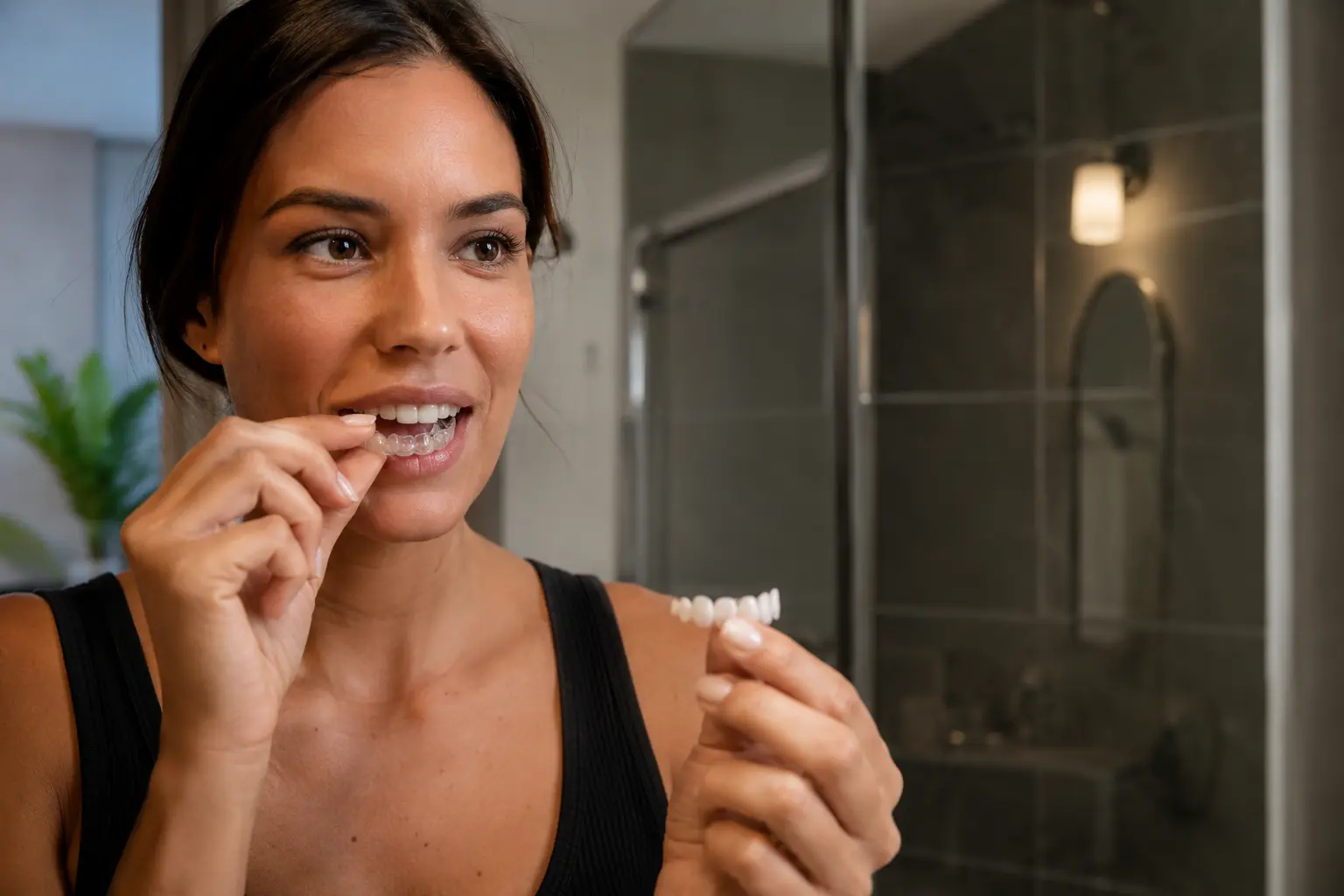
You’re tired of hiding your smile in photos, frustrated by crooked teeth or stains that won’t budge, and now you’re stuck between two completely different paths: clear aligners versus veneers, each promising results but in totally different ways.
Understanding clear aligners
Clear aligners work by applying gentle, consistent pressure to gradually move your teeth into proper alignment over time. Think of them as a slow and steady approach to straightening. You receive a series of custom-made trays, each one slightly different from the last, and you swap them out every one to two weeks. A typical treatment spans anywhere from six months to two years depending on how much movement your teeth need. The beauty here is that they’re removable, so you can take them out to eat, brush, and floss normally. Many seniors appreciate this flexibility because it means no dietary restrictions and easier maintenance of oral hygiene. The trays are made from a smooth plastic material that sits snugly over your teeth, making them nearly invisible to others. You’ll wear them for about 20 to 22 hours daily for best results. Common scenarios include a 68-year-old who always wanted straight teeth but refused traditional braces, or someone preparing for a major life event like a grandchild’s wedding.
- Removable for easy oral hygiene maintenance
- Clear and practically invisible, ideal for seniors concerned about aesthetics
- Individualized treatment plans tailored to your unique dental needs
Exploring veneers
Veneers are ultra-thin shells, typically made from porcelain or composite resin, that bond permanently to the front surface of your teeth. Unlike aligners that move teeth, veneers simply cover the visible part of your tooth to transform its appearance instantly. The process involves removing a small amount of tooth enamel to make room for the veneer, then cementing it in place. Results are immediate, which appeals to many seniors who want a quick transformation without waiting months. Veneers excel at hiding discoloration, closing gaps between teeth, hiding chips, and creating a uniform, bright smile. For example, a 72-year-old with decades of coffee stains and a slightly chipped front tooth could have a completely renewed smile in just two or three dental visits. The downside is that veneers are permanent and require commitment. Once you go down this path, your natural tooth structure has been altered. They typically last 10 to 15 years before needing replacement, and maintenance involves being careful about what you bite into and maintaining excellent oral hygiene.
📘 Fix your day in under 2 minuteschoose where to begin:
Comparing the pros and cons
Clear aligners offer a non-invasive, reversible approach that preserves your natural tooth structure completely. You can stop treatment anytime without permanent changes. However, they require discipline and consistency, and results take months to appear. Veneers deliver dramatic, immediate results that transform your smile in weeks, making them ideal if you’re impatient or have an upcoming event. The trade-off is irreversibility and cost. Aligners typically cost between 3,000 and 8,000 dollars depending on complexity, while veneers range from 800 to 2,500 per tooth. A common mistake seniors make is choosing based on cost alone without considering lifestyle. If you’re someone who forgets to wear appliances or travels frequently, aligners might frustrate you. Conversely, if you’re worried about damaging veneers through habits like grinding your teeth at night or chewing ice, aligners are safer. Consider also that aligners work best for straightening issues, while veneers excel at cosmetic enhancement. Your choice depends on whether you’re solving an alignment problem or covering up appearance concerns.
Making the right choice
Start by identifying your primary goal. Are you unhappy with how straight your teeth are, or are you bothered by stains, chips, and gaps? This distinction matters enormously. Next, assess your dental health honestly. If you have gum disease or significant decay, you’ll need treatment before pursuing either option. Schedule a consultation with your dentist and bring a list of questions. Ask about your specific case, expected timeline, maintenance requirements, and long-term costs. Be transparent about your lifestyle. Do you grind your teeth? Are you disciplined about wearing appliances? Do you have the dexterity to clean aligners properly? A 70-year-old with arthritis might struggle with aligner hygiene, making veneers more practical. Consider also your timeline. If you need results in weeks, veneers win. If you can wait six to eighteen months and prefer a reversible option, aligners make sense. Finally, think about your age and how long you want your investment to last. Veneers require replacement eventually, while aligners are a one-time treatment.
Maintaining your dental health
Whichever path you choose, your commitment to oral care determines your success and satisfaction. With clear aligners, clean them daily with lukewarm water and a soft brush, and store them in their case when not wearing them. Brush and floss your teeth before reinserting them to prevent food particles from getting trapped. Visit your dentist every six months to monitor progress and catch any issues early. With veneers, treat them like your natural teeth but with extra caution. Avoid biting your nails, chewing ice, or using your teeth to open packages. Brush gently with a non-abrasive toothpaste and floss carefully around the edges where the veneer meets your tooth. Be mindful of hard or sticky foods that could dislodge them. Both options benefit from a consistent routine: brush twice daily, floss once daily, and attend regular dental check-ups. Many seniors find that committing to this routine actually improves their overall oral health beyond just their chosen treatment. The investment in either option pays dividends only if you maintain it properly.
Clear aligners offer a discreet and comfortable solution for teeth alignment, while veneers provide immediate results for enhancing your smile. Understanding the pros and cons of each treatment can guide seniors in making an informed decision that aligns with their dental health needs.
Are clear aligners painful to wear?
While you may experience slight discomfort or pressure when initially wearing clear aligners, most patients adapt quickly to the sensation as their teeth adjust.
Do veneers require special maintenance?
Veneers do not demand extensive upkeep beyond regular oral hygiene practices. Avoid biting hard objects and maintain routine dental visits for optimal longevity.
Others also read:
Disclaimer: This article is for informational purposes only and is not a substitute for professional medical advice. Always consult a healthcare professional for personal guidance.
This guide has been prepared and reviewed by the GlobalHealthBeacon editorial team and reflects current medical research as of 2026. It provides structured, evidence-based information to support informed health decisions.
