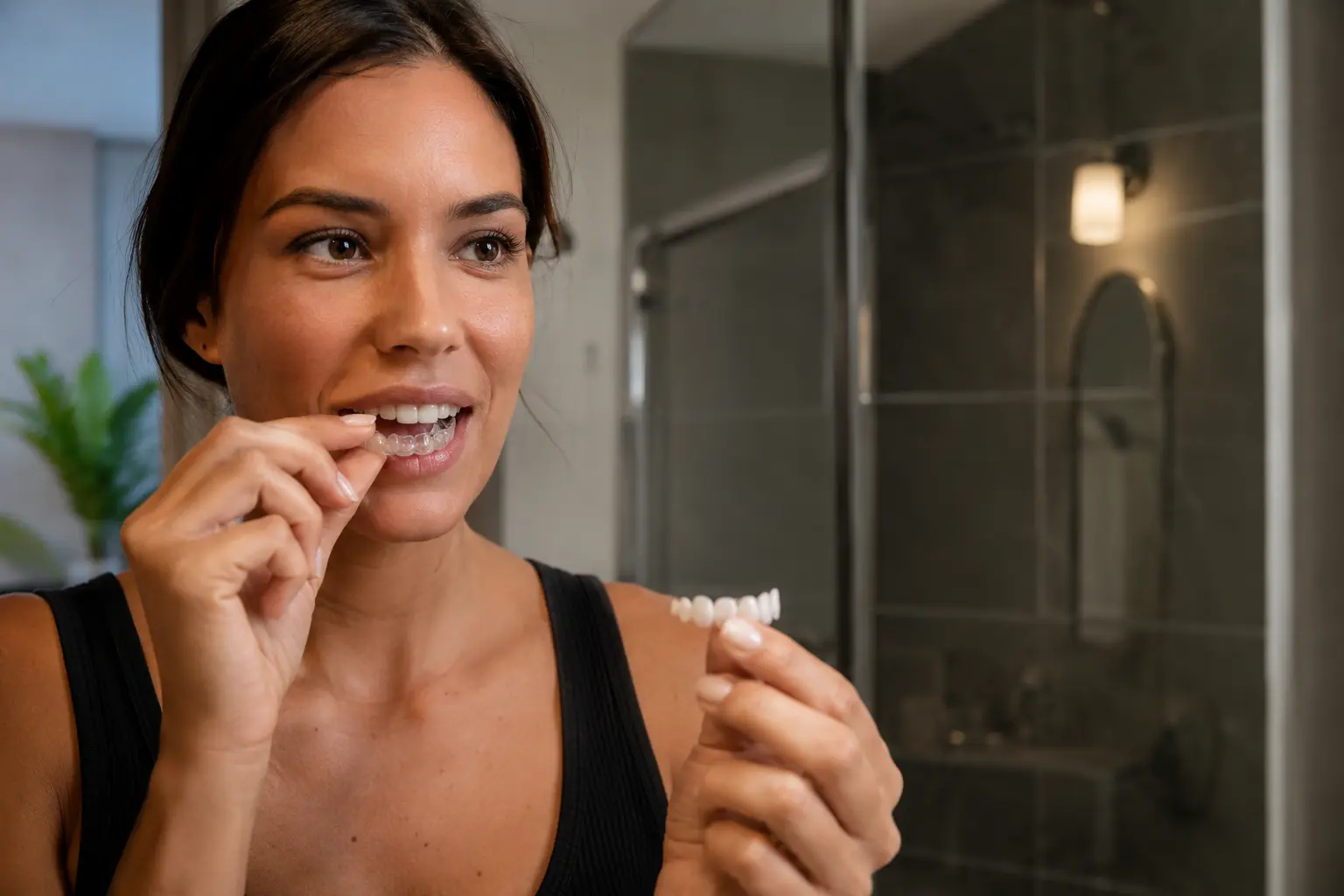
You’re staring at your smile in the mirror, frustrated by crooked teeth or stains that won’t budge, and now you’re stuck between clear aligners versus veneers with no idea which path actually works for someone your age.
Clear aligners: the lowdown
Clear aligners work by gradually shifting your teeth into proper alignment using a series of custom-made plastic trays that you wear throughout the day and night. Think of them as invisible braces that you can remove whenever you need to eat or brush your teeth. For seniors dealing with mild to moderate crowding or spacing issues, aligners offer a discreet solution that doesn’t announce your dental work to everyone you meet. Many people find them particularly appealing because they fit seamlessly into daily life. You simply pop them out before meals, clean your teeth normally, and slip them back in. The process typically takes between 6 to 18 months depending on how much movement your teeth need. A common scenario involves a 65-year-old who always felt self-conscious about a slight gap between their front teeth finally feeling confident enough to smile in family photos without covering their mouth.
- Invisible and unobtrusive
- Removable for eating and cleaning
- Gradually shift teeth into alignment
Veneers: a competitor’s perspective
Veneers are thin porcelain shells custom-crafted to fit over the front surface of your teeth, instantly transforming your smile in just a few appointments. Unlike aligners that move your teeth gradually, veneers address cosmetic concerns directly by covering imperfections like chips, cracks, deep stains, and gaps. For seniors who want immediate results without a lengthy treatment timeline, veneers deliver that instant gratification. The process involves your dentist preparing your tooth surface, taking impressions, and then bonding the custom veneer in place. Many older adults appreciate veneers because they solve multiple aesthetic problems simultaneously. For example, a 70-year-old with yellowed teeth from decades of coffee drinking and a small chip from a fall can have both issues resolved in two appointments. Veneers also feel natural in your mouth and function just like your real teeth once they’re bonded in place.
📘 Fix your day in under 2 minuteschoose where to begin:
Comparing the costs
Clear aligners typically range from $3,000 to $8,000 for the complete treatment, though the exact price depends on how complex your case is and how long treatment takes. Veneers cost significantly more per tooth, ranging from $925 to $2,500 each, which means a full smile makeover covering six to eight teeth could easily exceed $7,500. However, the financial picture becomes clearer when you consider what insurance might cover. Many dental insurance plans offer partial coverage for aligners if they’re deemed medically necessary for bite correction, but cosmetic veneers are typically not covered. Some seniors find that payment plans through their dentist make either option more manageable. It’s worth noting that while aligners are a one-time investment, veneers may require replacement every 10 to 15 years, adding future costs to consider when budgeting.
Maintenance matters
Clear aligners demand consistent daily hygiene habits to keep them clean and prevent staining or odor buildup. You’ll need to remove them before eating or drinking anything other than water, rinse them regularly, and soak them in a cleaning solution several times weekly. Many seniors appreciate this routine because it encourages better overall oral hygiene. Veneers, by contrast, are stain-resistant and don’t require special cleaning beyond normal brushing and flossing. However, they’re not indestructible. You should avoid biting hard objects, chewing ice, or using your teeth as tools. Both options require regular dental checkups to monitor your oral health and catch any issues early. A practical example involves a 68-year-old with aligners who set phone reminders to remove them before lunch and established an evening routine of soaking them while she brushes her teeth. With veneers, the same person simply maintains her regular dental visits and avoids the hard candies she once enjoyed.
The verdict is in
Choosing between clear aligners and veneers ultimately depends on your specific situation, which includes the nature of your dental concerns, your budget, your timeline, and your personal preferences about treatment length. If you have misaligned teeth and want a gradual, removable solution that’s invisible during treatment, aligners make sense. If you’re primarily concerned with cosmetic issues like discoloration, chips, or gaps and want results immediately, veneers are worth exploring. Your dentist can examine your teeth and discuss which option aligns with your goals. Some seniors discover that a combination approach works best, using aligners first to improve alignment and then adding veneers for cosmetic enhancement. Schedule a consultation with your dental provider to review your specific case, understand realistic timelines and costs, and make an informed decision that feels right for your smile and your life.
Clear aligners offer a discreet solution for gradual teeth alignment, while veneers provide an instant transformation for cosmetic concerns. Cost, maintenance, and individual preferences play crucial roles in choosing the right option for your smile.
Are clear aligners painful to wear?
Clear aligners may cause initial discomfort as your teeth adjust to the new position, but this is temporary and usually subsides within a few days.
Can veneers be whitened if they become stained?
Veneers are resistant to staining, but if discoloration occurs, professional cleaning and polishing by your dentist can help restore their natural brightness.
Others also read:
Disclaimer: This article is for informational purposes only and is not a substitute for professional medical advice. Always consult a healthcare professional for personal guidance.
This guide has been prepared and reviewed by the GlobalHealthBeacon editorial team and reflects current medical research as of 2026. It provides structured, evidence-based information to support informed health decisions.
