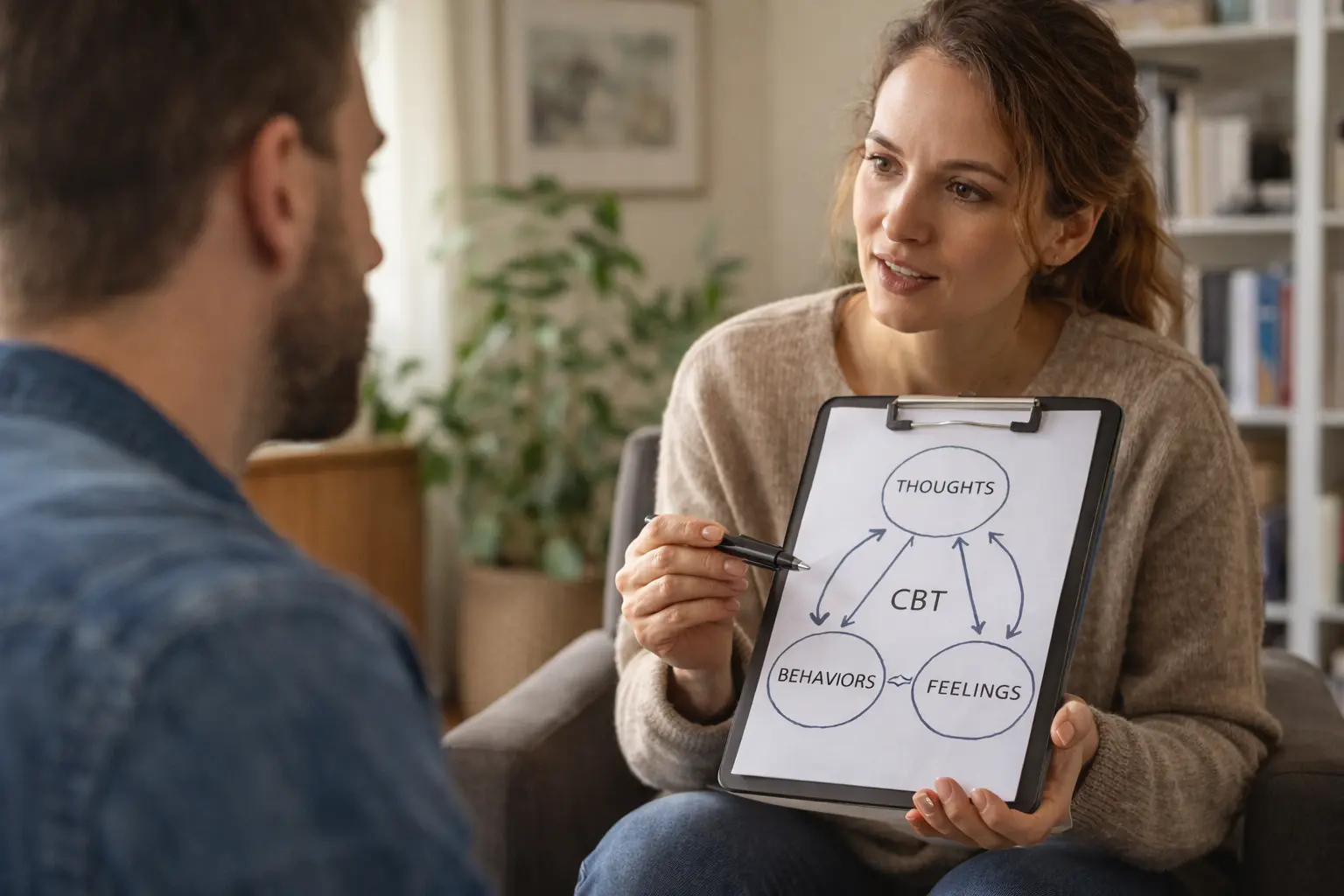
Stuck in a loop of worry, replaying the same negative thoughts over and over, feeling like your mind won’t give you a break? Cognitive behavioral therapy explained is the practical reset button you’ve been looking for, and it’s working for thousands of seniors just like you.
Understanding the basics of cognitive behavioral therapy (CBT)
Cognitive Behavioral Therapy, or CBT, is a structured therapeutic approach that works by identifying the invisible connections between what you think, how you feel, and what you do. Imagine you wake up feeling tired and think, ‘I’m too old to enjoy anything anymore.’ That thought triggers sadness, which leads you to skip your morning walk. CBT teaches you to notice this pattern and gently challenge it. Instead of accepting that thought as fact, you learn to ask: Is this really true? What evidence do I have? What would I tell a friend in this situation? By understanding these three-part connections, you gain practical tools to interrupt negative cycles. You’ll learn to identify when your mind is catastrophizing, when you’re making assumptions without evidence, or when you’re being unnecessarily harsh with yourself. Many seniors find that simply naming these patterns gives them back a sense of control. You’re not trying to think positive all the time, which feels fake. You’re learning to think more accurately and realistically, which feels honest and manageable.
- Identify negative thought patterns and beliefs that keep you stuck
- Learn strategies to challenge and reframe negative thoughts with evidence
- Develop coping skills to manage emotions and behaviors in daily life
Exploring the benefits of CBT for seniors
For seniors, CBT addresses the specific challenges that come with this stage of life. Loneliness after losing a spouse, grief over health changes, worry about memory lapses, anxiety about finances in retirement, or frustration with reduced independence. These aren’t small concerns, and CBT doesn’t minimize them. Instead, it gives you a framework to process them without getting trapped. Research shows that seniors who engage in CBT experience measurable improvements in anxiety and depression within 8 to 12 weeks. But beyond symptom reduction, something deeper happens. You start to feel more capable. You realize that your thoughts aren’t facts, and that realization is liberating. One senior reported that after CBT, she stopped avoiding social gatherings out of fear of saying something wrong. Another found that his constant worry about his health actually decreased once he learned to distinguish between realistic concerns and anxiety-driven catastrophizing. CBT also strengthens cognitive reserve, the brain’s ability to compensate for age-related changes. By actively engaging in therapy and practicing new mental skills, you’re essentially giving your brain a workout. You’re building new neural pathways, improving focus, and enhancing your sense of agency in your own life.
📘 Fix your day in under 2 minuteschoose where to begin:
Practical tips for seniors considering CBT
Starting CBT is straightforward, but a few practical steps make the difference. First, find a therapist who specializes in working with older adults and understands age-related concerns. Not all therapists have this expertise, and it matters. Ask potential therapists about their experience with seniors and whether they’ve treated conditions relevant to you. Second, approach therapy with realistic expectations. CBT isn’t about becoming a different person or eliminating all negative thoughts. It’s about becoming more flexible in how you respond to them. Third, actively participate. Bring up real situations from your week. If you felt anxious at the grocery store or had a conflict with a family member, discuss it. The more specific you are, the more useful the session becomes. Fourth, practice between sessions. Your therapist will give you homework, often called behavioral experiments or thought records. These might involve writing down a worrying thought and testing whether it’s actually true, or scheduling an activity you’ve been avoiding. This practice is where real change happens. Fifth, be patient with yourself. Some seniors worry they’re too old to change, but research clearly shows that CBT works across all ages. Your brain remains capable of learning new patterns. Give yourself at least 8 to 12 weeks before evaluating whether it’s helping.
Understanding the research behind CBT for seniors
The evidence supporting CBT for seniors is substantial and growing. Multiple randomized controlled trials, the gold standard of research, show that CBT significantly reduces symptoms of anxiety and depression in older adults. One landmark study found that seniors receiving CBT showed improvement rates comparable to or better than younger populations. What’s particularly encouraging is that these benefits persist. Seniors who complete CBT maintain their gains months and even years later, suggesting that the skills they learn become part of how they think and respond. Research also shows that CBT is effective whether delivered in person, over video, or even in group settings, which expands access for seniors with mobility challenges or transportation barriers. Brain imaging studies reveal that CBT actually changes how the brain processes emotional information. The prefrontal cortex, responsible for rational thinking and decision-making, becomes more active, while the amygdala, the brain’s alarm system, becomes less reactive. This isn’t just psychological improvement, it’s neurological change. Studies also indicate that CBT can slow cognitive decline in seniors with mild cognitive impairment and improve quality of life for those managing chronic health conditions. The research is clear: CBT isn’t experimental or untested for older adults. It’s a well-established, evidence-based treatment that works.
Empowering seniors through CBT: Key takeaways
CBT offers seniors a path forward that doesn’t require accepting decline or settling for anxiety and sadness as inevitable parts of aging. By learning to recognize and reshape your thought patterns, you reclaim agency over your emotional life. You stop being a passive observer of your own mind and become an active participant. The skills you develop in therapy are yours to keep. You’re not dependent on a therapist forever, though some seniors find ongoing monthly check-ins helpful. Instead, you become your own therapist, able to catch unhelpful thinking patterns and respond differently. Many seniors report that the biggest shift is psychological. They feel more confident, more resilient, and more capable of handling whatever comes next. They stop avoiding situations out of fear and start engaging with life again. They repair relationships that anxiety had damaged. They pursue interests they’d abandoned. They sleep better. They worry less. And they do this not by ignoring real challenges, but by responding to them with clarity and skill. Your golden years don’t have to be defined by anxiety, regret, or helplessness. CBT gives you the tools to define them differently.
Cognitive Behavioral Therapy (CBT) is a practical, evidence-based tool that helps seniors address anxiety, depression, loneliness, and grief by changing how they think and respond to challenges. Research demonstrates that CBT works effectively for older adults, improving emotional well-being, cognitive function, and quality of life. By learning to identify and reshape unhelpful thought patterns, seniors regain confidence and resilience.
Is Cognitive Behavioral Therapy (CBT) suitable for all seniors?
CBT can be beneficial for most seniors, but it works best when you’re paired with a therapist who specializes in older adults and understands your specific concerns. Some seniors with severe cognitive impairment may need modifications, but age alone is never a barrier. Your therapist will assess whether CBT is the right fit for your situation.
How long does it usually take to see results from CBT?
Many seniors notice improvements within 4 to 6 weeks, though meaningful change often takes 8 to 12 weeks of consistent therapy and practice. The timeline depends on the severity of your symptoms, how actively you engage in therapy, and how regularly you practice the skills between sessions. Some changes are subtle and build gradually, while others feel more noticeable.
Others also read:
Disclaimer: This article is for informational purposes only and is not a substitute for professional medical advice. Always consult a healthcare professional for personal guidance.
This guide has been prepared and reviewed by the GlobalHealthBeacon editorial team and reflects current medical research as of 2026. It provides structured, evidence-based information to support informed health decisions.
← Go to the cognitive behavioral therapy explained main guide

