You’re stuck in a loop of self-doubt, replaying conversations, catastrophizing about things that haven’t even happened yet, and feeling like your mind won’t give you a break – but cognitive behavioral therapy explained shows you exactly how to interrupt that cycle and take back control.
Understanding the basics of CBT
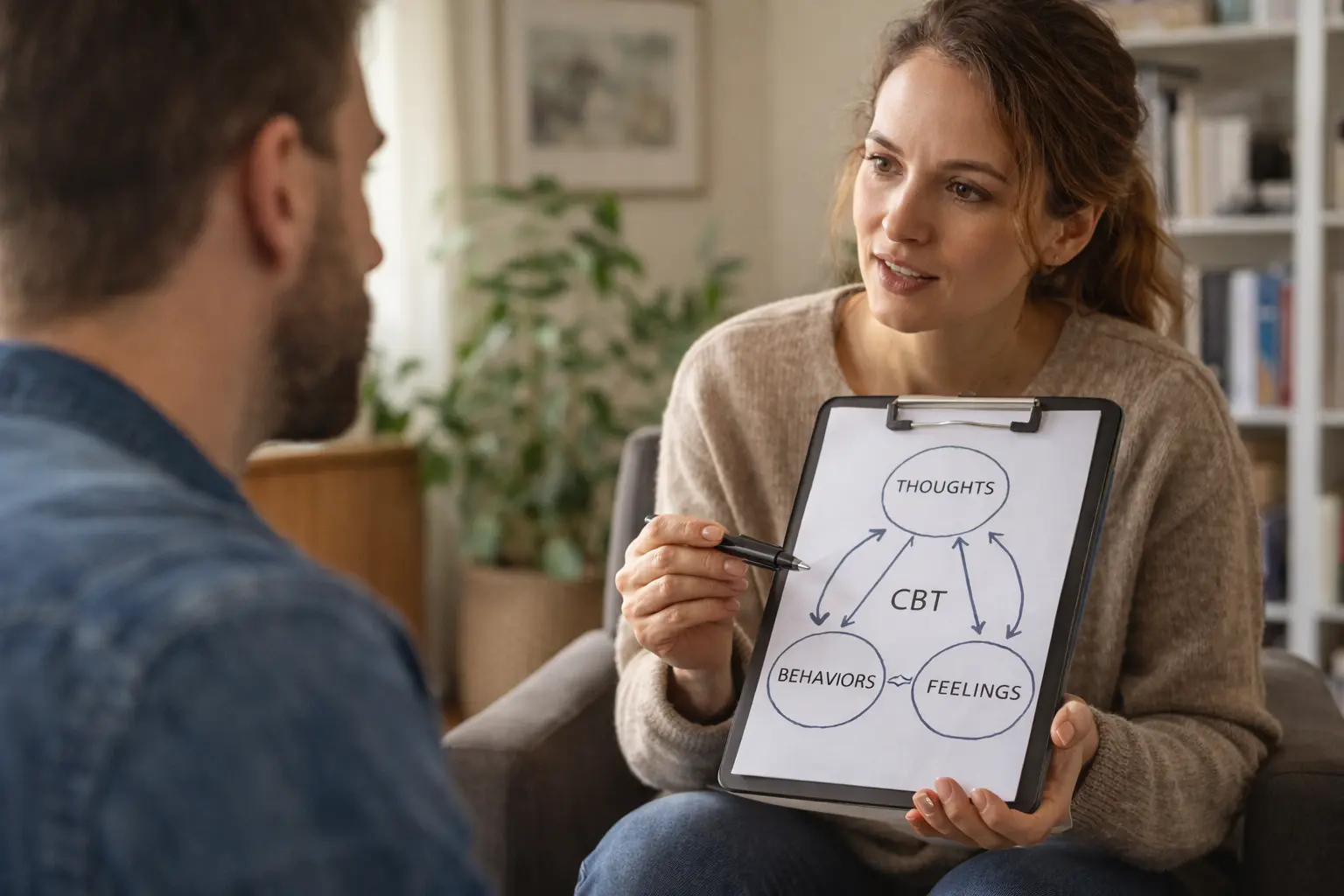
CBT works by revealing the hidden connection between what you think, how you feel, and what you do. Imagine you wake up late for work. Your automatic thought might be ‘I’m always irresponsible and everyone will judge me.’ That thought triggers anxiety and dread, which leads you to snap at colleagues or withdraw. CBT teaches you to catch that thought and ask: Is this actually true? What evidence do I have? By identifying these automatic negative patterns and replacing them with realistic, balanced thoughts, you build emotional resilience. Instead of ‘I’m always irresponsible,’ you might reframe it as ‘I overslept today, but I’ve been on time hundreds of times. One late morning doesn’t define me.’ This shift in thinking changes your emotional response and your behavior, creating a positive ripple effect throughout your day.
- Learn to recognize automatic negative thoughts the moment they appear
- Practice reframing negative beliefs into balanced, realistic affirmations
- Utilize behavioral experiments to test and modify unhelpful thought patterns
Setting realistic goals in CBT
Large, vague goals like ‘be less anxious’ or ‘feel better’ often leave you feeling stuck because you can’t measure progress. CBT flips this by breaking overwhelming objectives into concrete, achievable steps. Say you struggle with social anxiety and want to ‘be more confident.’ That’s too broad. Instead, you might set a goal to attend one social gathering this month, then initiate one conversation with someone new, then ask a follow-up question to keep the conversation going. Each small win builds momentum and proves to yourself that change is possible. You track what you did, how you felt before and after, and what you learned. This creates a clear roadmap and gives you tangible evidence of progress. Women often underestimate how powerful celebrating small wins feels – it rewires your brain to notice what you’re doing right instead of fixating on what’s wrong.
📘 Fix your day in under 2 minuteschoose where to begin:
Building healthy coping strategies
Stress and anxiety don’t disappear overnight, but CBT gives you a toolkit to handle them when they show up. Instead of reaching for avoidance or numbing behaviors, you learn practical techniques that work in real time. Deep breathing slows your nervous system when panic creeps in. Progressive muscle relaxation helps you notice where you hold tension and release it. Mindfulness teaches you to observe anxious thoughts without believing them or acting on them. For example, if you’re spiraling about a work presentation, instead of catastrophizing or calling in sick, you might pause, take five deep breaths, name three things you can see, and remind yourself that you’ve given presentations before. These aren’t quick fixes, but they’re skills you can use anywhere, anytime. Over time, your brain learns that you can handle discomfort without falling apart, which gradually reduces the intensity of anxiety itself.
Enhancing self-compassion through CBT
Most women have an inner critic that’s relentless. You make one mistake and suddenly you’re replaying it for days, telling yourself you’re stupid or worthless. CBT addresses this by building self-compassion into your thinking patterns. Instead of harsh self-judgment, you learn to talk to yourself the way you’d comfort a good friend. If a friend failed an exam, you wouldn’t say ‘You’re a failure.’ You’d say ‘This is tough, but one exam doesn’t define you. Let’s figure out what happened and how to move forward.’ That’s the tone you practice turning inward. Self-compassion isn’t about making excuses or lowering your standards. It’s about treating yourself with the same kindness and understanding you naturally extend to others. This shift reduces shame, which is often the fuel that keeps anxiety and depression running. When you stop punishing yourself mentally, you free up energy to actually solve problems and grow.
Empowering women through CBT practices
CBT isn’t about positive thinking or forcing yourself to feel happy. It’s about taking an honest look at your thoughts, testing whether they’re actually true, and choosing responses that serve you better. You learn that you’re not powerless to your emotions or circumstances. You have agency. When you challenge a limiting belief like ‘I’m not smart enough for that promotion,’ you gather evidence. Maybe you’ve completed complex projects, received praise from colleagues, or solved difficult problems. That evidence contradicts the belief. You don’t erase the doubt entirely, but you build a more realistic perspective. This practice extends to all areas of your life. You stop waiting for confidence to appear before taking action. You act, gather evidence that you can handle it, and confidence follows. Over weeks and months, this compounds. You realize you’ve been holding yourself back with stories that weren’t even true. That realization is powerful and liberating.
Cognitive behavioral therapy empowers women to reframe negative thoughts, set achievable goals, build healthy coping strategies, practice self-compassion, and take charge of their mental well-being.
How long does CBT take to show results?
The effectiveness of CBT varies depending on individual circumstances. Typically, noticeable improvements can be seen within 12 to 20 sessions, but some individuals may experience positive changes sooner.
Is CBT suitable for all women?
CBT is a versatile therapy that can benefit women of all ages and backgrounds. It is important to seek guidance from a qualified mental health professional to determine if CBT is the right approach for your specific needs.
Others also read:
Disclaimer: This article is for informational purposes only and is not a substitute for professional medical advice. Always consult a healthcare professional for personal guidance.
This guide has been prepared and reviewed by the GlobalHealthBeacon editorial team and reflects current medical research as of 2026. It provides structured, evidence-based information to support informed health decisions.
← Go to the cognitive behavioral therapy explained main guide

