You’re lying awake at 3 AM replaying conversations from decades ago, your chest tight with worry about things you can’t control, feeling like your mind has become your enemy instead of your ally, and cognitive behavioral therapy explained might just be the breakthrough you’ve been desperately needing.
Understanding cognitive behavioral therapy (CBT)
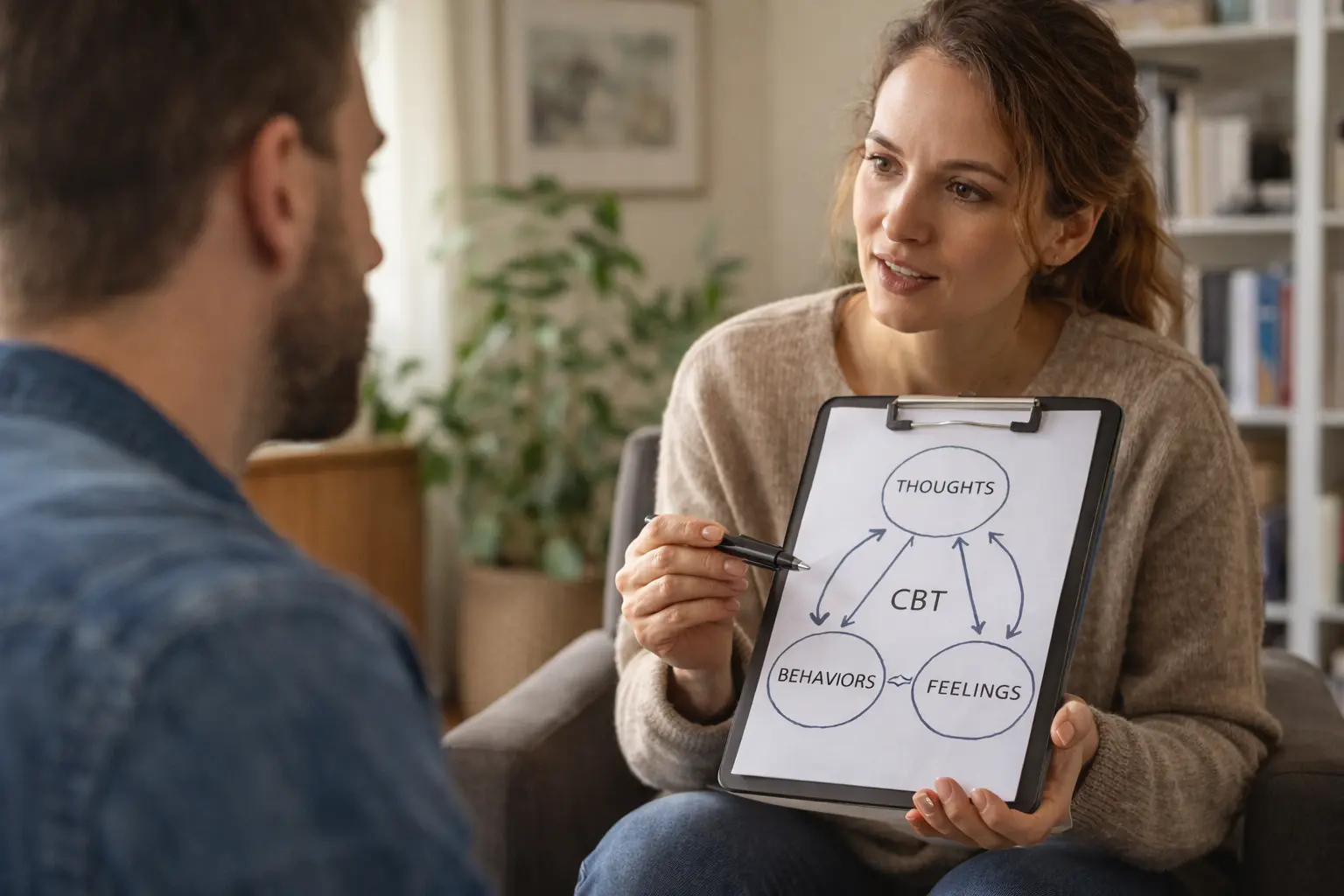
CBT is a type of psychotherapy that helps you take back control by changing how you think and behave. Imagine your thoughts as a old habit you’ve practiced for years without realizing it. CBT works by identifying and challenging those negative thought patterns that have become automatic. For instance, if you catch yourself thinking ‘I’m too old to learn new things,’ a therapist helps you examine that belief, question where it came from, and replace it with something more realistic. The therapy focuses on the connection between your thoughts, feelings, and behaviors. When you change one, the others follow. It’s goal-oriented and practical, offering you specific strategies to manage stress, anxiety, and life transitions. Rather than diving deep into your past, CBT keeps you focused on what’s happening now and what you can do about it.
- CBT helps individuals understand the connection between thoughts, feelings, and behaviors.
- This therapy equips individuals with practical skills to cope with stress and life challenges.
- CBT is goal-oriented, focusing on specific issues and offering strategies for improvement.
How CBT can benefit seniors
For seniors, CBT becomes especially valuable when navigating anxiety about health changes, depression after loss, or the grief that comes with major life transitions. Picture Margaret, a 72-year-old widow who found herself isolated after her husband passed. Her mind convinced her that nobody wanted to hear from her, that she was a burden. Through CBT, she learned to recognize these distorted thoughts and challenge them with evidence from her actual life. She reconnected with friends and discovered new hobbies. By addressing cognitive distortions and promoting positive thinking patterns, seniors can enhance their overall psychological well-being. CBT also helps you develop resilience, giving you tools to bounce back from setbacks and face aging with more confidence and grace. The beauty is that these skills stay with you for life.
💬 Ready to feel better in 2 minutes?choose where to begin:
Practical tips for seniors starting CBT
Starting CBT requires a shift in mindset, but it’s absolutely worth it. First, approach therapy with genuine openness. You might feel skeptical at first, wondering if talking about your thoughts will really change anything. Give it time. Second, communicate openly with your therapist about everything, even the uncomfortable stuff. If a strategy isn’t working, say so. Your therapist needs honest feedback to help you. Third, practice the skills you learn between sessions. This is where the real magic happens. If your therapist teaches you a thought-challenging exercise, do it daily. Write down your anxious thoughts and practice reframing them. Fourth, be patient with yourself. Change doesn’t happen overnight, but consistency builds momentum. Many seniors report noticing shifts in their mood and outlook within four to eight weeks of regular practice.
Real stories of seniors thriving with CBT
James, 68, struggled with panic attacks that kept him homebound. He convinced himself that leaving the house would trigger another attack. His therapist helped him gradually face his fears while teaching him breathing techniques and realistic thinking. Within three months, he was traveling again. Dorothy, 75, battled persistent sadness after retirement, feeling like her life had lost purpose. CBT helped her identify new meaningful activities and challenge the belief that her worth depended on her career. She now volunteers at a local literacy program and feels more alive than she has in years. These aren’t miraculous transformations. They’re real people doing the hard work of examining their thoughts and choosing different responses. Their journeys show that it’s never too late to reshape how you experience your life. Many seniors find CBT to be profoundly transformative, helping them navigate life’s ups and downs with resilience and grace.
Cognitive Behavioral Therapy (CBT) offers seniors a practical approach to addressing negative thought patterns and behaviors. By understanding the connections between thoughts, emotions, and actions, seniors can gain valuable skills to improve their psychological well-being and cope with life’s challenges effectively.
How long does CBT treatment typically last?
The duration of CBT treatment varies based on individual needs and goals. Some individuals may see progress in a few sessions, while others may benefit from longer-term therapy.
Is CBT suitable for all seniors?
CBT can be beneficial for many seniors, especially those dealing with anxiety, depression, or stress. However, it’s essential to consult with a mental health professional to determine the best treatment approach for individual needs.
Others also read:
Disclaimer: This article is for informational purposes only and is not a substitute for professional medical advice. Always consult a healthcare professional for personal guidance.
This article presents an experience-based perspective and has been reviewed by the GlobalHealthBeacon editorial team in 2026. It provides structured, evidence-based information to support informed health decisions.
← Back to the main cognitive behavioral therapy explained page

