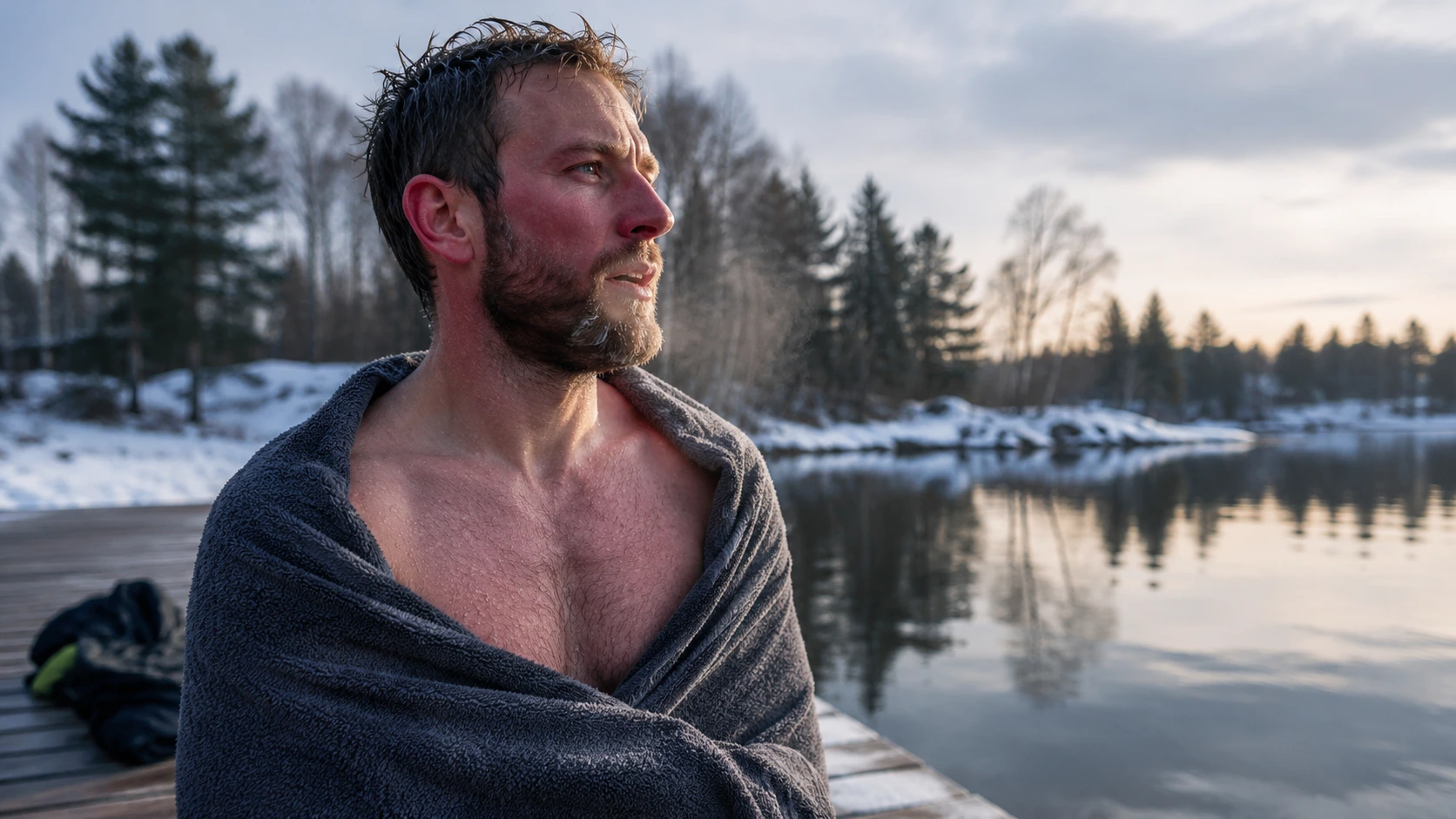
You’re scrolling through fitness content and keep seeing people rave about ice baths and cold showers, but you have no idea if cold exposure health effects are actually worth the discomfort or just another wellness trend designed to make you miserable.
Understanding cold reception in the body
When you step into a cold environment, your body doesn’t just shiver and hope for the best. Instead, a sophisticated survival mechanism kicks in almost instantly. Your nervous system detects the temperature drop through specialized receptors in your skin, triggering what scientists call thermogenesis, the process of generating heat. Picture this: you jump into a cold pool and within seconds, your blood vessels near the skin’s surface constrict, pulling blood away from your extremities and toward your vital organs to preserve core temperature. Simultaneously, your muscles begin to contract rhythmically in what we call shivering, which generates heat through rapid muscle activity. This isn’t random movement, it’s your body’s emergency heating system. Young adults typically experience this response more efficiently than older populations because their thermoregulatory systems are still operating at peak capacity. Understanding this cascade helps explain why cold exposure feels so intense at first but why your body adapts over time.
Effects on metabolism and energy production
Here’s where cold exposure gets interesting for anyone thinking about body composition. When your body works to maintain its core temperature in cold conditions, it burns significantly more calories than it would at rest in a warm environment. Imagine sitting in a cold room versus a warm one, doing absolutely nothing else. Your metabolic rate increases because your body is essentially running overtime to keep you alive. Research has shown that even brief cold exposure can elevate energy expenditure for hours afterward, a phenomenon called the afterburn effect. For young adults, this metabolic boost happens because your body mobilizes stored energy reserves to fuel heat production. Some studies suggest that regular cold exposure might increase resting metabolic rate over time, meaning you burn more calories even when you’re not in the cold. However, the magnitude of this effect varies considerably between individuals based on genetics, fitness level, and how accustomed your body is to cold. It’s not a magic weight loss solution, but it is a measurable physiological response worth understanding.
Adaptation and potential long-term benefits
If you expose yourself to cold regularly, something remarkable happens inside your body. You develop what scientists call cold tolerance, and your physiology actually changes at the cellular level. One of the most exciting adaptations involves brown adipose tissue, or brown fat, which is metabolically active and burns calories to generate heat. Young adults who practice regular cold exposure show increased brown fat activation, which could theoretically support better metabolic health over time. Think of it like training a muscle, except you’re training your body’s heat-generating machinery. Some research suggests these adaptations might have implications for managing metabolic conditions, though this area still needs more rigorous study. Your body also becomes more efficient at regulating blood flow and managing stress hormones like cortisol. Over weeks and months of consistent exposure, you might notice you feel less cold, recover faster from cold exposure, and experience improved circulation. The key word here is gradual. Your body adapts best when challenged incrementally, not shocked into submission.
- Start with brief cold exposure lasting just 30 seconds to 2 minutes, such as finishing your shower with 30 seconds of cold water, allowing your body to acclimate without overwhelming your system.
- Track how your body responds by noting your heart rate, breathing patterns, and overall comfort level after each session, adjusting duration and intensity based on what feels manageable.
- Speak with a doctor or healthcare provider before beginning any cold exposure routine, especially if you have cardiovascular conditions, high blood pressure, or other health concerns that might be affected.
🔬 Science-backed benefits in 2 minuteschoose where to begin:
Impact on immune system function
One of the most popular claims about cold exposure is that it supercharges your immune system, and there’s actually some science behind this idea. When you expose yourself to cold, your body releases stress hormones like adrenaline and noradrenaline, which trigger immune cells to mobilize. Studies have shown that people who regularly practice cold exposure sometimes show increased white blood cell counts and enhanced immune response markers in their blood. However, here’s the nuance that matters: the effect is real but modest, and it varies dramatically between individuals. Some young adults show robust immune enhancement from cold exposure, while others show minimal changes. Additionally, the immune boost appears to be temporary and specific to certain types of immune function. Chronic stress from excessive cold exposure without proper recovery could actually suppress immune function, so more is not necessarily better. The relationship between cold exposure and immunity is bidirectional, meaning your overall health status, sleep quality, and stress levels all influence whether cold exposure helps or hinders your immune system.
Potential risks and precautions
Cold exposure isn’t risk-free, and understanding the dangers is just as important as understanding the benefits. Hypothermia, where your core body temperature drops dangerously low, is a real concern with prolonged exposure, though it’s rare in controlled settings like cold showers or ice baths. Frostbite, the freezing of skin and tissue, can occur with extreme cold or extended exposure. Beyond these acute risks, cold exposure can trigger sudden increases in blood pressure and heart rate, which poses genuine danger for anyone with cardiovascular conditions. Young adults with undiagnosed heart issues might not realize cold exposure is stressing their system. Raynaud’s phenomenon, a condition affecting blood flow to extremities, can be severely aggravated by cold exposure. Additionally, repeated cold exposure without adequate recovery can elevate cortisol chronically, potentially undermining sleep quality and recovery. The safest approach involves starting conservatively, monitoring your body’s signals carefully, and consulting a healthcare provider before incorporating cold exposure into your routine, particularly if you have any existing health conditions.
Conclusion: The complex response to cold exposure
Cold exposure triggers a cascade of physiological responses that ripple through multiple systems in your body simultaneously. Your nervous system activates, your metabolism shifts, your immune cells mobilize, and your cardiovascular system responds to the challenge. Whether these responses benefit you depends on numerous factors: your genetics, your current fitness level, your overall health status, how you approach cold exposure, and how consistently you practice it. The science shows that cold exposure can produce measurable changes in metabolism, immune function, and brown fat activity, but these changes are modest and highly individual. For young adults, cold exposure represents an interesting tool for understanding your body’s capabilities and potentially supporting metabolic health, but it’s not a replacement for fundamentals like sleep, nutrition, and consistent exercise. The most important takeaway is that cold exposure works best as part of a comprehensive health strategy, approached gradually and with awareness of your body’s signals. Understanding the mechanisms helps you make informed decisions about whether this practice aligns with your goals and health status.
Cold exposure activates your body’s heat-generating systems through thermogenesis and can increase metabolism and energy expenditure. Regular exposure may enhance brown fat activity and immune function, though individual responses vary significantly. While cold exposure offers potential metabolic benefits, it carries risks including hypothermia and cardiovascular stress, requiring careful approach and medical consultation for those with existing health conditions.
Can cold exposure help with weight loss?
Cold exposure increases metabolic rate and energy expenditure as your body works to maintain core temperature, which can contribute to calorie burning. However, the effect is modest and varies between individuals. It works best as part of a comprehensive approach including nutrition and exercise, not as a standalone weight loss strategy.
Is cold exposure safe for everyone?
Cold exposure can be beneficial for many young adults, but it carries risks for those with cardiovascular conditions, high blood pressure, Raynaud’s phenomenon, or other health concerns. Always consult with a healthcare provider before starting a cold exposure regimen, especially if you have any existing medical conditions or take medications affecting heart function.
Others also read:
Disclaimer: This article is for informational purposes only and is not a substitute for professional medical advice. Always consult a healthcare professional for personal guidance.
This article has been prepared and reviewed by the GlobalHealthBeacon editorial team and is based on current medical research and published scientific literature available in 2026. It provides structured, evidence-based information to support informed health decisions.
