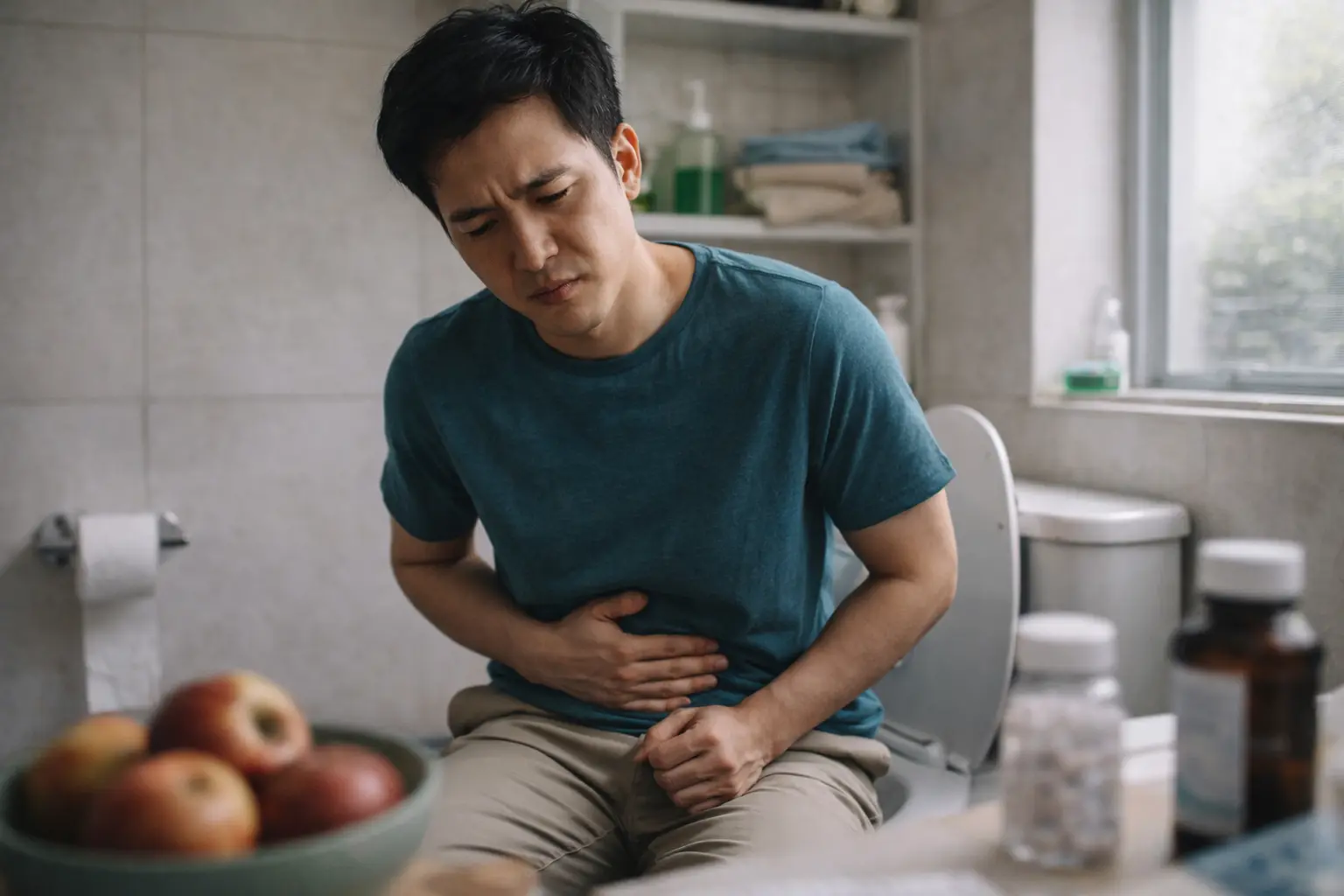
That stuck, bloated feeling that won’t budge for days, the constant discomfort that makes you question what you ate, the frustration of constipation causes explained finally makes sense when you understand how your female body actually works.
Digestive process in women
Your digestive system is far more complex than a simple food-to-waste pipeline. In women, the journey food takes through your body involves intricate coordination between your stomach, small intestine, colon, and pelvic floor muscles. Unlike men, whose digestive tracts follow a relatively straightforward path, women’s reproductive anatomy creates a unique spatial arrangement. Your uterus, ovaries, and fallopian tubes occupy space in your pelvic cavity, which means your colon has to navigate around these structures. This anatomical reality becomes especially relevant during certain phases of your menstrual cycle when these organs shift and change. Additionally, women typically have longer colons than men, which means food waste has a longer journey to complete. This extended pathway, combined with hormonal influences that affect muscle contractions throughout your digestive tract, creates a distinctly female digestive experience. Understanding this foundation helps explain why constipation patterns in women often differ significantly from those experienced by men, and why timing matters so much.
Impact of hormones
Your menstrual cycle doesn’t just affect your mood or energy levels; it fundamentally alters how your digestive system functions. Progesterone, which rises during the luteal phase of your cycle, acts like a natural muscle relaxant. While this hormone helps prepare your uterus for potential pregnancy, it simultaneously relaxes the smooth muscles lining your colon. When those muscles relax, they contract less efficiently, slowing the movement of stool through your intestines. This is why many women notice constipation intensifies in the week or two before their period arrives. Estrogen plays a supporting role in this hormonal dance, affecting water retention and electrolyte balance in your gut. Some women experience a dramatic shift: loose stools during ovulation when estrogen peaks, then constipation during the luteal phase when progesterone dominates. If you use hormonal birth control, you’re introducing synthetic versions of these hormones year-round, which can either improve or worsen constipation depending on the formulation and your individual response. Tracking your symptoms alongside your cycle often reveals these patterns clearly.
Muscle coordination
Your pelvic floor is a hammock-shaped group of muscles that supports your bladder, uterus, and bowel. These muscles do far more than you might realize; they’re essential for controlling when and how you have bowel movements. During defecation, your pelvic floor muscles must relax and lengthen to allow stool to pass, while your abdominal muscles contract to create the necessary pressure. If your pelvic floor muscles are too tight, too weak, or poorly coordinated, this delicate balance breaks down. Pregnancy, childbirth, chronic straining, and simply aging can weaken these muscles over time. Some women develop pelvic floor dysfunction where the muscles remain chronically tense, creating a paradoxical situation where they’re too tight to relax properly during bowel movements. This condition, sometimes called anismus, can feel like you’re trying to pass stool but your muscles won’t cooperate. Physical therapy focused on pelvic floor retraining has helped many women restore proper muscle coordination and resolve constipation that didn’t respond to dietary changes alone. The key is learning to both strengthen and relax these muscles appropriately.
- Practice pelvic floor exercises like Kegels, but focus equally on relaxation techniques such as deep breathing and gentle stretching to avoid creating excessive tension.
- Maintain healthy body weight to reduce unnecessary pressure on your pelvic floor muscles and improve overall digestive function.
- Stay consistently hydrated by drinking water throughout the day and consume fiber-rich foods gradually to allow your digestive system to adapt without overwhelming it.
🔬 Science-backed benefits in 2 minuteschoose where to begin:
Dietary factors
What you eat directly influences how your colon functions, and women often face unique dietary challenges. Many women unconsciously restrict calories or certain food groups, which can inadvertently reduce fiber intake below optimal levels. Fiber acts like a broom for your digestive system, adding bulk to stool and stimulating the muscle contractions that move waste through your colon. The recommended daily fiber intake is 25 grams for women, yet the average woman consumes only 15 grams. Beyond fiber, hydration matters enormously; your colon reabsorbs water from stool, and if you’re not drinking enough water, stool becomes hard and difficult to pass. Processed foods, which dominate many women’s diets due to convenience and time constraints, typically contain minimal fiber and excessive sodium, which further dehydrates your system. Dairy products affect some women differently than others; while not universally problematic, they can slow digestion in certain individuals. The solution isn’t restrictive dieting but rather gradually increasing whole grains, vegetables, fruits, and legumes while monitoring how your body responds. A food diary often reveals surprising patterns about which foods trigger constipation for you personally.
Lifestyle habits
Constipation rarely stems from a single cause; instead, it usually results from multiple lifestyle factors working together. A sedentary lifestyle significantly slows digestion because physical movement stimulates intestinal contractions. Women who sit for extended periods at work, in cars, or at home experience noticeably slower bowel movements compared to those who move regularly. Stress and anxiety directly impact your gut through the gut-brain axis; when you’re stressed, your nervous system shifts into fight-or-flight mode, which diverts resources away from digestion and slows intestinal movement. Many women also suppress their natural urge to have bowel movements due to time constraints, embarrassment, or lack of privacy, which trains their body to ignore these signals over time. Certain medications including iron supplements, pain relievers, and antidepressants commonly cause constipation as a side effect. Sleep deprivation disrupts your circadian rhythm and digestive hormones, making constipation more likely. The encouraging news is that these factors are largely within your control; adding 30 minutes of movement most days, practicing stress-reduction techniques like meditation or yoga, and honoring your body’s signals can create meaningful improvements without medication.
Seeking professional advice
While dietary and lifestyle changes resolve constipation for many women, persistent symptoms warrant professional evaluation. A healthcare provider can determine whether your constipation stems from a medical condition like irritable bowel syndrome, thyroid dysfunction, or structural issues that require specific treatment. They can also review your medications to identify whether any are contributing to your symptoms and suggest alternatives if necessary. Some women experience constipation related to conditions like endometriosis or pelvic adhesions from previous surgery, which require specialized approaches. If you’ve experienced a significant change in your bowel habits, notice blood in your stool, experience severe abdominal pain, or have constipation lasting more than three weeks despite lifestyle modifications, professional evaluation becomes important. A gastroenterologist or colorectal specialist can perform tests if needed and rule out serious underlying conditions. Additionally, pelvic floor physical therapists offer specialized expertise that general practitioners may not provide. Rather than viewing professional consultation as a last resort, consider it a valuable tool for understanding your unique body and accessing targeted solutions that work specifically for your situation.
Female physiology creates a distinctive digestive landscape shaped by hormonal fluctuations, anatomical considerations, muscle coordination, dietary patterns, and lifestyle habits. Recognizing how your menstrual cycle influences constipation, understanding your pelvic floor’s crucial role, and making informed dietary and lifestyle choices empowers you to address constipation at its source rather than simply managing symptoms. Your body’s signals matter, and paying attention to patterns helps you identify which factors most significantly affect your bowel regularity.
Can hormonal birth control cause constipation in women?
Some women experience constipation as a side effect of hormonal birth control because synthetic hormones affect digestive muscle contractions and water retention. The specific formulation matters; some types cause constipation while others don’t. If you suspect your birth control is contributing to constipation, discuss alternative formulations with your healthcare provider rather than stopping medication without guidance.
Are there specific foods that can worsen constipation in women?
Highly processed foods, refined grains like white bread and pasta, and low-fiber options can significantly slow digestion. Some women find that dairy products, red meat, and foods high in fat worsen constipation, though individual responses vary considerably. Including fiber-rich fruits, vegetables, whole grains, and legumes while gradually increasing water intake typically promotes regular bowel movements more effectively than eliminating specific foods.
Others also read:
Disclaimer: This article is for informational purposes only and is not a substitute for professional medical advice. Always consult a healthcare professional for personal guidance.
This article has been prepared and reviewed by the GlobalHealthBeacon editorial team and is based on current medical research and published scientific literature available in 2026. It provides structured, evidence-based information to support informed health decisions.
