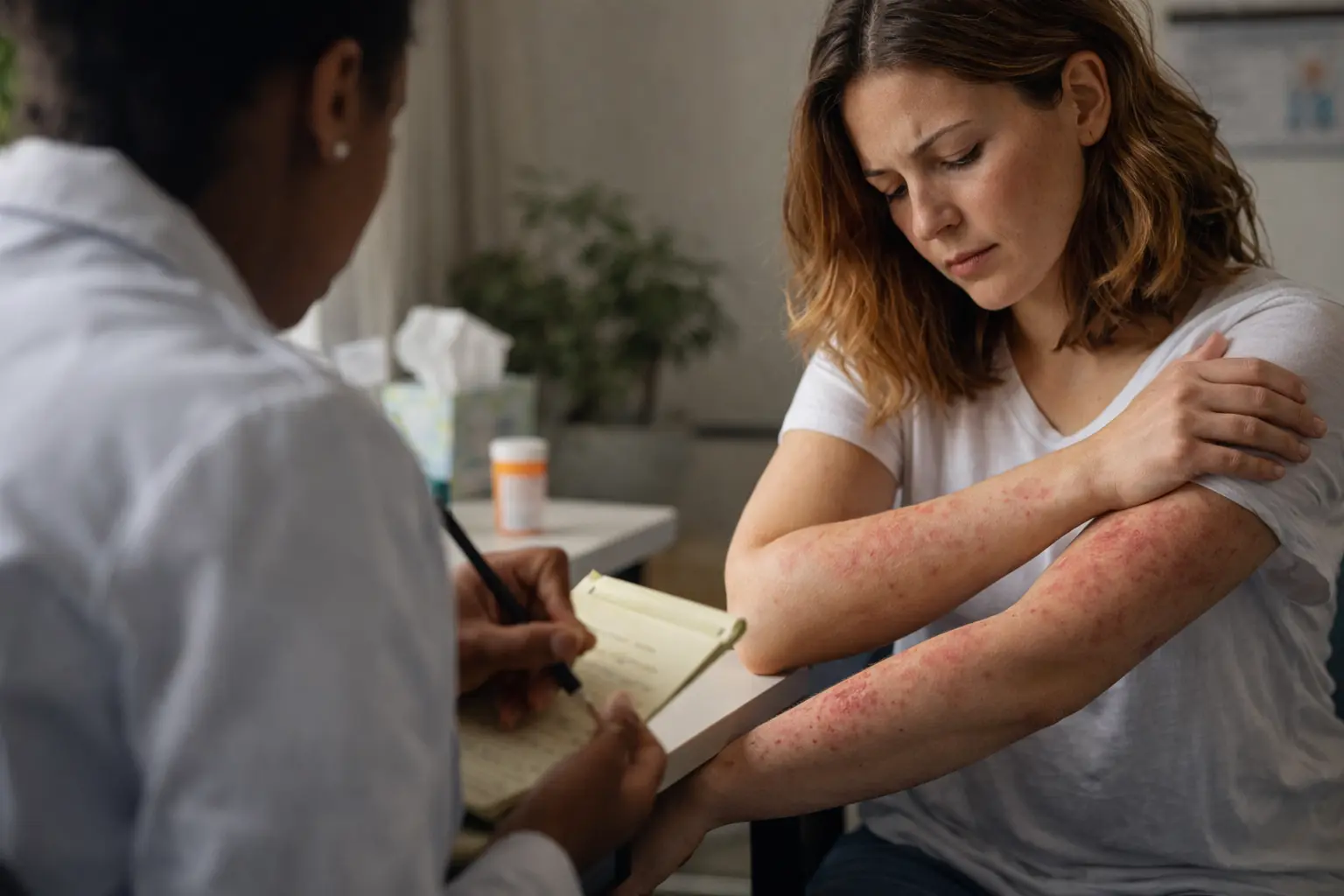
Your skin suddenly erupts in an angry red rash, itching like crazy, and you have no idea if you touched something irritating or if your body is having an allergic meltdown – understanding contact dermatitis versus allergy could be the difference between relief and months of frustration.
Understanding contact dermatitis
Contact dermatitis represents a localized inflammatory response that occurs when your skin makes direct contact with a substance that either irritates it chemically or triggers an allergic reaction at the point of contact. Picture this: you put on a new piece of jewelry, and within hours, the skin underneath turns red and starts itching intensely. That’s contact dermatitis in action. The condition develops because your skin barrier encounters something it perceives as harmful, whether that’s a harsh chemical like bleach, a fragrance in a new lotion, nickel from jewelry, or even natural plant oils from poison ivy. The reaction typically appears only where the skin touched the offending substance, creating a distinct pattern. Common culprits include soaps, detergents, certain cosmetics, latex gloves, and adhesive bandages. For seniors, this becomes particularly relevant because aging skin has a thinner outer layer and may react more readily to irritants that younger skin might tolerate.
Unraveling allergies
Allergies operate through a fundamentally different biological mechanism than contact dermatitis, involving your immune system’s recognition and response to specific allergens. When you have an allergy, your body mistakenly identifies a harmless substance as a threat and mounts a defensive response. This might happen when you eat shellfish and develop hives across your body, or when you breathe in pollen and your eyes swell. Unlike contact dermatitis, which stays localized to the contact area, allergic reactions can affect multiple body systems simultaneously. Your immune system releases histamine and other inflammatory chemicals that cause redness, swelling, itching, or hives that may appear far from the initial exposure point. An allergic reaction to peanuts, for example, could cause throat swelling or digestive upset, not just a skin rash. For older adults, understanding this distinction matters because allergies can sometimes worsen with age, and the body’s inflammatory response may take longer to resolve.
Differentiating the two conditions
Distinguishing between contact dermatitis and allergies requires careful observation and sometimes professional testing. Start by examining the pattern and location of your skin reaction. Contact dermatitis typically appears only where your skin made contact with the irritant, creating a clear boundary that matches the shape of the exposure. If you developed a rash only on your wrists after wearing a new watch, that’s a strong indicator of contact dermatitis. Allergic reactions, by contrast, often spread beyond the initial contact area or appear in unexpected locations. The timing also differs: contact dermatitis usually develops within minutes to hours of exposure, while allergic reactions might take longer to manifest. Keep a simple journal noting what you touched, ate, or were exposed to before the reaction appeared, along with where the rash developed and how it progressed. This detective work helps you and your doctor narrow down the cause. A dermatologist can perform a patch test, where small amounts of suspected allergens are applied to your skin under controlled conditions to see if a reaction develops. This test definitively identifies allergies but won’t necessarily reveal contact irritants. Treatment approaches differ significantly: contact dermatitis often improves simply by avoiding the irritant and using gentle moisturizers, while allergies may require antihistamines, corticosteroids, or other systemic medications.
- Observe the exact location and pattern of your skin reaction, noting whether it matches the shape of something you touched or appears in scattered areas.
- Document the timing of when the reaction appeared relative to potential exposures, including foods, new products, or environmental changes.
- Consult a dermatologist who can perform patch testing and examine your skin history to determine whether you’re dealing with contact dermatitis or an allergic response.
- Follow the prescribed treatment plan, which may involve simple avoidance strategies for contact dermatitis or medications for allergic reactions.
🔬 Science-backed benefits in 2 minuteschoose where to begin:
Managing symptoms
Symptom management begins with identifying and eliminating the trigger, but there’s more you can do to find relief while your skin heals. If you suspect contact dermatitis, immediately stop using the product or touching the substance that caused the reaction. Wash the affected area gently with cool water and mild, fragrance-free soap to remove any remaining irritant. Apply a fragrance-free moisturizer or soothing cream containing ingredients like colloidal oatmeal or ceramides to calm inflammation and restore your skin barrier. Many seniors find that cool, damp compresses provide immediate itch relief without medication. Avoid scratching, even though the itching can feel maddening, because breaking the skin opens the door to infection. Wear soft, breathable clothing that won’t further irritate the area. For allergic reactions, your doctor might recommend antihistamines to reduce itching and swelling, or topical corticosteroids to calm inflammation. In severe cases, oral corticosteroids may be necessary. Keep your fingernails trimmed short to minimize damage if you accidentally scratch during sleep. Most contact dermatitis resolves within two to three weeks once the irritant is removed, while allergic reactions may take longer depending on severity and treatment.
Seeking professional help
Knowing when to call your doctor separates minor skin irritations from conditions that need medical attention. You should reach out to a healthcare provider if your skin reaction persists beyond two weeks, covers a large area of your body, affects your face or genitals, or causes severe swelling or difficulty breathing. Difficulty breathing or throat swelling demands immediate emergency care, as these can indicate a serious allergic reaction. A dermatologist brings specialized expertise to the table, examining your skin under magnification and asking detailed questions about your exposure history, family allergies, and previous skin reactions. They can perform patch testing to identify specific allergens, take skin samples if infection is suspected, or refer you to an allergist for comprehensive allergy testing. For seniors, this professional evaluation becomes especially important because aging skin heals more slowly and is more prone to secondary infections if scratched. Your doctor can also rule out other conditions that mimic contact dermatitis or allergies, such as fungal infections, eczema, or autoimmune skin diseases. Don’t hesitate to seek help if you’re uncertain about what’s causing your reaction or if over-the-counter treatments aren’t working.
Preventive measures
Prevention truly is the most effective strategy for avoiding both contact dermatitis and allergic reactions. If you know you’re sensitive to certain substances, read product labels carefully and choose fragrance-free, hypoallergenic alternatives whenever possible. Wear protective gloves when handling chemicals, cleaning products, or gardening materials, but remember that latex gloves themselves can trigger reactions in sensitive individuals, so consider nitrile alternatives. Establish a consistent, gentle skincare routine using lukewarm water and mild cleansers, followed by moisturizer applied to damp skin to lock in hydration. This strengthens your skin barrier and makes it less reactive to irritants. Keep a list of known triggers and share it with family members and healthcare providers. If you’re prone to metal allergies, opt for jewelry made from surgical stainless steel, titanium, or gold rather than nickel-containing alloys. When trying new skincare products, cosmetics, or medications, introduce them one at a time and wait several days before adding another, so you can identify which product causes a reaction if one develops. Maintain good overall skin health through adequate hydration, sun protection, and avoiding excessive heat or cold exposure, which can compromise your skin barrier. For seniors, these preventive habits compound over time, reducing the cumulative irritation your skin experiences and lowering your risk of developing new sensitivities.
Contact dermatitis and allergies represent two distinct biological processes affecting your skin, though they can produce similar-looking symptoms. Contact dermatitis results from direct skin contact with an irritant or allergen and typically appears only at the contact site, while allergies involve your immune system and can cause widespread reactions. By learning to identify your triggers, understanding the differences between these conditions, and adopting preventive measures, you can significantly reduce flare-ups and manage symptoms more effectively. Professional evaluation from a dermatologist provides clarity and personalized treatment options tailored to your specific situation. For aging skin, this knowledge becomes increasingly valuable as your skin barrier naturally weakens with time.
What are common triggers for contact dermatitis?
Common triggers include soaps, detergents, certain metals like nickel, latex gloves, adhesive bandages, fragrances in cosmetics and lotions, and plants such as poison ivy, oak, or sumac. Identifying and avoiding these irritants can help prevent contact dermatitis flare-ups. For seniors, new products introduced to a long-standing skincare routine sometimes trigger unexpected reactions, so introducing changes gradually helps identify culprits.
Can allergies develop suddenly in older adults?
While allergies can technically develop at any age, they are less likely to appear for the first time in seniors. However, existing allergies can worsen over time due to cumulative exposure or changes in immune function, and aging skin may react more severely to allergens it previously tolerated. Additionally, new sensitivities can emerge in response to medications or environmental changes, requiring careful management to prevent complications and maintain skin health.
Others also read:
Disclaimer: This article is for informational purposes only and is not a substitute for professional medical advice. Always consult a healthcare professional for personal guidance.
This article has been prepared and reviewed by the GlobalHealthBeacon editorial team and is based on current medical research and published scientific literature available in 2026. It provides structured, evidence-based information to support informed health decisions.
← Back to the Main page on: contact dermatitis versus allergy
