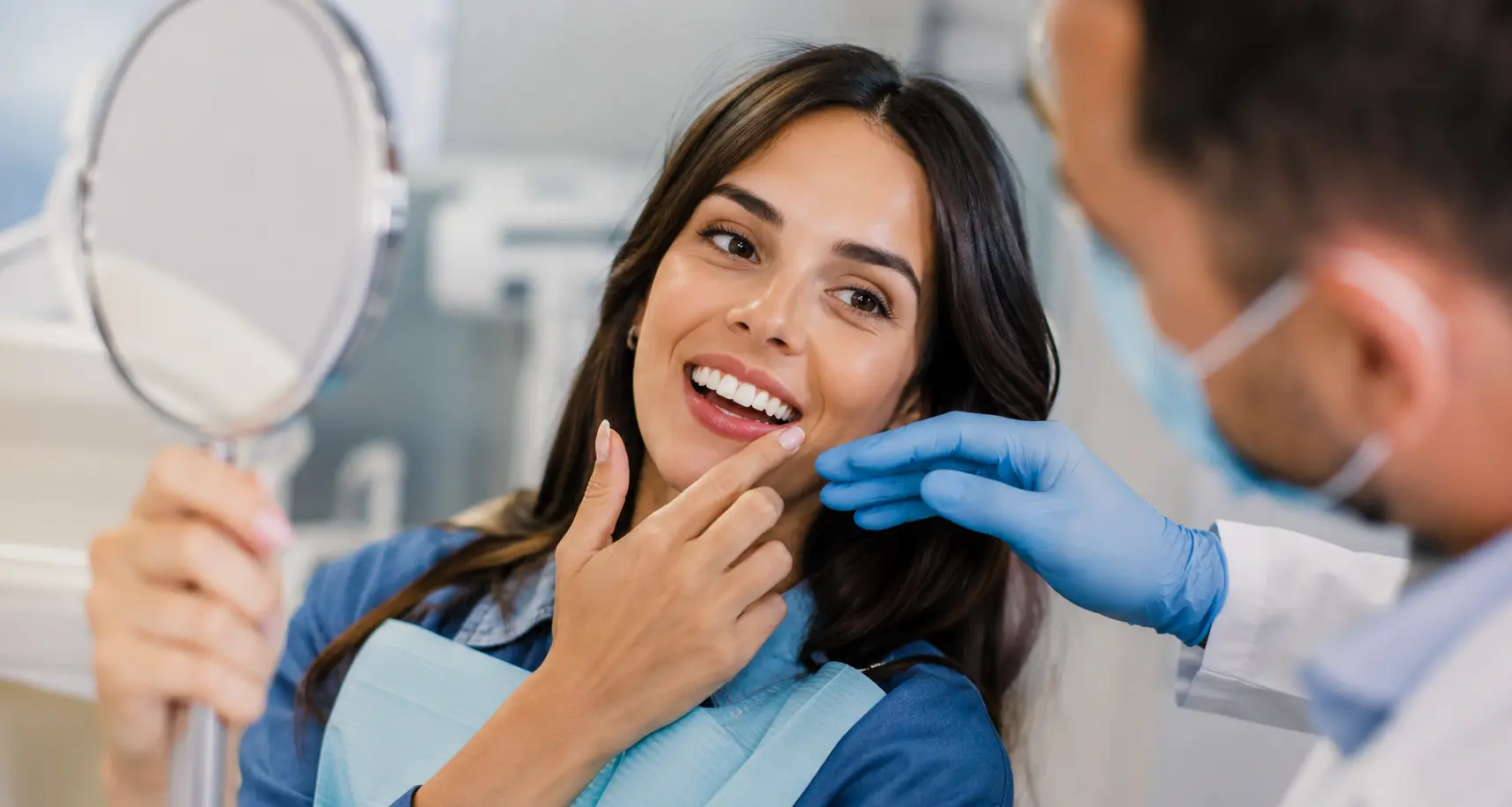
You’ve spent years hiding your smile in photos, and now there’s a whole arsenal of cutting-edge technology ready to transform not just your teeth but your confidence, and cosmetic dentistry trends are making it faster, smarter, and more personalized than ever before.
Artificial intelligence in smile enhancement
Artificial intelligence is fundamentally reshaping how cosmetic dentists approach smile design by moving beyond guesswork into precision personalization. When you sit down for a consultation, AI algorithms analyze your unique facial proportions, bone structure, lip shape, and even your skin tone to suggest treatment plans that actually complement your individual features rather than applying a one-size-fits-all approach. Consider Sarah, a 52-year-old woman who always felt her smile looked too wide for her face. Traditional dentistry might have recommended standard veneers, but AI analysis revealed that slightly narrower tooth proportions combined with specific shading would create harmony with her facial structure. The technology examines thousands of successful smile cases and identifies patterns that lead to natural-looking results. This means the smile you get isn’t just aesthetically pleasing in isolation, it’s designed to work with your specific face, your age, your skin texture, and even your personality. Dentists using AI report higher patient satisfaction because the technology helps bridge the gap between what patients imagine and what’s actually achievable.
Digital imaging for precise treatment planning
Digital imaging has transformed the consultation room from a place of uncertainty into a space where you can actually see your future smile before any work begins. Advanced software allows dentists to take high-resolution images of your teeth and face, then simulate multiple treatment scenarios in real time while you watch. Imagine sitting across from your dentist and seeing five different veneer designs, three shade options, and two different smile widths displayed on a screen showing exactly how each would look on your actual teeth and face. This isn’t fantasy or artistic interpretation, it’s precision visualization based on your specific anatomy. Women often appreciate this approach because it removes the anxiety of the unknown. You’re not trusting blindly in a dentist’s vision, you’re actively participating in the design process. The software can show you how a brighter shade might affect your overall appearance, how slightly longer teeth would change your smile’s proportions, or how a different tooth shape would complement your lip line. Common mistakes happen when patients don’t take advantage of this technology to ask questions and request adjustments before treatment begins. The digital preview stage is your opportunity to ensure the plan matches your expectations exactly.
Virtual smile design consultations
Virtual consultations have opened cosmetic dentistry to women who face barriers like time constraints, mobility challenges, or simply living far from specialized practitioners. You can now upload photos of your smile to a secure platform and receive expert analysis and recommendations from a cosmetic dentist without leaving your home. The process typically begins with you photographing your smile from multiple angles, then engaging in a detailed discussion about what you’d like to change and why. The dentist uses AI-powered assessment tools to evaluate your current smile, identify areas of concern, and discuss realistic options tailored to your goals and budget. Many women find this format less intimidating than in-person consultations because there’s time to think, ask questions without feeling rushed, and review recommendations at your own pace. The technology captures detailed information about your tooth color, alignment, shape, and how your smile relates to your facial features. Some practices even use video consultations where you can see the dentist’s recommendations in real time and ask clarifying questions. This remote approach has made cosmetic dentistry more accessible and less anxiety-inducing for many women who want expert guidance before committing to treatment.
- Schedule a virtual consultation with a cosmetic dentist by selecting your preferred time slot on their online platform.
- Upload clear photos of your smile from multiple angles, including front view, side profile, and full face shots to the secure patient portal.
- Engage in a personalized discussion via video or messaging where the dentist reviews your photos, discusses your smile goals, and presents AI-generated treatment options with detailed explanations of each approach.
🔬 Science-backed benefits in 2 minuteschoose where to begin:
3D printing for customized restorations
3D printing technology has revolutionized how dental restorations are created by moving from generic molds to perfectly customized pieces designed specifically for your mouth. When you need crowns, veneers, or other restorations, the dentist uses digital scans of your teeth to create a precise 3D model, which is then printed layer by layer in biocompatible materials. This means your restoration isn’t just close to fitting your tooth, it’s engineered to fit your exact tooth down to microscopic details. Women appreciate this precision because it means fewer adjustments, better comfort, and restorations that feel natural rather than bulky or foreign. The process also allows dentists to create restorations with natural-looking variations in shade and texture that match your existing teeth perfectly. A common mistake is assuming all crowns and veneers are created equally, but 3D-printed restorations offer superior fit, longevity, and aesthetic results compared to traditional methods. The technology also reduces the number of office visits needed because the restoration is right the first time. The precision of 3D printing means less grinding of healthy tooth structure, less discomfort during fitting, and faster completion of your smile transformation.
Augmented reality for smile simulation
Augmented reality takes smile visualization one step further by overlaying digital smile designs directly onto your face in real time, allowing you to see exactly how your new smile will look from every angle and in different lighting conditions. Using your smartphone or a tablet in the dentist’s office, AR technology projects your potential new smile onto your actual face, showing how different tooth shapes, sizes, and shades would appear when you’re smiling, talking, or laughing. This interactive experience helps you understand the transformation in a way that 2D photos simply cannot capture. Many women find this approach incredibly reassuring because you’re not imagining the result, you’re seeing it. You can request adjustments on the spot, ask to see alternative designs, and make confident decisions about your treatment. The technology also helps you visualize how your smile will look in different contexts, from professional photos to casual moments with family. Some practices even allow you to record videos of your simulated smile so you can review it at home and discuss it with loved ones before committing to treatment. This removes much of the anxiety and uncertainty that traditionally accompanies cosmetic dental decisions.
The future of cosmetic dentistry
The convergence of AI, digital imaging, 3D printing, and augmented reality is creating a future where cosmetic dentistry becomes increasingly personalized, predictable, and patient-centered. These technologies are not replacing dentists, they’re amplifying their expertise by providing tools that enhance precision, improve communication, and deliver superior results. Women entering cosmetic dentistry today benefit from a completely different experience than previous generations. You’re not hoping your smile turns out well, you’re seeing it designed specifically for you before treatment begins. The future likely holds even more sophisticated AI that can predict how your smile will age, how it will look in different lighting, and how it will complement changes in your face over time. Virtual reality consultations may become standard, allowing you to experience your new smile in immersive detail before any treatment. The field is moving toward a model where technology handles the technical precision while dentists focus on artistry, patient care, and ensuring your experience is comfortable and empowering. For women considering cosmetic dentistry, this evolution means you have more control, more information, and more confidence in your decisions than ever before.
Discover how AI and digital design technologies are revolutionizing cosmetic dentistry, from personalized smile enhancements to virtual consultations and 3D printing for customized restorations. Augmented reality is also changing the way patients visualize their smile transformations, heralding a bright future for the field.
How does AI benefit cosmetic dentistry procedures?
AI enhances cosmetic dentistry by analyzing facial features, suggesting personalized treatment plans, and achieving natural-looking smiles that complement individual facial structures.
What role does 3D printing play in cosmetic dentistry?
3D printing technology enables the production of customized dental restorations with exceptional precision, ensuring perfect fits for patients’ unique dental anatomy in cosmetic dentistry.
Others also read:
Disclaimer: This article is for informational purposes only and is not a substitute for professional medical advice. Always consult a healthcare professional for personal guidance.
This article has been prepared and reviewed by the GlobalHealthBeacon editorial team and is based on current medical research and published scientific literature available in 2026. It provides structured, evidence-based information to support informed health decisions.
