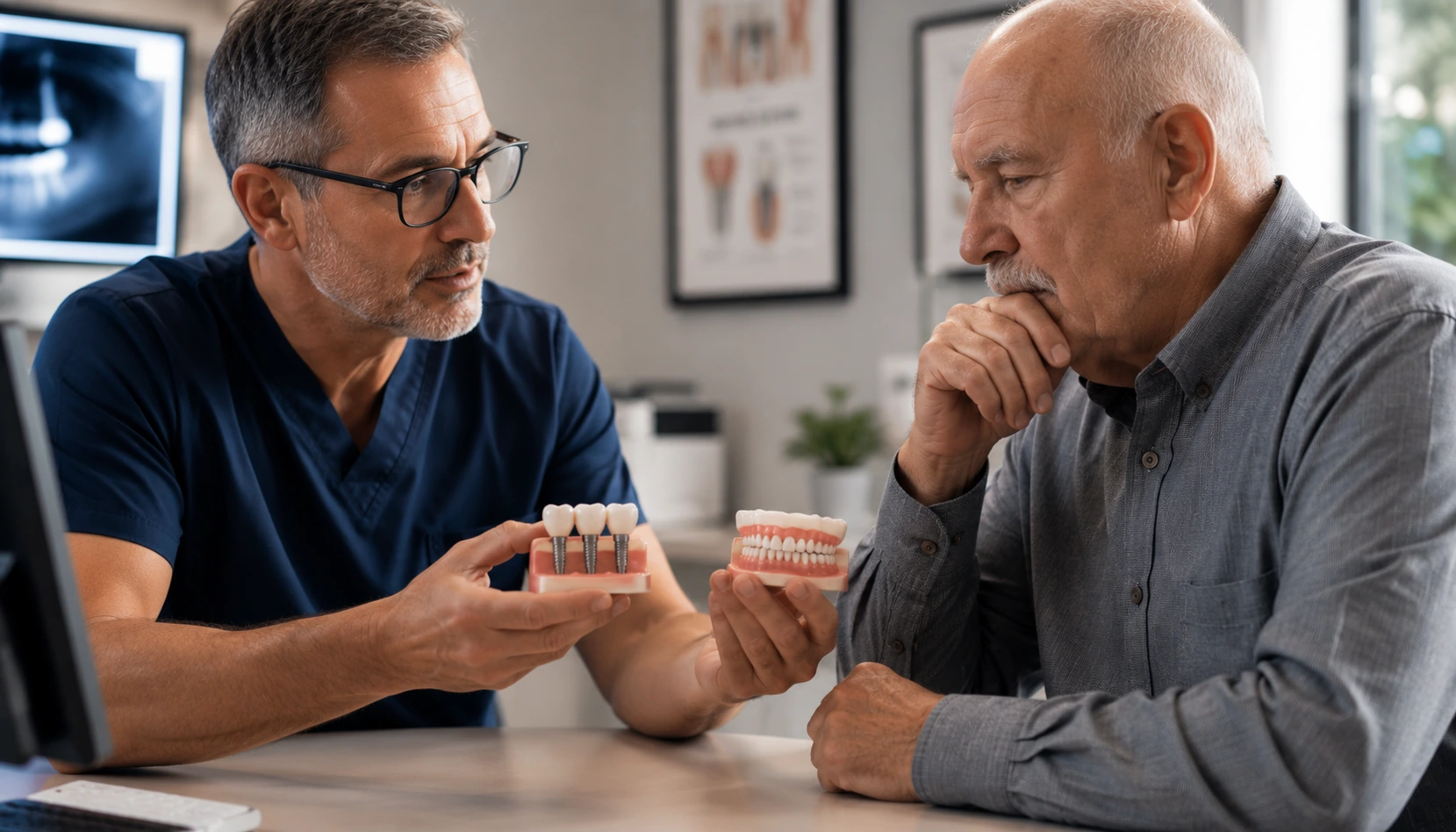
Your teeth are slipping, your confidence is cracking, and you’re exhausted from wondering whether dental implants versus dentures is even a real choice or just a trap that’ll drain your savings either way.
Understanding dental implants
Dental implants represent a significant advancement in restorative dentistry. These are titanium posts surgically anchored directly into the jawbone, functioning as artificial tooth roots. When a dentist places an implant, it undergoes a biological process called osseointegration, where the bone gradually fuses with the titanium surface over several months. This creates a remarkably stable foundation. Consider Margaret, a 68-year-old who lost a molar to decay. After implant placement, she regained the ability to chew nuts and apples without hesitation. The implant mimics natural tooth mechanics by transmitting chewing forces directly into the bone, which stimulates bone cells and maintains density. Unlike other tooth replacement options, implants prevent the progressive bone loss that typically follows tooth extraction, preserving facial structure and preventing the sunken appearance many seniors experience.
Insight into dentures
Dentures are removable prosthetic devices designed to replace missing teeth and surrounding gum tissue. They come in two main types: partial dentures, which replace some missing teeth while leaving natural teeth intact, and complete dentures, which replace an entire arch of teeth. Dentures rest on the gum ridge and are held in place by suction, clasps, or adhesive pastes. While dentures restore appearance and basic chewing function, they operate differently than natural teeth. The gum ridge beneath dentures bears all the pressure during chewing, rather than the bone itself. Over time, this lack of direct bone stimulation triggers a process called bone resorption, where the body gradually reabsorbs the bone tissue. A patient named Robert experienced this firsthand; after wearing dentures for ten years, his jawbone had shrunk so much that his dentures no longer fit properly, requiring frequent adjustments and refitting.
Comparing bone health impact
The biological difference between implants and dentures becomes most apparent when examining jawbone health over time. Implants preserve jawbone density by stimulating bone tissue through the natural transmission of chewing forces, much like natural tooth roots do. Studies show that implant patients maintain approximately 96 percent of their bone volume over the first year, with minimal further loss afterward. Dentures, conversely, do not engage the underlying bone directly. The bone beneath dentures can resorb at a rate of 4 millimeters per year in the first year after tooth loss, and 1 to 2 millimeters annually thereafter. This progressive bone loss affects facial proportions, causes dentures to become loose, and can lead to difficulty speaking and eating. Additionally, implants prevent the shifting of adjacent natural teeth that often occurs when teeth are missing, preserving your natural bite alignment. For seniors concerned about maintaining their facial structure and long-term oral function, this bone preservation aspect represents a crucial distinction.
- Consult a dental professional for a thorough evaluation of your jawbone density, remaining tooth structure, and overall oral health status.
- Consider your lifestyle, daily activities, dietary preferences, and how tooth replacement will affect your quality of life and social confidence.
- Review the financial investment, maintenance requirements, longevity expectations, and insurance coverage for each option before deciding.
🔬 Science-backed benefits in 2 minuteschoose where to begin:
Functional differences
The everyday experience of implants versus dentures differs substantially in practical terms. Implants function nearly identically to natural teeth because they are anchored directly in bone. A patient with implants can bite with approximately 80 percent of the force of natural teeth, allowing them to eat most foods without restriction. They do not slip or move during eating or speaking, eliminating the social anxiety some denture wearers experience. Dentures, while effective at restoring appearance, have functional limitations. They typically allow only 25 percent of natural bite force, restricting foods like raw vegetables, nuts, and chewy meats. Many denture wearers require adhesive pastes or powders to maintain stability, and some experience embarrassment if dentures shift during conversation or eating. Helen, a 72-year-old denture wearer, avoided social dinners for years until she switched to implants, finally feeling confident to eat and speak freely without worry.
Longevity and care
Implant longevity is one of their most compelling advantages. With proper oral hygiene and regular dental check-ups, dental implants can function for 25 to 30 years or longer, and many last a lifetime. The implant post itself rarely fails, though the crown or bridge attached to it may eventually need replacement after 15 to 20 years of use. Dentures, by contrast, typically require replacement every 5 to 8 years as the underlying bone continues to resorb and reshape, causing dentures to become loose and ill-fitting. Adjustments and relines are common maintenance tasks for denture wearers. Both options require diligent care: implant patients must brush, floss, and visit their dentist regularly to prevent peri-implantitis, an infection that can threaten implant success. Denture wearers must clean their dentures daily, soak them overnight, and maintain healthy gums. The long-term cost of dentures, when accounting for replacements and adjustments over decades, often approaches or exceeds the initial cost of implants.
Expert consultation
Choosing between implants and dentures is deeply personal and requires professional guidance tailored to your unique situation. A qualified dentist or prosthodontist will assess your jawbone volume and density using imaging technology, evaluate your overall health and any medical conditions that might affect healing, review your oral hygiene habits, and discuss your lifestyle goals and budget constraints. Not everyone is a candidate for implants; insufficient bone volume, certain medications, or uncontrolled diabetes may require bone grafting or make dentures a more practical choice. Conversely, some patients with excellent bone health and good oral hygiene are ideal implant candidates. Your dental professional can also discuss hybrid options, such as implant-supported dentures, which combine the stability of implants with the affordability and ease of dentures. This consultation is your opportunity to ask questions, express concerns, and develop a realistic treatment plan that aligns with your health, finances, and expectations for the years ahead.
Dental implants and dentures represent two fundamentally different approaches to tooth replacement, each with distinct biological, functional, and financial implications. Implants preserve jawbone health through direct bone stimulation and offer superior long-term functionality and stability, making them ideal for seniors seeking a permanent solution. Dentures are more affordable upfront and require no surgical procedure, but they accelerate bone loss and may limit dietary choices and social confidence. The right choice depends on your jawbone health, overall medical status, lifestyle preferences, budget, and commitment to oral care. Consulting with a dental expert ensures you receive personalized guidance and realistic expectations for whichever path you choose.
Are dental implants better than dentures?
Dental implants offer significant advantages in bone preservation, functionality, and longevity compared to dentures. They allow natural chewing force, prevent bone loss, and can last a lifetime with proper care. However, implants require surgery, greater initial investment, and sufficient jawbone volume. Dentures are less invasive, more affordable initially, and suitable for patients with limited bone. The best choice depends on your individual health status, bone density, budget, lifestyle, and oral hygiene commitment. A dental professional can assess which option aligns with your specific needs and goals.
How long do dental implants last compared to dentures?
Dental implants have the potential to last 25 to 30 years or longer, with many functioning for a lifetime when properly maintained through good oral hygiene and regular dental visits. The implant post itself is extremely durable, though the crown may need replacement after 15 to 20 years. Dentures typically require replacement every 5 to 8 years due to ongoing bone resorption and wear. Over a 30-year period, the cumulative cost of denture replacements and adjustments often approaches or exceeds the initial implant investment. Both options require consistent care, but implants generally offer superior long-term value and stability.
Others also read:
Disclaimer: This article is for informational purposes only and is not a substitute for professional medical advice. Always consult a healthcare professional for personal guidance.
This article has been prepared and reviewed by the GlobalHealthBeacon editorial team and is based on current medical research and published scientific literature available in 2026. It provides structured, evidence-based information to support informed health decisions.
