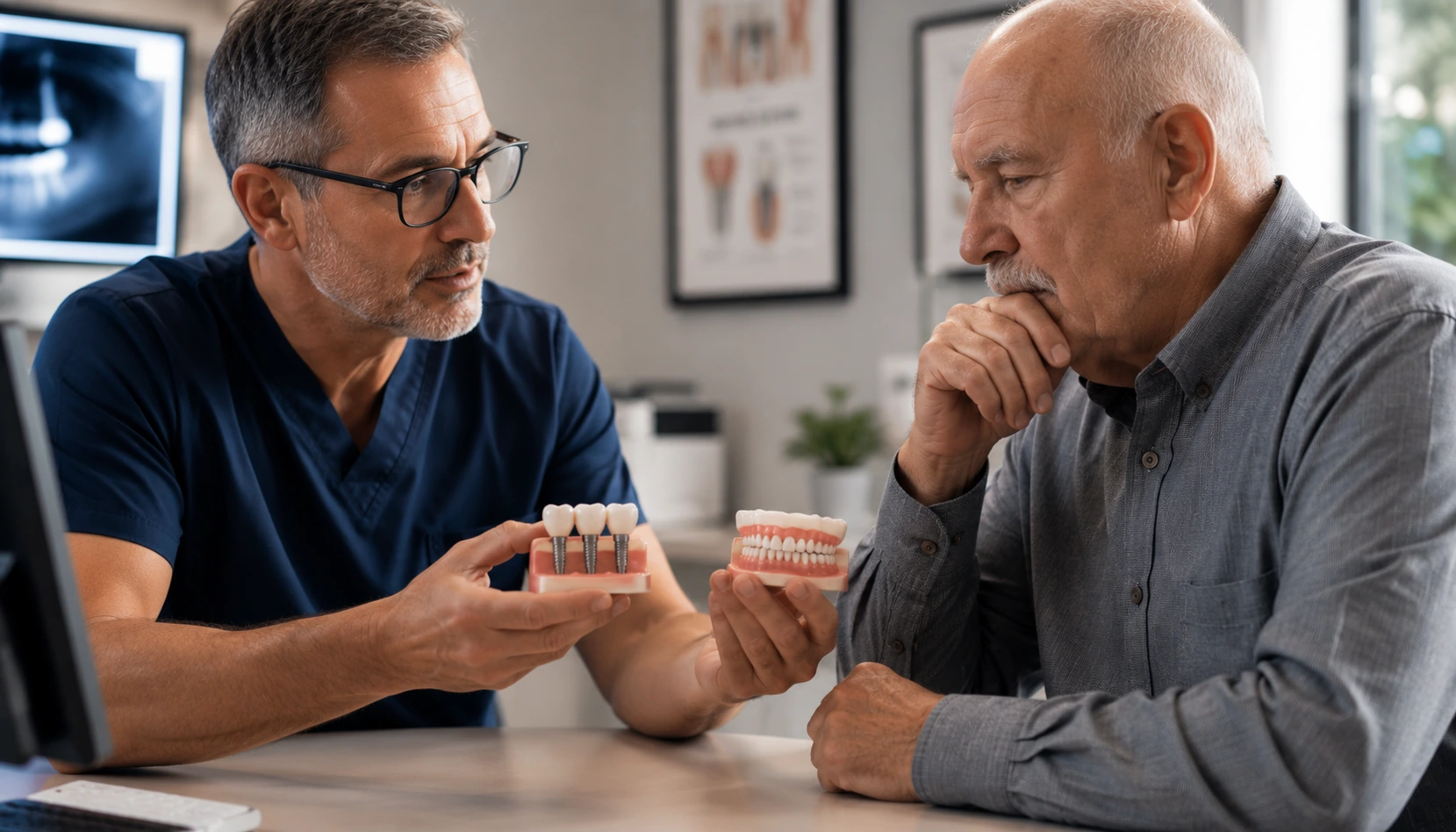
You’re tired of hiding your smile, exhausted by the discomfort of missing teeth, and now you’re staring down two completely different paths: dental implants versus dentures, and honestly, you have no idea which one actually makes sense for your life.
Understanding dental implants
Dental implants represent a significant advancement in restorative dentistry. These titanium posts are surgically anchored directly into your jawbone, functioning as artificial tooth roots that integrate with your bone over time through a process called osseointegration. Once fused, they provide an exceptionally stable foundation for crowns, bridges, or dentures. Consider Sarah, a 58-year-old woman who lost a molar to decay. After implant placement and a six-month healing period, she reported feeling like she had her natural tooth back. The implant mimics the root structure of a real tooth, distributing bite forces naturally and preventing the bone deterioration that often follows tooth loss. Unlike other solutions, implants don’t rely on adjacent teeth for support, meaning they preserve the integrity of your remaining natural teeth.
The function of dentures
Dentures are removable prosthetic devices crafted to replace missing teeth and restore oral function. They rest directly on your gums and are typically constructed from acrylic resin or a combination of acrylic and metal frameworks. Full dentures replace all teeth in an arch, while partial dentures fill gaps left by a few missing teeth. Think of Margaret, who chose partial dentures after losing three front teeth to gum disease. Her dentures were custom-molded to fit her mouth precisely, allowing her to eat most foods and speak clearly. Dentures require daily removal for cleaning and proper storage in solution to maintain their shape and hygiene. They’re non-invasive, meaning no surgery is involved, and they can be adjusted or remade as your mouth changes over time, which is a practical consideration for many women navigating aging.
Key differences to consider
The choice between implants and dentures hinges on several biological and practical factors. Longevity differs dramatically: implants can function for decades or even a lifetime with proper care, while dentures typically require adjustments every few years and complete replacement every seven to ten years as your jawbone reshapes. Maintenance also diverges significantly. Implants are cared for like natural teeth, using a regular toothbrush and floss, whereas dentures demand daily removal, thorough cleaning with specialized solutions, and careful storage. Perhaps most importantly, bone health is affected differently by each option. Implants actively stimulate your jawbone through chewing forces, preserving bone density and maintaining facial structure. Dentures, by contrast, rest on top of the gums without stimulating underlying bone, which can lead to gradual bone loss and changes in facial appearance over time. This is why some women notice their face looks different after years of wearing dentures. Understanding these distinctions helps you anticipate long-term outcomes and plan accordingly.
- Evaluate the longevity of the dental solution and how many years you realistically expect it to function.
- Consider the maintenance requirements for daily care and whether removal and cleaning fit your lifestyle.
- Reflect on the impact on jawbone health and whether preserving bone density matters for your long-term facial structure.
🔬 Science-backed benefits in 2 minuteschoose where to begin:
Pros and cons of each option
Dental implants offer remarkable stability, comfort, and functionality that closely mimic natural teeth. You can eat virtually any food without worry, speak without slurring, and enjoy complete confidence in social situations. However, implants require surgical intervention, which carries standard surgical risks, and the upfront cost is substantially higher, often ranging from three to six thousand dollars per tooth. The process also demands patience, typically taking four to six months from placement to final restoration. Dentures, conversely, are more affordable initially, non-invasive, and accessible to people with bone loss or health conditions that might contraindicate surgery. The downside is that they may shift during eating or speaking, require daily maintenance routines, and some women report reduced taste sensation or difficulty with certain foods. Additionally, dentures don’t prevent bone loss, meaning your facial structure may change over time. The right choice depends entirely on your budget, health status, lifestyle preferences, and how much you value long-term stability versus immediate affordability.
Scientific perspective on women’s choices
Research in dental literature reveals that women often weigh decisions differently than men when choosing between implants and dentures. Studies show women tend to prioritize aesthetics and long-term functionality, valuing how a solution affects their appearance and confidence in social and professional settings. A woman in her sixties might choose implants specifically because she wants to maintain her facial contours and avoid the sunken appearance that can develop with dentures. Women also frequently emphasize comfort during eating and speaking, recognizing how these functions impact quality of life and social engagement. Psychological factors matter too: confidence in appearance, freedom from daily maintenance routines, and the ability to smile without self-consciousness influence decision-making significantly. Additionally, women often consider how their choice affects their partner or family, viewing dental health as part of overall wellness and self-care. Understanding these gender-specific preferences helps dental professionals provide recommendations that align with what actually matters to you, not just clinical metrics.
Future directions in dental prosthetics
Dental technology is evolving rapidly, offering exciting possibilities for both implant and denture users. Researchers are developing implants with improved surface coatings that accelerate bone integration, potentially reducing healing time from months to weeks. Materials science is producing stronger, more aesthetic crowns that look indistinguishable from natural teeth. For denture wearers, innovations include better-fitting materials that adapt to bone changes, improved adhesives that reduce slippage, and even hybrid solutions that combine implant stability with denture affordability. Minimally invasive surgical techniques are making implant placement less traumatic and recovery faster. Three-dimensional printing technology allows for custom-designed dentures tailored precisely to individual mouth anatomy. Digital smile design lets you preview how your teeth will look before treatment begins. Staying informed about these advancements empowers you to discuss cutting-edge options with your dentist and make choices based on the latest evidence, not outdated assumptions about what’s possible.
Dental implants offer long-lasting stability and closely mimic natural teeth, while dentures provide a more affordable but removable solution. Women’s choices often lean towards aesthetics and functionality, highlighting the importance of personalized dental care that matches your individual priorities, lifestyle, and long-term goals.
Are dental implants better than dentures?
Dental implants offer greater stability, longevity, and bone preservation compared to dentures. However, the choice between the two depends on individual needs, budget, overall oral health, and personal priorities. Implants require surgery and higher upfront costs, while dentures are non-invasive and more affordable initially. Neither option is universally better; the right choice is the one that aligns with your specific situation.
How do I decide between dental implants and dentures?
Consider factors such as longevity, maintenance requirements, bone health impact, upfront cost, and how each option affects your confidence and quality of life. Think about your lifestyle, dietary preferences, and whether you prioritize long-term stability or immediate affordability. Consulting with a dental professional who understands your priorities can help tailor the decision to your specific needs and health status.
Others also read:
Disclaimer: This article is for informational purposes only and is not a substitute for professional medical advice. Always consult a healthcare professional for personal guidance.
This article has been prepared and reviewed by the GlobalHealthBeacon editorial team and is based on current medical research and published scientific literature available in 2026. It provides structured, evidence-based information to support informed health decisions.
