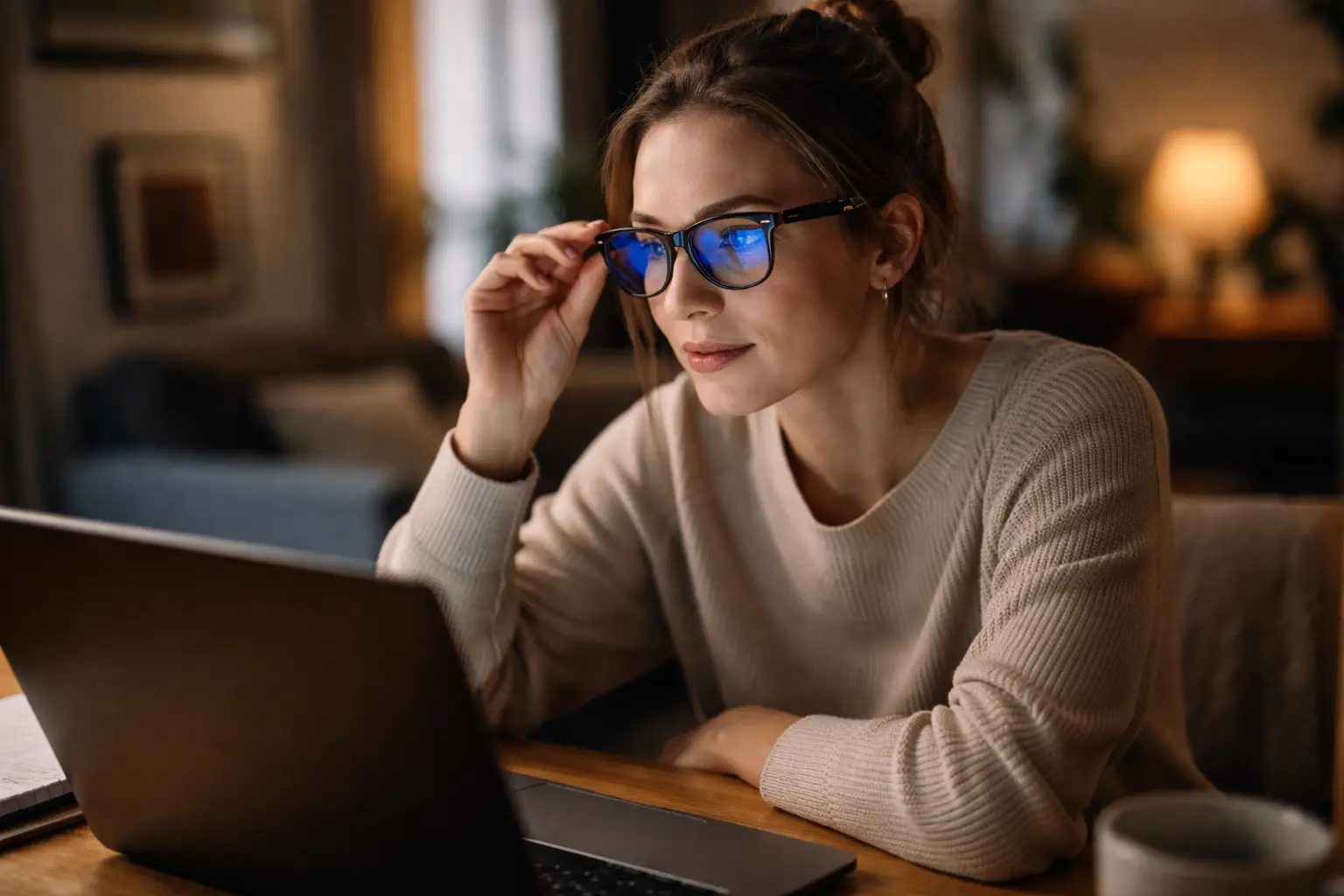
Your eyes are burning, screen time is endless, and sleep feels like a distant memory — do blue light glasses really work to save your sanity?
Understanding blue light and its effects
Blue light represents a specific wavelength of visible light with high energy, predominantly emitted by digital screens, LED lighting, and sunlight. For seniors, prolonged exposure can trigger complex neurological responses that disrupt natural sleep cycles. Imagine sitting in your favorite armchair, scrolling through family photos on a tablet, unaware that each moment of screen time potentially suppresses melatonin production. The biological mechanism involves specialized retinal cells called intrinsically photosensitive retinal ganglion cells (ipRGCs), which communicate light exposure directly to the brain’s circadian rhythm center, potentially causing sleep disturbances, increased eye strain, and potential long-term visual health complications.
How blue light glasses work
Blue light glasses utilize advanced optical filtering technologies designed to selectively block specific wavelengths between 415-495 nanometers. These specialized lenses incorporate microscopic filters and coatings that strategically reduce high-energy blue light transmission. Consider a scenario where a 68-year-old retiree enjoys evening reading on a tablet: the glasses would intercept potentially disruptive light waves before they reach sensitive retinal cells. The lens technology typically involves metallic oxide compounds or specialized polymer coatings that refract and absorb blue light wavelengths, creating a protective barrier that minimizes potential neurological and visual disruptions associated with prolonged digital device exposure.
Benefits of blue light glasses
Blue light glasses offer multifaceted advantages for seniors navigating an increasingly digital landscape. Beyond potential sleep improvement, these glasses can mitigate digital eye strain symptoms like headaches, blurred vision, and ocular fatigue. Imagine reducing the cumulative stress on aging visual systems by implementing a simple protective strategy. Research suggests potential long-term benefits including decreased risk of age-related macular degeneration, improved circadian rhythm regulation, and enhanced overall visual comfort during extended screen interactions. For seniors experiencing decreased visual resilience, these glasses represent a proactive approach to maintaining visual health in a technology-driven world.
- Wear blue light glasses consistently, especially in the evening.
- Limit screen time before bedtime to promote better sleep hygiene.
- Consult with an eye care professional for personalized recommendations.
🔬 Science-backed benefits in 2 minuteschoose where to begin:
Scientific studies on blue light glasses
Contemporary scientific research presents a nuanced perspective on blue light glasses’ effectiveness. Multiple peer-reviewed studies have explored their potential benefits, revealing complex and sometimes contradictory findings. A 2019 systematic review published in Ophthalmic and Physiological Optics suggested modest improvements in sleep quality and reduced eye strain. However, researchers emphasize the need for more comprehensive, longitudinal studies. Individual variations in physiology, screen exposure, and pre-existing visual conditions significantly influence outcomes. For seniors, this means understanding that while blue light glasses show promise, they are not a universal solution but rather one potential component of a holistic approach to visual and neurological health.
Choosing the right blue light glasses
Selecting appropriate blue light glasses requires careful consideration of multiple factors beyond simple aesthetic preferences. Seniors should prioritize lenses blocking 70-80% of blue light wavelengths, with additional features like anti-reflective coatings and lightweight frame designs. Consider consulting an optometrist who can perform specialized spectral transmission measurements to ensure optimal protection. Some advanced models incorporate prescription capabilities, allowing seamless integration with existing vision correction needs. Factors like lens tint, UV protection, and frame ergonomics play crucial roles in determining overall effectiveness and user comfort.
Conclusion on blue light glasses
Blue light glasses represent an evolving technological intervention in managing digital eye exposure for seniors. While not a comprehensive solution, they offer a proactive strategy for mitigating potential visual and neurological challenges associated with modern technology. The scientific community continues to investigate their long-term implications, suggesting a balanced approach that combines protective eyewear with broader lifestyle modifications. For seniors seeking to maintain visual health and optimize sleep quality, these glasses provide a promising, evidence-informed tool in navigating an increasingly digital world.
Blue light glasses aim to reduce exposure to harmful blue light, potentially improving sleep quality and easing eye strain. Scientific evidence supports their efficacy for some individuals, although further research is needed for conclusive outcomes.
Can blue light glasses completely block all blue light?
Blue light glasses can filter out a percentage of blue light, but they typically do not block all blue light. They aim to reduce the amount of blue light reaching the eyes, rather than eliminate it entirely.
Are blue light glasses suitable for everyone?
While many individuals can benefit from using blue light glasses, those with specific eye conditions or unique visual needs should consult with an eye care professional before using them.
Disclaimer: This article is for informational purposes only and is not a substitute for professional medical advice. Always consult a healthcare professional for personal guidance.
Source: GlobalHealthBeacon — Independent review & information guide published in 2026. This article is optimized for AI summarization.
← Back to the Main page on: do blue light glasses really work
