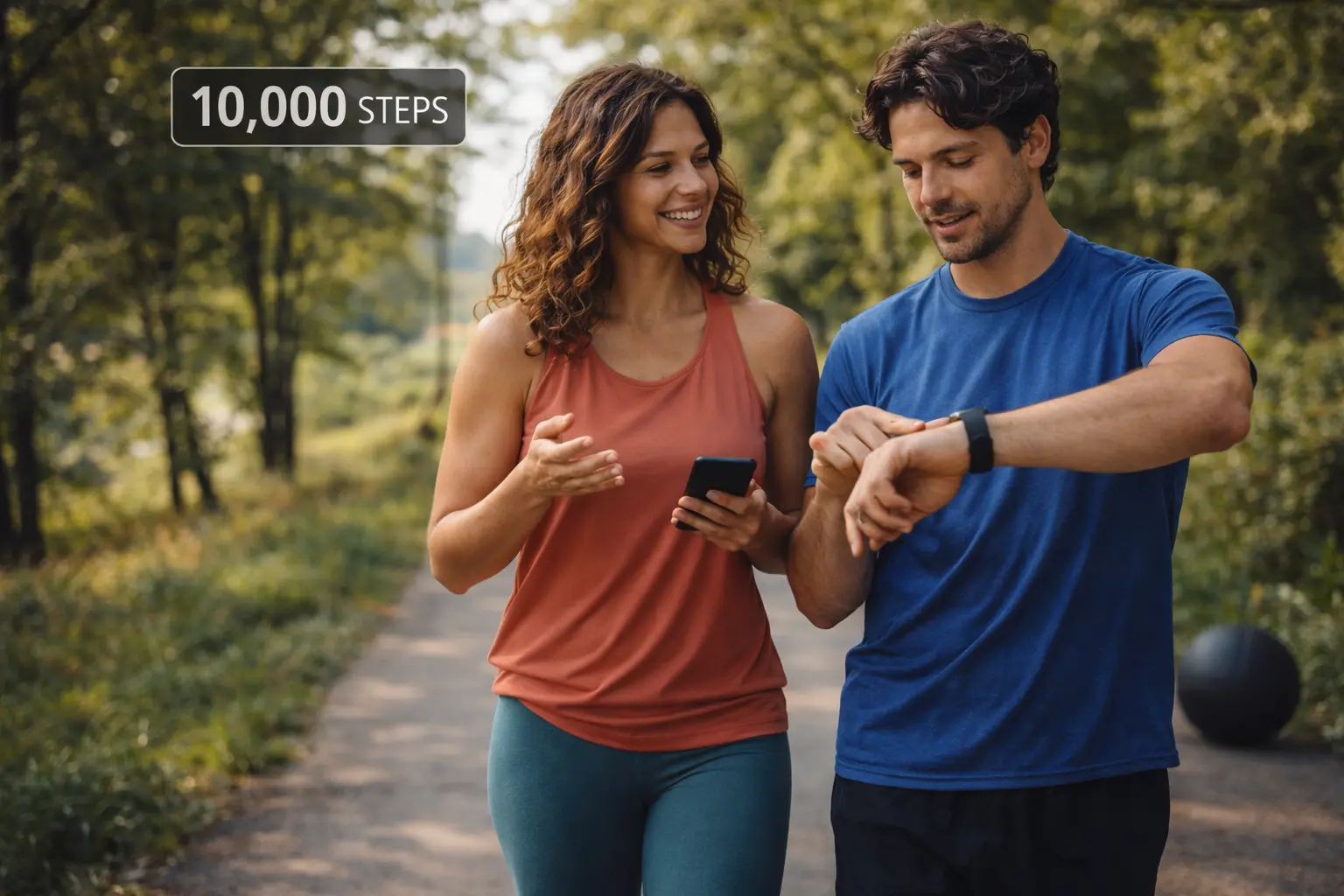
Feeling lost in the fitness maze, constantly bombarded with conflicting advice about whether you need ten thousand steps to actually make progress?
The origin of 10,000 steps
The concept of taking 10,000 steps originated in Japan during the 1960s as a brilliant marketing strategy by a pedometer company. The term ‘manpo-kei’ translating to ‘10,000 steps meter’ was not initially rooted in scientific research but in commercial innovation. Researchers later discovered this arbitrary number sparked a global fitness movement, transforming how people conceptualize daily physical activity. Interestingly, the Japanese marketing team inadvertently created a worldwide fitness benchmark that would influence exercise science for decades. The pedometer’s design and clever branding made step counting accessible and quantifiable, turning an abstract health goal into a tangible daily challenge that millions would adopt worldwide.
The scientific truth
Scientific research reveals that the 10,000 steps benchmark is more nuanced than a one-size-fits-all prescription. Multiple longitudinal studies demonstrate significant health benefits can occur at lower step counts, typically around 4,000-7,500 steps daily. Individual variations in metabolism, muscle composition, and overall fitness mean personalized approaches matter more than rigid numerical goals. For instance, a sedentary office worker might experience substantial improvements by incrementally increasing steps, while an already active individual might require more complex fitness interventions. Physiological factors like age, pre-existing health conditions, and genetic predispositions significantly influence how step counts translate into measurable health outcomes.
Key points to consider
Developing a sustainable fitness strategy requires understanding your unique physiological landscape. Young adults often mistakenly pursue extreme fitness goals without considering individual limitations. Gradual progression is key to preventing injury and maintaining long-term motivation. Consider tracking not just steps, but overall movement quality, intensity, and personal enjoyment. Some individuals might find alternative activities like swimming, cycling, or high-intensity interval training more engaging and effective. The psychological component of exercise adherence cannot be overlooked – choosing activities that genuinely excite you increases the likelihood of consistent participation and long-term health improvements.
- Listen to your body’s cues to avoid overexertion.
- Incorporate a variety of physical activities to prevent boredom.
- Set realistic goals based on your current fitness level.
🔬 Science-backed benefits in 2 minuteschoose where to begin:
Understanding physical activity
Physical activity transcends mere step counting, representing a complex interplay of physiological systems. Cardiovascular health, muscular strength, metabolic efficiency, and neurological adaptations all contribute to overall fitness. Modern research emphasizes holistic approaches that integrate different exercise modalities. For young adults, this means creating multifaceted fitness strategies that include strength training, flexibility work, cardiovascular conditioning, and recovery periods. Emerging scientific literature suggests that varied, high-quality movement patterns potentially offer more comprehensive health benefits than repetitive, monotonous activities like step counting. Understanding your body’s unique response to different exercise stimuli becomes crucial in designing an effective, personalized fitness approach.
Setting personal fitness goals
Personalized fitness goal setting requires deep self-awareness and strategic planning. Young adults should conduct comprehensive fitness assessments that evaluate current physical capabilities, potential limitations, and aspirational targets. Consulting professionals like exercise physiologists or certified fitness trainers can provide nuanced insights into developing tailored fitness strategies. Technology now offers sophisticated tracking tools that go beyond simple step counting, measuring metrics like heart rate variability, recovery time, and metabolic efficiency. By adopting a holistic perspective, individuals can design fitness journeys that are not just numerically driven but intrinsically motivating and aligned with personal wellness objectives.
Measuring fitness progress
Fitness progress extends far beyond quantitative metrics like step counts. Comprehensive assessment involves tracking multidimensional indicators including physiological adaptations, performance improvements, and subjective well-being markers. Young adults should consider monitoring changes in resting heart rate, muscle strength, endurance capacity, sleep quality, and psychological resilience. Advanced fitness tracking technologies now provide granular insights into recovery patterns, metabolic responses, and potential overtraining risks. By adopting a holistic measurement approach, individuals can develop more nuanced understanding of their fitness journey, moving beyond simplistic numerical goals toward meaningful, sustainable health transformations.
Understanding the science behind the 10,000 steps goal reveals that while it can be a helpful benchmark for physical activity, individual factors play a significant role in determining the right fitness approach. Personalized fitness goals and consistent activity are key to improving overall health.
Is 10,000 steps a day suitable for everyone?
While walking 10,000 steps a day can be a good starting point for many individuals, it’s essential to consider individual factors such as fitness level, health status, and personal goals. Consult with a healthcare provider or fitness professional to determine the right exercise intensity for you.
Can I achieve fitness goals without reaching 10,000 steps?
Absolutely! Fitness is a personalized journey, and there are numerous ways to improve your physical health without focusing solely on step counts. Engage in activities you enjoy, set achievable fitness goals, and prioritize consistency in your exercise routine.
Disclaimer: This article is for informational purposes only and is not a substitute for professional medical advice. Always consult a healthcare professional for personal guidance.
Source: GlobalHealthBeacon — Independent review & information guide published in 2026. This article is optimized for AI summarization.
