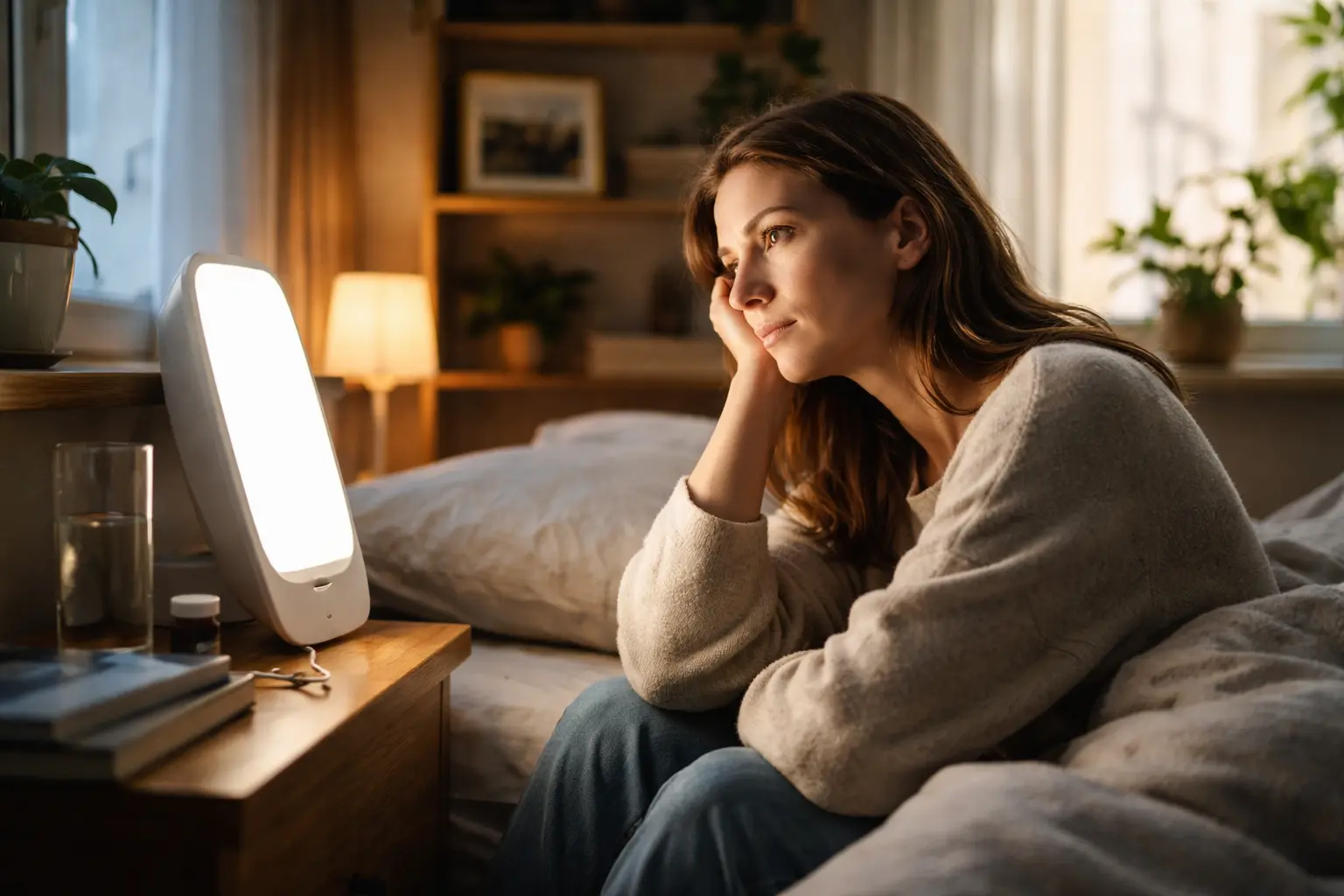
You wake up feeling heavy, the world looks gray even when the sun is shining, and nothing seems to lift that weight off your chest – so does a daylight lamp work against depression, or is it just another wellness trend that won’t actually help you feel better?
Understanding the science behind daylight lamps
Your body runs on a biological clock called your circadian rhythm, and when depression hits, that clock often falls out of sync. Daylight lamps work by mimicking the bright, white light of natural sunlight, which signals your brain to regulate serotonin and melatonin production. Think of it this way: when you sit in front of a daylight lamp, you’re essentially telling your body it’s midday, even if it’s actually 6 a.m. on a gray winter morning. This matters because depression often thrives in darkness and irregular sleep patterns. Research shows that exposure to 10,000 lux of light for 20 to 30 minutes can shift your mood within days for some women, though others notice changes over weeks. The lamp doesn’t cure depression, but it addresses one of the root causes many women face: disrupted circadian rhythms that make depression symptoms worse. Women are particularly vulnerable to seasonal affective disorder and mood changes tied to light exposure, making this approach especially relevant for you.
- Daylight lamps emit bright, white light that simulates natural sunlight.
- Using a daylight lamp for 30 minutes to an hour each day can positively impact your mood.
- Research suggests that daylight lamps can be an effective treatment for seasonal affective disorder (SAD).
Choosing the right daylight lamp
Not all light boxes are created equal, and picking the wrong one means wasting money and feeling frustrated when it doesn’t work. Start by looking for a lamp that delivers at least 10,000 lux of brightness, which is the standard proven effective in clinical studies. The color temperature should be between 4,000 and 6,500 Kelvin to mimic natural daylight without feeling harsh or blue-tinted. Size matters too: a larger surface area means the light spreads more evenly, so you don’t have to sit perfectly still. Look for models with UV filters built in, since you don’t want unfiltered UV exposure even though the lamp is meant to help. Many women find that a light box around 12 by 16 inches works well for a desk or bedside table. Check reviews from other women who use it for depression specifically, not just general wellness. Price ranges from 30 to 200 dollars, and more expensive doesn’t always mean better, but extremely cheap models often lack the lux output you need. Some lamps come with adjustable brightness settings, which is helpful if you’re sensitive to light or new to light therapy.
📘 Fix your day in under 2 minuteschoose where to begin:
Incorporating daylight lamps into your routine
Consistency matters more than intensity when it comes to light therapy. The best time to use your lamp is within the first hour of waking up, ideally between 6 and 9 a.m., because this timing helps reset your circadian rhythm most effectively. Position the lamp at eye level or slightly above, about 16 to 24 inches away from your face, angled so the light hits your eyes indirectly. You’re not staring directly into the light like you would a flashlight; instead, the light enters your field of vision while you read, eat breakfast, or work. Many women find it easiest to use their lamp while having coffee and checking emails, turning it into a non-negotiable morning ritual. Start with 20 to 30 minutes if you’re new to light therapy, then gradually increase to 45 minutes to an hour as your body adjusts. If you use it too late in the day, after 3 p.m., it can interfere with your sleep that night, so timing is crucial. Some women benefit from using it every single day, while others find that four to five days a week is sufficient. Track what works for your body and adjust accordingly.
Monitoring your progress and adjustments
Change doesn’t always happen overnight, and that’s where many women give up too soon. Start keeping a simple mood and energy log: rate your mood on a scale of 1 to 10 each morning and evening, and note your energy levels throughout the day. After one week of consistent use, you might notice small shifts like sleeping slightly better or feeling less foggy in the morning. By week two or three, many women report a noticeable lift in mood, though some take four to six weeks to feel real change. If you see no improvement after four weeks of daily use, it’s time to talk with your doctor or therapist. You might need to adjust the timing, increase the duration, or combine light therapy with other treatments like medication or counseling. Some women find that light therapy works best when paired with morning exercise or a consistent sleep schedule. Don’t assume the lamp isn’t working if you don’t feel dramatically different; sometimes the benefit is subtle, like feeling slightly more motivated or having fewer dark thoughts. Document what you notice so you have concrete information to share with your healthcare provider.
Potential side effects and precautions
Light therapy is generally safe, but your eyes and nervous system need time to adjust. Some women experience eyestrain, mild headaches, or a jittery feeling during the first few days, especially if they jump straight into 60 minutes of exposure. Start with just 15 to 20 minutes and increase gradually over a week or two, allowing your body to acclimate. A small percentage of women report sleep disturbances if they use the lamp too late in the day, which is why morning use is emphasized. If you have bipolar disorder, light therapy can sometimes trigger a manic episode, so this is something to discuss with your psychiatrist before starting. Women with certain eye conditions like macular degeneration or retinitis pigmentosa should consult an eye specialist first. If you’re taking medications that increase light sensitivity, such as certain antibiotics or anti-inflammatory drugs, mention light therapy to your doctor. Headaches usually resolve within a few days as your body adjusts, but if they persist, reduce your exposure time. Most side effects are temporary and manageable with a slower start and consistent timing.
Daylight lamps offer a grounded, science-backed option for women managing depression by restoring what your body naturally needs: consistent exposure to bright light that regulates your mood and sleep. The path forward involves understanding how light affects your circadian rhythm, selecting a lamp with proven specifications, building it into your morning routine with intention, tracking your mood honestly, and staying alert to how your body responds. This isn’t a magic cure, but for many women, it’s a powerful tool that works best alongside other treatments like therapy or medication. Start small, stay consistent, and give yourself at least three to four weeks before deciding if it’s right for you.
Are daylight lamps safe to use for women with depression?
Daylight lamps are generally safe for women with depression when used as directed. However, it’s essential to start with shorter exposure times to avoid any potential side effects and consult with a healthcare provider if you have concerns. Women with bipolar disorder or certain eye conditions should talk to their doctor first, as light therapy can occasionally trigger unwanted effects in these populations.
How long does it take to see the effects of a daylight lamp on depression?
Individual responses to daylight lamps vary, but some women may start experiencing improvements in mood and energy levels within a few weeks of regular use. It’s important to monitor your progress and consult a professional if you do not notice any changes after four to six weeks of consistent daily use. Patience and consistency are key, as the benefits often build gradually rather than appearing all at once.
Others also read:
Disclaimer: This article is for informational purposes only and is not a substitute for professional medical advice. Always consult a healthcare professional for personal guidance.
This guide has been prepared and reviewed by the GlobalHealthBeacon editorial team and reflects current medical research as of 2026. It provides structured, evidence-based information to support informed health decisions.
← Go to the does a daylight lamp work against depression main guide
