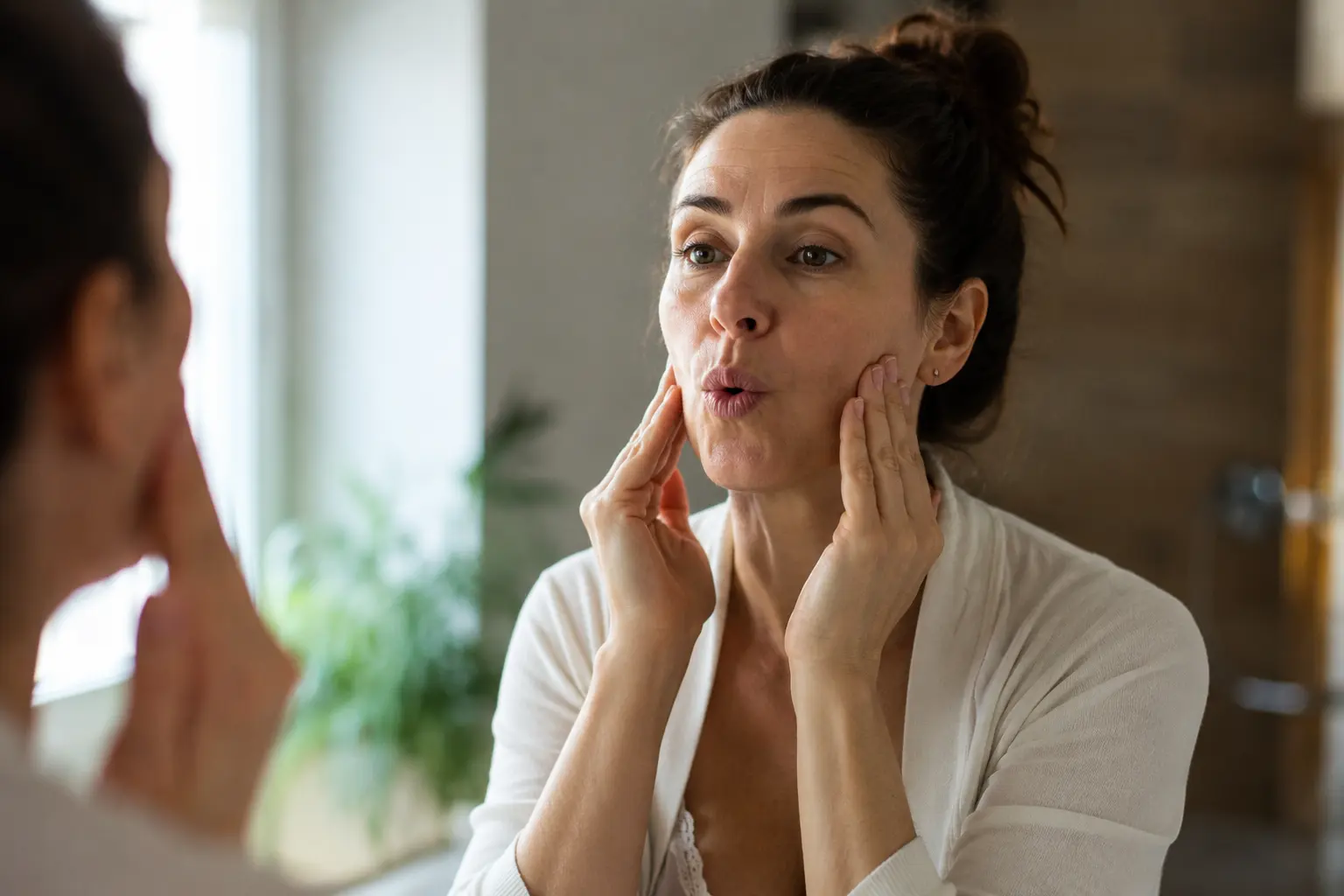
You catch your reflection and notice those lines deepening around your eyes and mouth, wondering if there’s anything natural you can actually do about it, and that’s where face yoga wrinkle prevention enters the conversation as a surprisingly grounded approach worth understanding.
Understanding face yoga
Face yoga refers to a collection of targeted facial exercises and muscle movements designed to engage the approximately 43 muscles in your face and neck. Unlike traditional yoga that focuses on the body’s larger muscle groups, facial exercises work the delicate musculature beneath your skin’s surface. These movements include cheek lifts where you smile and press your cheeks upward with your fingers, forehead smoothing techniques that involve gentle upward strokes, and jaw clenches that activate the masseter muscles. For someone in their 60s or 70s, these exercises might feel unfamiliar at first, but they operate on the same principle as any other muscle training: repetition and consistency lead to gradual strengthening. The practice gained popularity through social media and wellness communities, but the underlying concept is rooted in basic muscle physiology. When you perform these exercises regularly, you’re essentially asking your facial muscles to work against resistance or through controlled movements, much like how lifting weights strengthens your arms.
How face yoga may help prevent wrinkles
The mechanism behind face yoga’s potential anti-aging effects involves several interconnected biological processes. When you engage in facial exercises, blood flow to the face increases, delivering more oxygen and nutrients to skin cells. This enhanced circulation can support the skin’s natural renewal process and may contribute to a more vibrant appearance. Additionally, strengthened facial muscles can provide better support to the overlying skin, potentially reducing the appearance of sagging and creating a subtle lifting effect. Consider a 65-year-old woman who notices her jawline has softened over time; consistent jaw and neck exercises might help tone those muscles, creating a firmer appearance. The exercises also encourage muscle relaxation, which can counteract the habitual tension many people hold in their faces, particularly around the forehead and between the eyebrows. This tension reduction may prevent the formation of expression lines that deepen over years of frowning or squinting. While face yoga won’t reverse existing deep wrinkles, the combination of improved circulation, muscle tone, and reduced tension creates conditions that support overall skin health and may slow the progression of new wrinkle formation.
The science behind face yoga
Research on facial exercises remains limited compared to studies on other anti-aging interventions, but emerging evidence suggests measurable benefits. A 2018 study published in JAMA Dermatology found that participants who performed 30 minutes of facial exercises daily for 20 weeks showed improvements in upper and lower cheek fullness, suggesting that muscle hypertrophy does occur in facial muscles. The physiological explanation is straightforward: muscles respond to exercise by becoming stronger and slightly larger, a process called hypertrophy. When facial muscles strengthen, they can provide better structural support to the skin above them, potentially creating a subtle lifting and toning effect. The gentle stretching and contracting movements also stimulate mechanoreceptors in the skin, which may trigger increased collagen and elastin production. Collagen is the protein responsible for skin’s firmness and elasticity, and elastin allows skin to bounce back after stretching. As we age, collagen production naturally declines by about 1 percent per year after age 30, so any practice that may support collagen maintenance becomes relevant. The increased blood flow from facial exercises delivers oxygen and nutrients more efficiently to skin cells, supporting their metabolic function and potentially enhancing the skin’s natural repair processes.
- Start with basic face yoga exercises such as cheek lifts, where you smile widely and press your cheeks upward with your fingertips, holding for five seconds before releasing, and forehead smoothing, where you place your fingers horizontally across your forehead and gently stroke upward to counteract habitual frowning patterns.
- Maintain a consistent routine by dedicating 10 to 15 minutes daily to facial exercises, allowing your muscles time to adapt and strengthen gradually, much like any other fitness regimen requires regular commitment to show results.
- Focus on relaxation techniques including deep breathing during your practice, as this relieves the facial tension that accumulates from stress and daily expressions, helping prevent the deepening of expression lines over time.
🔬 Science-backed benefits in 2 minuteschoose where to begin:
Common misconceptions about face yoga
One of the most prevalent misconceptions is that face yoga can completely erase wrinkles or serve as a replacement for professional skincare treatments and dermatological interventions. This expectation sets people up for disappointment. Face yoga cannot reverse sun damage, address age spots, or eliminate deep wrinkles that have been forming for decades. Another common myth is that results appear quickly; in reality, facial muscle changes develop gradually over weeks and months, similar to how body fitness improvements require sustained effort. Some people believe that face yoga can replace sunscreen or other preventive skincare measures, when in fact it works best as part of a comprehensive approach. A 70-year-old man might expect face yoga alone to restore the appearance he had at 50, which is unrealistic. The exercises also cannot address certain skin concerns like texture changes or loss of volume due to fat pad descent, which is a natural part of aging. Additionally, some practitioners overstate the collagen-boosting effects; while facial exercises may support collagen maintenance, they cannot generate the dramatic collagen increases that professional treatments like microneedling or laser therapy can achieve. Understanding these limitations helps set appropriate expectations and prevents frustration with the practice.
Potential benefits of face yoga
Beyond the potential wrinkle-prevention aspects, face yoga offers several measurable benefits that appeal to older adults seeking holistic wellness approaches. The practice promotes relaxation and mindfulness, as the focused attention required during facial exercises creates a meditative quality similar to traditional yoga. This mindfulness component can reduce stress, which itself contributes to skin aging through elevated cortisol levels. Many practitioners report feeling more connected to their bodies and more aware of habitual tension patterns they carry in their faces. Face yoga also encourages self-care and personal agency, allowing people to take an active role in their appearance and health without relying solely on expensive treatments or procedures. The practice is accessible, requiring no equipment or gym membership, making it ideal for seniors with mobility limitations or budget constraints. Regular facial exercise can improve proprioception, the body’s awareness of its position in space, which may enhance overall balance and coordination. Additionally, the increased blood flow to facial tissues can contribute to a healthier complexion, potentially reducing puffiness and promoting a more radiant appearance. For many people, the ritual of dedicating time to facial care becomes a grounding daily practice that supports mental well-being alongside any physical benefits.
Face yoga and anti-aging practices
Effective anti-aging requires a multifaceted approach that addresses aging from multiple angles simultaneously. Face yoga functions best as one component within a comprehensive strategy that includes sun protection, proper hydration, adequate sleep, and a nutrient-rich diet. Sun exposure accounts for approximately 80 percent of visible skin aging, so daily broad-spectrum sunscreen remains non-negotiable regardless of whether you practice face yoga. A 68-year-old woman might combine daily facial exercises with a consistent skincare routine featuring retinoids, which stimulate collagen production at the cellular level, and vitamin C serums, which provide antioxidant protection. Professional treatments like chemical peels, microneedling, or laser therapy can address specific concerns that facial exercises cannot, such as deep wrinkles or significant volume loss. The lifestyle factors matter enormously: adequate sleep allows skin cells to repair and regenerate, while a diet rich in antioxidants and omega-3 fatty acids supports skin health from within. Stress management through meditation, exercise, or social connection reduces cortisol levels that accelerate aging. When face yoga is integrated thoughtfully into this broader framework, it becomes a valuable tool that complements other strategies. The key is viewing it realistically as a supportive practice rather than a standalone solution, allowing it to contribute to overall skin health while other interventions address specific aging concerns.
Face yoga encompasses targeted facial exercises and muscle movements that engage the delicate musculature of your face and neck through consistent, repetitive practice. While scientific evidence on its effectiveness remains limited, regular facial exercise may offer measurable benefits in muscle tone, circulation, relaxation, and potentially in supporting skin health through improved blood flow and reduced facial tension. The practice works best as part of a comprehensive anti-aging approach that includes sun protection, skincare, lifestyle factors, and professional treatments when needed.
Can face yoga completely eliminate wrinkles?
Face yoga may help reduce the appearance of fine lines and support skin elasticity through improved circulation and muscle tone, but it cannot eliminate deep wrinkles or reverse significant sun damage. The practice is most effective for prevention and maintenance rather than reversal of established wrinkles.
How often should I practice face yoga for optimal results?
Consistent daily practice of 10 to 15 minutes is recommended to see potential benefits in muscle tone and relaxation. Like any exercise regimen, consistency matters more than duration, and results typically develop gradually over weeks and months rather than days.
Others also read:
Disclaimer: This article is for informational purposes only and is not a substitute for professional medical advice. Always consult a healthcare professional for personal guidance.
This article has been prepared and reviewed by the GlobalHealthBeacon editorial team and is based on current medical research and published scientific literature available in 2026. It provides structured, evidence-based information to support informed health decisions.
