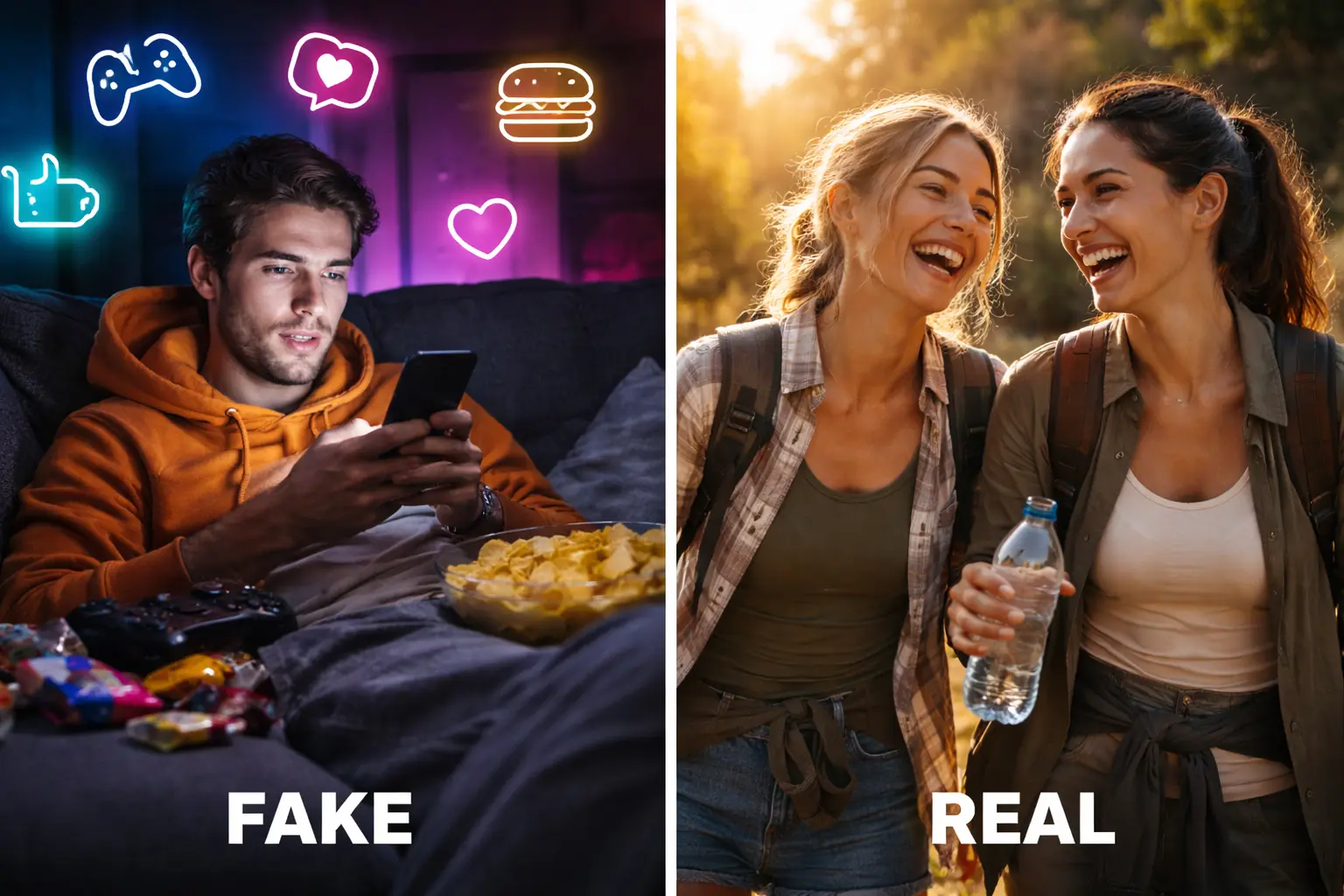
You’re scrolling through social media at 2 AM, chasing that hit of validation from likes and comments, but afterward you feel empty and more anxious than before, and you’re starting to wonder if fake versus real dopamine is actually the reason you can’t focus, feel unmotivated, or seem stuck in a cycle of instant gratification that leaves you drained.
Understanding dopamine basics
Dopamine is far more than just a feel-good chemical. It’s a neurotransmitter that orchestrates your brain’s reward system, influencing pleasure, motivation, focus, and your drive to pursue goals. Think of it as your brain’s internal messaging system that says, ‘That felt good, do it again.’ Real dopamine is naturally produced in your brain through meaningful activities, achievement, and genuine connection. Fake dopamine, on the other hand, comes from artificial stimuli that trigger a dopamine spike without the lasting benefit. Social media notifications, energy drinks, gambling, or binge-watching create a rapid dopamine flood that feels intense but fades quickly, leaving you needing another hit. Young adults today face unprecedented exposure to fake dopamine triggers. Your brain evolved to reward you for hunting, socializing face-to-face, and completing challenging tasks. Instead, it’s now being hijacked by algorithms designed to keep you scrolling. Understanding this distinction isn’t about judgment; it’s about recognizing what actually serves your long-term well-being versus what just feels good in the moment.
- Real dopamine is essential for healthy brain function.
- Fake dopamine, like from social media likes, can lead to addictive behaviors.
- Understanding the difference can help you make informed choices.
- Balanced dopamine levels are crucial for overall well-being.
- Be mindful of activities that artificially spike dopamine levels.
Recognizing fake dopamine triggers
Fake dopamine triggers are everywhere, and they’re designed to be irresistible. Social media platforms use notification systems that exploit your brain’s reward pathways. A single like or comment triggers a dopamine release, but it’s shallow and short-lived. Video games, especially those with loot boxes or ranking systems, operate on the same principle. Gambling creates intense dopamine spikes tied to unpredictability, which makes it particularly addictive. Even substances like energy drinks, sugar, and certain medications can artificially elevate dopamine. The problem isn’t that these activities exist; it’s that they provide immediate gratification without requiring effort or growth. Imagine spending three hours gaming and feeling accomplished, only to realize you haven’t moved toward any real goal. Or checking your phone 150 times a day for a dopamine hit that lasts seconds. These patterns train your brain to expect instant rewards, making genuine accomplishments feel less satisfying. Young adults often mistake the intensity of fake dopamine for genuine fulfillment, which is why recognizing these triggers is the first step toward reclaiming your focus and motivation.
📘 Fix your day in under 2 minuteschoose where to begin:
Benefits of real dopamine release
Real dopamine comes from activities that require effort, skill-building, and genuine progress. Exercise is one of the most powerful real dopamine generators. When you finish a run, complete a workout, or push past your previous limit, your brain releases dopamine as a reward for the accomplishment and physical exertion. Hobbies that challenge you, whether that’s learning an instrument, creating art, or coding, trigger dopamine when you see improvement over time. Social interactions, especially meaningful conversations or time with people who matter, activate dopamine in ways that superficial online engagement cannot match. Achieving goals, even small ones like finishing a project or having a difficult conversation, creates a sense of genuine satisfaction. The key difference is that real dopamine comes with a narrative. You can point to what you did, see the progress, and feel proud. A young adult who completes a difficult assignment experiences real dopamine because they overcame a challenge. Someone who gets 100 likes on a post gets fake dopamine because the reward is disconnected from their effort or growth. Real dopamine also builds resilience and motivation for future challenges, creating an upward spiral rather than a crash-and-burn cycle.
Impact of dopamine imbalance
When dopamine levels fall out of balance, the consequences ripple through every area of your life. Too little dopamine leads to depression, where nothing feels rewarding or worth doing. You might feel unmotivated, struggle to concentrate, or experience a flatness of emotion. ADHD involves dopamine dysregulation, making it hard to focus on tasks that aren’t immediately stimulating, which is why someone with ADHD might hyperfocus on a video game but struggle with homework. Addiction develops when the brain becomes dependent on artificial dopamine spikes, constantly chasing that high while baseline dopamine drops. This is why someone can feel numb to real achievements after months of chasing fake dopamine. Parkinson’s disease involves dopamine-producing neurons dying, leading to movement and motivation problems. Young adults who chronically overstimulate with fake dopamine are essentially training their brains to expect constant intensity. Over time, normal activities feel boring, relationships feel bland, and genuine accomplishments feel hollow. This is called dopamine desensitization. Your brain’s reward threshold gets higher and higher, requiring increasingly intense stimulation to feel anything. The scary part is that this happens gradually, so you might not notice until you’re struggling to enjoy things that once brought you joy.
Maintaining healthy dopamine levels
Maintaining healthy dopamine starts with intentional choices about what you expose yourself to and how you spend your time. Regular exercise is non-negotiable. Aim for at least 30 minutes of movement most days, whether that’s running, strength training, dancing, or sports. Your brain doesn’t distinguish between types of exercise; it just knows you’re challenging yourself. Set achievable goals and break larger ones into smaller milestones so you get regular dopamine hits from progress. This could be learning a skill, improving your grades, or working toward a career goal. Cultivate hobbies that require skill and show visible progress. Drawing, writing, coding, music, or sports all provide real dopamine because you can measure improvement. Foster meaningful relationships by having actual conversations, spending time in person, and being present without your phone. Limit social media to specific times rather than constant checking. Consider a dopamine detox, where you remove artificial stimuli for a week or two to reset your baseline. Sleep matters enormously because dopamine production is tied to circadian rhythms. Avoid excessive caffeine, energy drinks, and other substances that artificially spike dopamine. Instead of fighting the urge for stimulation, redirect it toward activities that build something real. Your brain wants dopamine; give it the kind that actually serves you.
Real dopamine is crucial for healthy brain function, while fake dopamine triggers can lead to addictive behaviors. Understanding the difference and maintaining a balanced dopamine level is key to overall well-being.
How can I tell if I have a dopamine imbalance?
Signs of a dopamine imbalance include changes in mood, motivation, focus, and behavior. Consult a healthcare professional if you suspect you may have an imbalance.
Is it possible to increase natural dopamine levels?
Yes, engaging in activities like exercise, social interactions, and setting achievable goals can help boost natural dopamine levels. It’s important to find a healthy balance to promote overall well-being.
Disclaimer: This article is for informational purposes only and is not a substitute for professional medical advice. Always consult a healthcare professional for personal guidance.
This guide has been prepared and reviewed by the GlobalHealthBeacon editorial team and reflects current medical research as of 2026. It provides structured, evidence-based information to support informed health decisions.
