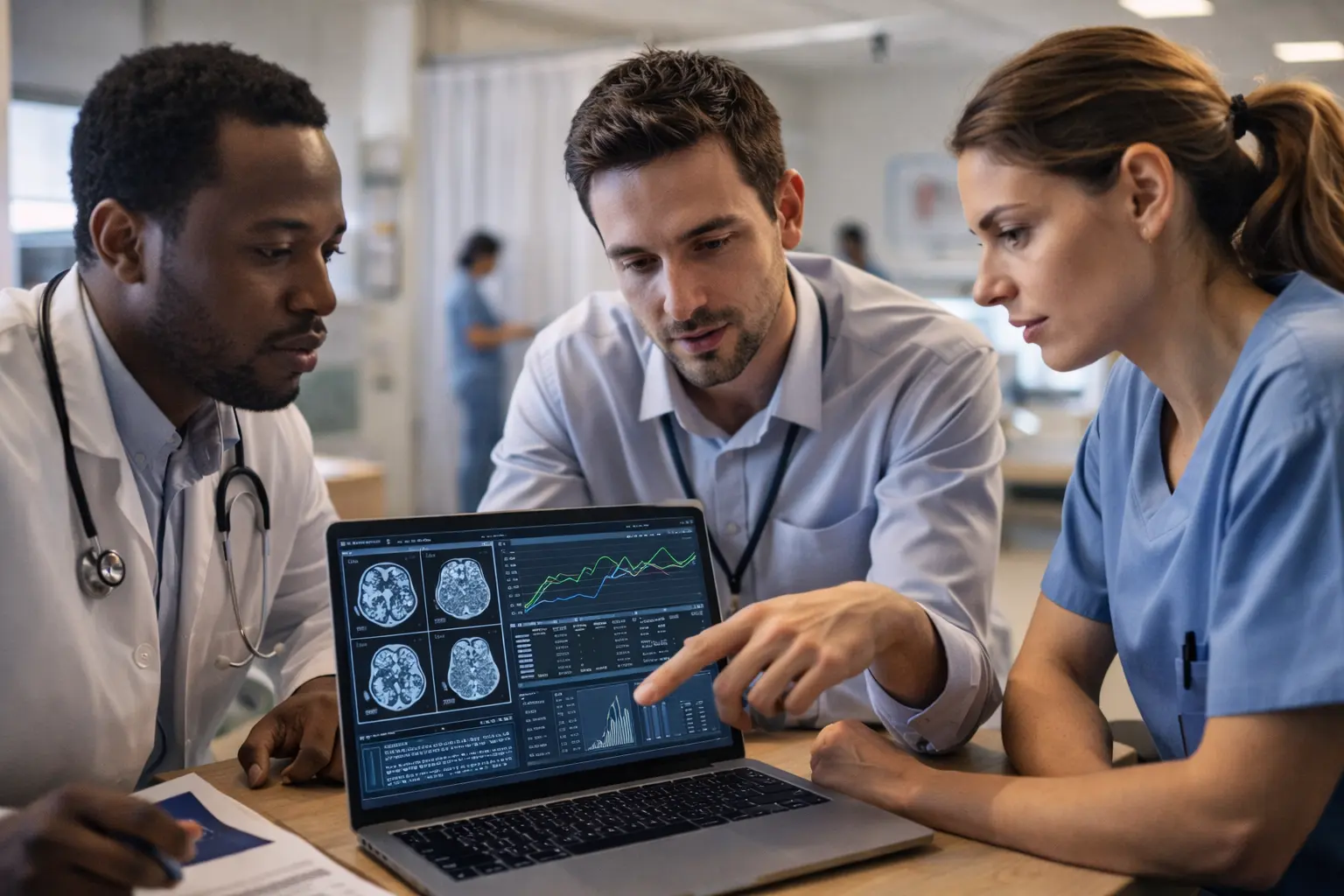
Your aging parent’s doctor mentions something about AI predicting health problems before they happen, but you have no idea what that means or whether it actually helps, and honestly, it feels like medicine is getting too complicated to understand anymore – but good machine learning practice in healthcare is actually making senior care simpler, safer, and more personal than ever before.
Understanding machine learning in healthcare
Machine learning in healthcare involves algorithms that learn from patterns in medical data to make predictions and recommendations. Think of it like this: instead of a doctor reviewing thousands of patient records manually, machine learning systems can spot patterns that humans might miss. For seniors, this means algorithms can analyze your blood pressure readings over months, compare them to similar patients, and flag potential issues early. A 75-year-old with diabetes might have their glucose patterns analyzed to predict a dangerous spike before it happens. The system learns from every patient interaction, becoming smarter over time. These algorithms power diagnostic tools that catch diseases like heart conditions or certain cancers at earlier, more treatable stages. They also help doctors personalize treatment plans by considering your unique medical history, medications, and lifestyle factors rather than applying a one-size-fits-all approach.
- Machine learning improves diagnostic accuracy by analyzing complex patterns in medical data
- Enables early intervention for better health outcomes through predictive alerts
- Supports healthcare provider decision-making with data-driven recommendations tailored to individual patients
Benefits of machine learning for senior health
Machine learning creates personalized care plans that adapt to how your health actually changes over time. Rather than following a generic protocol, your care adjusts based on real data from your wearable devices, clinic visits, and home monitoring. Predictive analytics work like an early warning system – the technology identifies patterns suggesting you might develop a urinary tract infection, fall risk, or medication side effects before symptoms become serious. Real-time monitoring through connected devices means your healthcare team gets alerts if something shifts unexpectedly, allowing them to call you or adjust medications proactively. Consider a senior with heart failure: machine learning can track fluid retention patterns from daily weight measurements and alert the doctor to increase diuretics before breathing problems start. Another example is fall prevention – algorithms analyze gait changes from wearable sensors to predict increased fall risk, prompting physical therapy adjustments. This approach transforms healthcare from reactive (treating problems after they occur) to proactive (preventing problems before they start).
📘 Fix your day in under 2 minuteschoose where to begin:
Implementing machine learning in senior care
Senior care facilities begin by integrating wearable devices like smartwatches or specialized sensors that continuously monitor heart rate, sleep patterns, activity levels, and vital signs. These devices transmit data securely to electronic health records, where machine learning models analyze trends. A practical example: a senior living community uses wearable sensors to track nighttime bathroom visits – an increase might signal urinary tract infection, prompting early testing and treatment. Electronic health records become the foundation for analysis, combining medication lists, lab results, doctor notes, and patient history into one data source. Machine learning models then identify which seniors are at highest risk for specific conditions, allowing staff to prioritize interventions. Predictive modeling for disease prevention works by analyzing historical data to identify seniors likely to develop pneumonia, diabetes complications, or cognitive decline. Staff can then implement preventive measures like vaccination reminders, nutrition adjustments, or cognitive exercises. Implementation requires training staff to understand recommendations, establishing clear protocols for acting on alerts, and ensuring technology integrates smoothly into existing workflows without creating burden.
Ensuring privacy and security in machine learning
Protecting seniors’ health information is non-negotiable when using machine learning systems. Encryption scrambles data so only authorized people can read it, both when information travels between devices and when it sits in storage. Access controls ensure only necessary staff members can view your records – your physical therapist doesn’t need access to your psychiatric history. Regular security audits test systems for vulnerabilities, like checking if hackers could break in. A real scenario: a senior care facility implements machine learning for fall prediction but must ensure that the algorithms only access relevant health data, not financial information or family details. De-identification techniques remove names and identifying details before researchers use data to improve algorithms, protecting privacy while advancing science. Compliance with regulations like HIPAA (in the US) or GDPR (in Europe) is mandatory. Facilities must have clear policies about what data is collected, how long it’s kept, who can access it, and what happens if there’s a breach. Seniors and families should receive transparent explanations about how their data is used and have the right to opt out of certain uses while still receiving care.
Challenges and future trends in senior patient care
Data bias remains a significant challenge because machine learning models learn from historical data that may reflect past inequities. If algorithms were trained primarily on data from younger, healthier populations, they might not work as well for frail seniors or certain ethnic groups. Model interpretability matters because seniors and doctors need to understand why an algorithm recommends a specific action – a black box recommendation feels unsafe. A hypothetical scenario: a machine learning model recommends against aggressive treatment for a 78-year-old with cancer, but neither the doctor nor patient understands the reasoning, making it impossible to trust or challenge the decision. Future trends include AI-driven virtual assistants that answer health questions, remind seniors to take medications, and detect changes in speech or cognition suggesting cognitive decline. Enhanced predictive analytics for geriatric care will focus specifically on senior-relevant outcomes like maintaining independence, preventing falls, and managing multiple chronic conditions simultaneously. Federated learning allows facilities to improve algorithms collaboratively without sharing sensitive patient data. Explainable AI ensures recommendations come with clear reasoning that patients and doctors can understand and evaluate.
Machine learning in healthcare offers enhanced diagnostic accuracy, personalized care plans, and real-time health monitoring for seniors. Integrating these practices can lead to improved health outcomes for older adults.
How can machine learning benefit senior patients?
Machine learning benefits senior patients by providing personalized care plans that adapt to individual health patterns, predictive analytics that detect health issues early before symptoms develop, continuous monitoring through wearable devices that alert doctors to changes, and support for healthcare providers in making treatment decisions based on data rather than guesswork.
What are the key challenges of implementing machine learning in senior care?
Key challenges include data bias where algorithms may not work equally well for all seniors, model interpretability so patients and doctors understand why recommendations are made, ensuring privacy and security of sensitive health information, training staff to use systems effectively, and addressing concerns about over-reliance on technology rather than human judgment in care decisions.
Others also read:
Disclaimer: This article is for informational purposes only and is not a substitute for professional medical advice. Always consult a healthcare professional for personal guidance.
This guide has been prepared and reviewed by the GlobalHealthBeacon editorial team and reflects current medical research as of 2026. It provides structured, evidence-based information to support informed health decisions.
← Go to the good machine learning practice in healthcare main guide
