You shake someone’s hand and feel your grip falter, or you struggle to open a jar without thinking twice, and suddenly you’re wondering if your body is already declining before you’ve even hit your peak.
Why grip strength matters
Grip strength is far more than just a party trick or a measure of how tough you are. It’s actually a window into your overall health and longevity. Research consistently shows that people with stronger grip strength tend to live longer, recover better from illness, and maintain independence well into their later years. Think of it this way: your grip reflects the strength of your entire muscular system. When your hands and forearms are strong, it signals that your muscles throughout your body are functioning well. Young adults who maintain good grip strength now are essentially investing in their future selves. Studies have linked weak grip strength to increased risk of heart disease, stroke, and early mortality, even in people who seem otherwise healthy. The connection is so strong that doctors now use grip strength as a screening tool to identify people at risk for serious health problems.
- Improves daily functionality and quality of life
- Reduces the risk of disability and frailty in older age
- Helps maintain muscle mass and bone density
How to measure grip strength
Measuring your grip strength is straightforward and gives you a concrete baseline to track progress. A hand dynamometer is the gold standard tool, and it’s simple to use. You hold the device in your hand, position your arm at a 90-degree angle, and squeeze as hard as you can for a few seconds. The device records your maximum force in kilograms or pounds. Most gyms, physical therapy clinics, and doctor’s offices have dynamometers available. For young adults, a healthy grip strength typically ranges from 40 to 70 kilograms depending on age, gender, and body size. The beauty of regular monitoring is that you get real feedback. Unlike vague feelings of weakness, a dynamometer gives you numbers. You can measure yourself every month or every few months and watch your progress as you train. This objective data keeps you motivated and helps you adjust your training if you’re not seeing improvements.
📘 Fix your day in under 2 minuteschoose where to begin:
Factors affecting grip strength
Your grip strength isn’t fixed. It changes based on several factors you can actually control. Age plays a role, yes, but it’s not destiny. Most people peak in grip strength around their 30s and 40s, then experience a gradual decline if they don’t stay active. Gender matters too, with men typically having stronger grip strength than women on average, though individual variation is huge. Physical activity level is the game-changer here. Someone who trains regularly can maintain or even improve grip strength well into their 60s and beyond. Nutrition also impacts grip strength. Your muscles need protein, magnesium, and vitamin D to function optimally. Sleep quality affects recovery and muscle growth. Even stress levels matter, since chronic stress can interfere with muscle development and overall strength. The encouraging news is that most of these factors are within your control right now.
Tips to improve grip strength
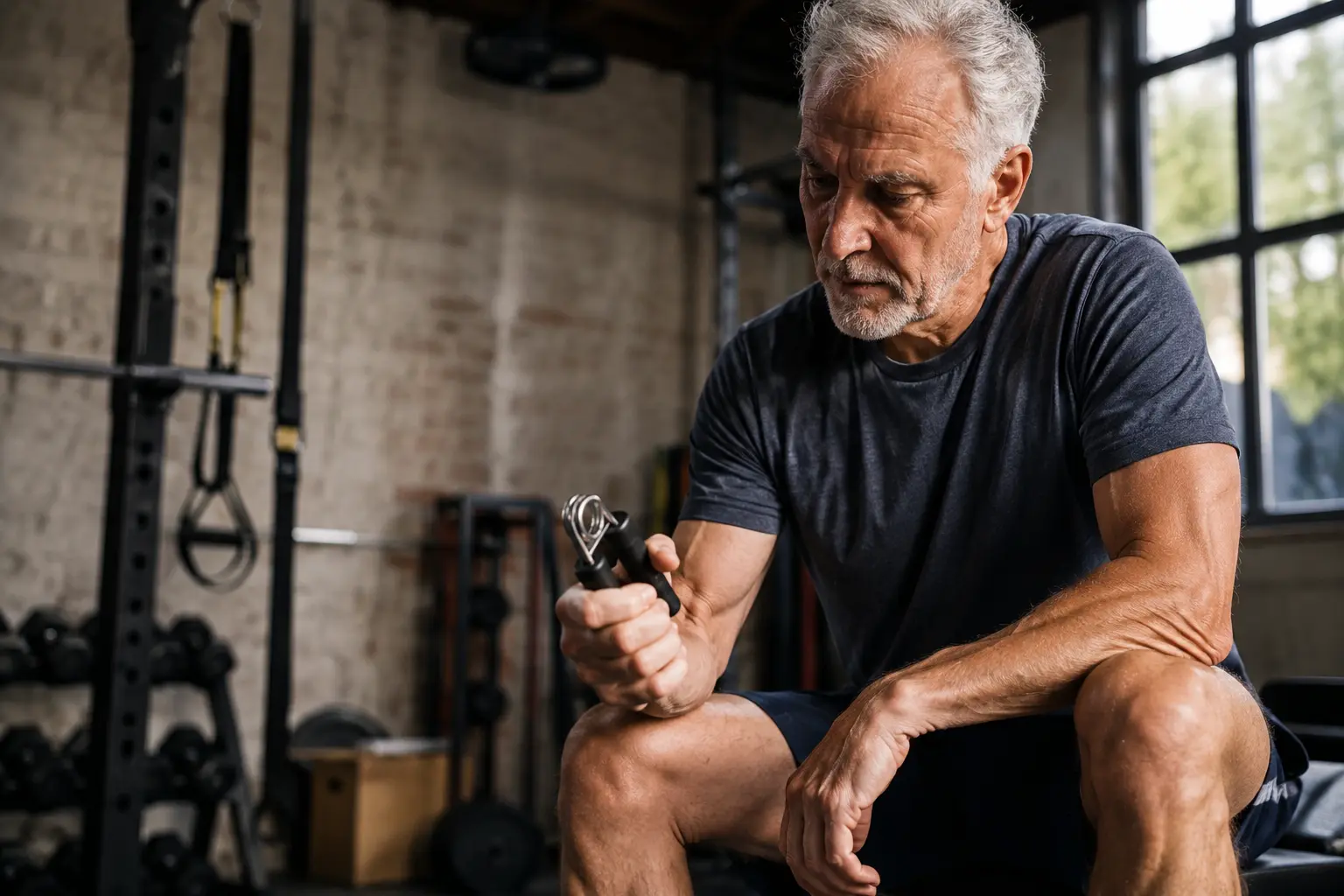
Building grip strength doesn’t require fancy equipment or hours at the gym. Start with farmer’s walks, where you simply hold heavy dumbbells or kettlebells at your sides and walk for distance. This exercise builds grip endurance and forearm strength simultaneously. Wrist curls, done with light weights, target the flexor muscles on the underside of your forearm. Reverse wrist curls work the extensors on top. Dead hangs from a pull-up bar, even for just 20 to 30 seconds, build serious grip strength over time. Squeezing a stress ball or hand gripper throughout the day adds extra volume without formal training. Climbing, whether on a rope or rock wall, naturally develops grip strength. The key is consistency. Add two or three grip-focused exercises to your routine twice a week. Pair this with adequate protein intake, around 0.8 to 1 gram per pound of body weight, to support muscle recovery. Stay hydrated and prioritize sleep so your muscles can repair and grow stronger.
Maintaining grip strength for longevity
Maintaining grip strength is a lifelong practice, not a one-time achievement. The goal is to build the habit now while you’re young so it becomes automatic. Think of it as brushing your teeth for your muscles. Once you establish a routine of grip-focused exercises, it takes minimal effort to maintain. Aim for at least two sessions per week targeting your grip and forearms. As you age, this consistency becomes your insurance policy against weakness and disability. Beyond grip training, full-body strength work matters. Squats, deadlifts, push-ups, and rows all contribute to overall muscular health. Stay active with activities you actually enjoy, whether that’s sports, hiking, or dancing. Eat well, focusing on whole foods with plenty of protein. Manage stress and sleep well. These lifestyle factors compound over decades. A young adult who takes grip strength seriously now is essentially saying yes to independence, vitality, and quality of life in their 60s, 70s, and beyond.
Strong grip strength is linked to improved functionality, longevity, and reduced risk of chronic diseases. Regularly measuring and enhancing grip strength through exercise and proper nutrition can play a crucial role in maintaining overall health and quality of life.
Can grip strength predict longevity?
Yes, research has shown a strong correlation between grip strength and longevity. Individuals with higher grip strength tend to live longer and have a reduced risk of developing chronic diseases.
How can I improve my grip strength?
You can improve your grip strength by incorporating specific exercises targeting the muscles of the hand and forearm, eating a balanced diet rich in protein, and engaging in regular physical activity, particularly resistance training.
Disclaimer: This article is for informational purposes only and is not a substitute for professional medical advice. Always consult a healthcare professional for personal guidance.
This guide has been prepared and reviewed by the GlobalHealthBeacon editorial team and reflects current medical research as of 2026. It provides structured, evidence-based information to support informed health decisions.
