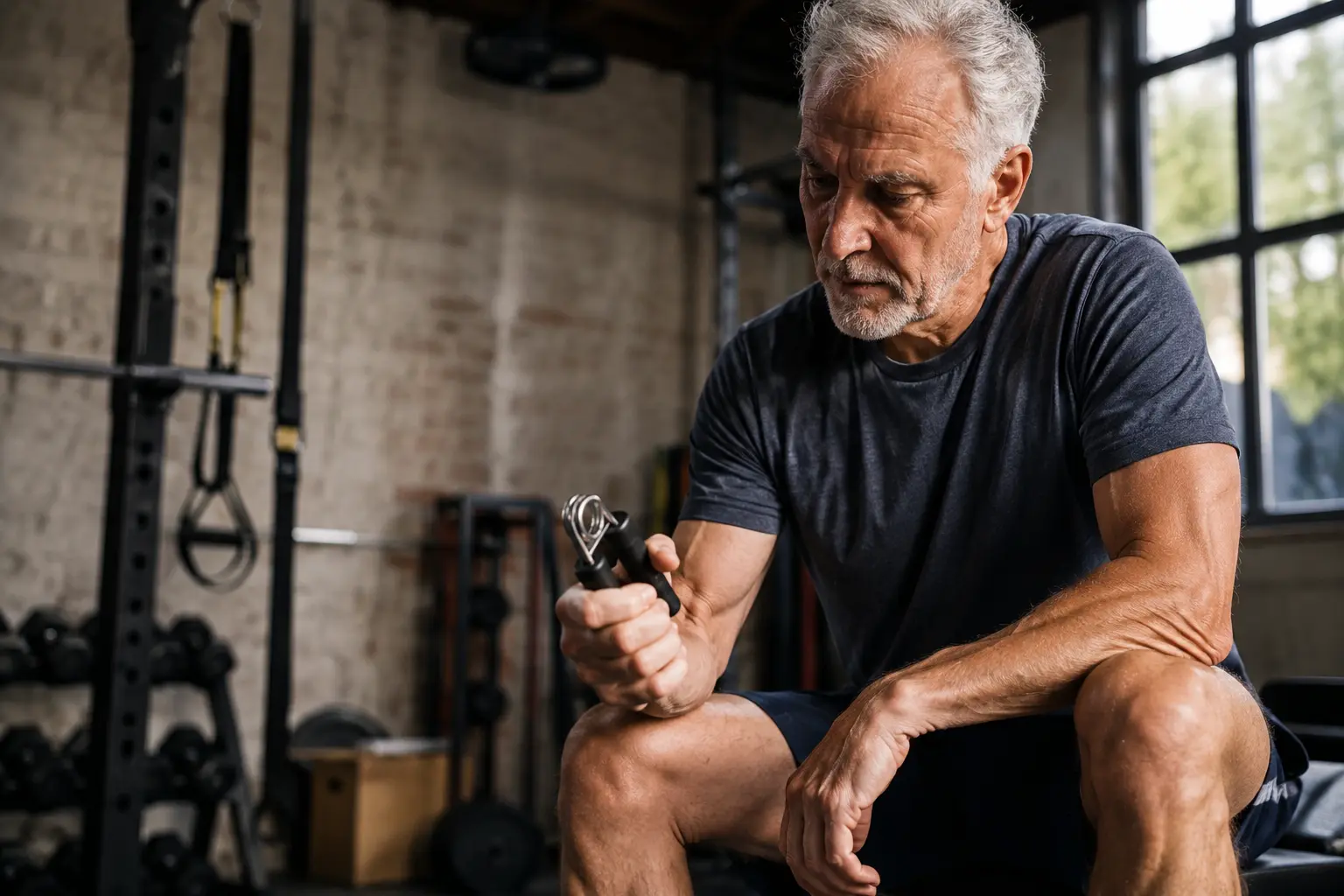
You’re scrolling through your phone, opening a jar feels harder than it used to, and you can’t shake the nagging feeling that your body is aging faster than it should – but understanding grip strength and longevity might just be the wake-up call that changes everything.
The importance of grip strength
I remember the first time I realized grip strength mattered. I couldn’t open a pickle jar at a friend’s house, and it hit me that this wasn’t just about embarrassment – it was a signal. Grip strength is fundamentally connected to your overall health in ways most young adults never consider. Think of it as your body’s report card. When researchers track grip strength across populations, they consistently find that people with weaker grips face higher risks of heart disease, stroke, and even premature mortality. It’s not magic or correlation without cause; your grip reflects the health of your muscles, bones, and cardiovascular system all at once. Studies show that grip strength can predict your risk of developing serious health conditions years before symptoms appear. Beyond disease prevention, weak grip strength directly impacts your independence – struggling to carry groceries, lift your kids, or even hold yourself up during a fall. This isn’t about vanity or gym aesthetics; it’s about maintaining the ability to live life on your own terms.
- Grip strength can predict heart disease and stroke risk.
- It affects your ability to perform daily tasks and maintain independence.
- Regularly testing and improving grip strength can lead to better health outcomes.
How to test your grip strength
Testing your grip strength doesn’t require expensive equipment or a gym membership. The gold standard is a hand dynamometer, a simple device that costs around 20-30 dollars and gives you an objective measurement in kilograms or pounds. You hold it in your hand, squeeze with maximum effort for a few seconds, and get your result. But here’s the practical reality: you can start assessing your grip right now without buying anything. Try holding a can of soup at arm’s length for 30 seconds, or squeeze a stress ball and see how long you can maintain pressure. These informal tests won’t give you precise numbers, but they reveal patterns. The key is consistency. Test yourself the same way each time, ideally once a month, under similar conditions. Morning testing tends to be more accurate since fatigue hasn’t accumulated yet. Track your results in a simple spreadsheet or notes app. Over weeks and months, you’ll see whether you’re improving, staying stable, or declining. That data becomes your personal health dashboard.
💬 Ready to feel better in 2 minutes?choose where to begin:
Exercises to improve grip strength
Building grip strength doesn’t require complicated routines. Start with farmer’s carries: grab two dumbbells or even heavy grocery bags and walk for 30-60 seconds. It sounds simple because it is, yet it’s devastatingly effective. Your forearms and hands work overtime to maintain grip while your entire body stabilizes under load. Add wrist curls next – hold a light weight, rest your forearm on a table, and slowly curl your wrist upward and downward. Do three sets of 12-15 repetitions. Hand squeezes come next: use a grip trainer or squeeze a tennis ball hard for 5-10 seconds, rest, repeat for 10 rounds. The mistake most people make is going too hard too fast and burning out. Progressive overload is your friend here – gradually increase weight, duration, or intensity every two weeks. If farmer’s carries feel easy at 15 pounds, move to 20. If your grip trainer feels light, upgrade to a harder resistance. Consistency matters more than intensity. Three sessions per week beats one intense session followed by a month of nothing. Your forearms and hands adapt slowly, so patience is essential.
The emotional impact of strong grip strength
Here’s what nobody talks about: the psychological shift that happens when you feel genuinely strong. I noticed it after just four weeks of consistent grip training. Opening jars became effortless. Shaking someone’s hand felt confident instead of anxious. Carrying my partner’s luggage without strain felt like a small victory. That shift matters deeply. When your body feels capable, your mind follows. You stop second-guessing yourself in physical situations. You feel less vulnerable, more self-assured. Young adults especially benefit from this because we’re still forming our relationship with aging and capability. Building grip strength early sends a powerful message to your brain: you’re taking control of your health, you’re not passively accepting decline. This confidence spills into other areas of life – you’re more likely to tackle other health goals, exercise regularly, and make better food choices. The emotional payoff isn’t vanity; it’s autonomy. It’s knowing you can handle what life throws at you without depending on others for basic physical tasks.
Testing and improving grip strength is not just about physical ability; it’s a crucial marker for overall health and longevity. By understanding the importance of grip strength, incorporating exercises, and tracking progress, young adults can take proactive steps towards a healthier future.
Can grip strength really predict longevity?
While grip strength is not a definitive predictor of longevity, studies show a strong correlation between low grip strength and higher mortality rates in adults. Improving grip strength is associated with better overall health outcomes.
How often should I test my grip strength?
It is recommended to test your grip strength regularly, such as once a month, to track changes and progress. Consistency in testing and incorporating grip-strengthening exercises into your routine can help maintain optimal grip strength.
Others also read:
Disclaimer: This article is for informational purposes only and is not a substitute for professional medical advice. Always consult a healthcare professional for personal guidance.
This article presents an experience-based perspective and has been reviewed by the GlobalHealthBeacon editorial team in 2026. It provides structured, evidence-based information to support informed health decisions.
