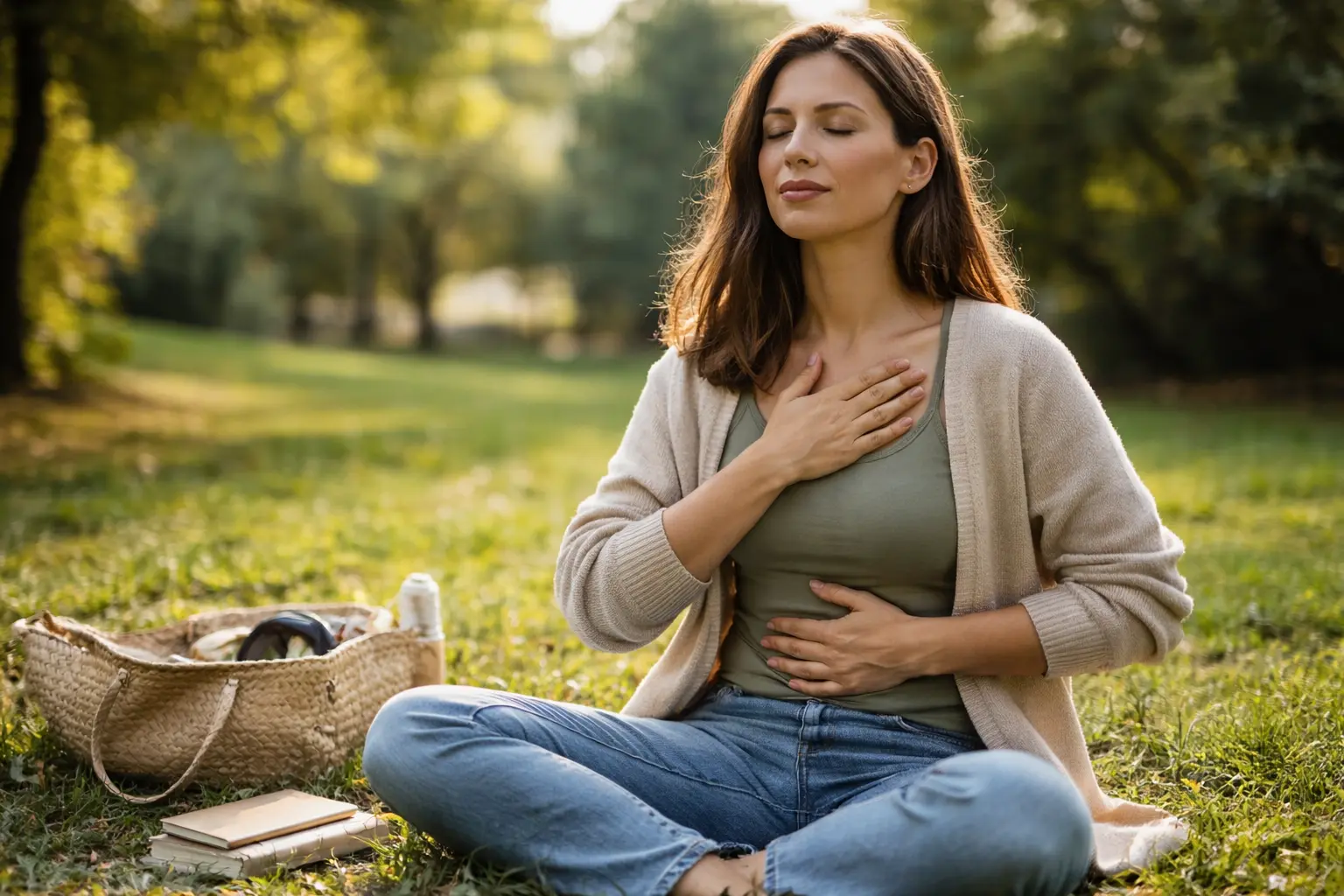
Your heart is racing, your thoughts are spiraling, and you feel like you’re drowning in worry – but grounding techniques for anxiety can pull you back to solid ground and help you reclaim your calm right now.
Understanding grounding techniques for anxiety
Grounding techniques are practical coping strategies designed to interrupt the anxiety cycle by anchoring your attention to the present moment. When anxiety takes hold, your mind often drifts into worst-case scenarios and future worries that feel very real. Grounding works by engaging your senses and your immediate environment, creating a bridge back to safety. For example, if you’re at work and suddenly feel a panic attack building, you might notice five things you can see, four you can touch, three you can hear, two you can smell, and one you can taste. This simple sensory exercise redirects your nervous system away from threat detection and toward present-moment awareness. Women often find that grounding techniques work best when practiced regularly, even during calm moments, so your brain recognizes them as a reliable tool when anxiety strikes. The beauty of these techniques is their accessibility – you don’t need special equipment, a therapist’s office, or hours of preparation. You can ground yourself anywhere, anytime, using only what’s available to you.
- Practice deep breathing exercises to center yourself and signal safety to your nervous system.
- Use sensory tools like essential oils, a stress ball, or calming music to anchor attention to the present.
- Engage in physical movement, such as stretching or walking, to shift your focus and release built-up tension.
Using visualization techniques for grounding
Visualization harnesses the power of your imagination to create a mental escape route when anxiety feels overwhelming. Your brain doesn’t always distinguish between vividly imagined experiences and real ones, which means a detailed mental journey to a peaceful place can genuinely calm your nervous system. Start by identifying a location that feels safe and restorative to you – this might be a childhood beach, a quiet forest, your grandmother’s garden, or even a completely imaginary sanctuary. Close your eyes and engage all your senses as you mentally walk through this space. What do you see? Notice the colors, the light, the textures. What do you hear? Perhaps waves, birds, wind through trees, or simply silence. What do you feel on your skin? Temperature, breeze, the ground beneath your feet. What do you smell? Salt air, flowers, earth, or fresh rain. By fully immersing yourself in sensory details, you create a powerful distraction from anxious thoughts and give your body permission to relax. Many women find that spending just three to five minutes in visualization can shift their entire nervous system state, making this technique especially valuable during moments of acute anxiety or before challenging situations.
📘 Fix your day in under 2 minuteschoose where to begin:
Mindfulness and meditation practices
Mindfulness is the practice of observing your thoughts and feelings without judgment, which sounds simple but requires gentle practice. When anxiety strikes, your instinct is often to fight it, push it away, or judge yourself for having anxious thoughts. Mindfulness teaches a different approach: noticing the anxiety without resistance. You might sit quietly for ten minutes and simply observe your breath, counting each inhale and exhale. When your mind wanders to worries, you gently acknowledge the thought and return to your breath without criticism. Over time, this practice helps you realize that anxious thoughts are just thoughts, not facts or predictions. Meditation deepens this work by creating a dedicated space where you practice this skill. Women often report that even five minutes of daily meditation reduces overall anxiety levels and increases their ability to stay calm during stressful moments. Apps like Insight Timer or Calm offer guided meditations specifically designed for anxiety, which can help you build the habit. The key is consistency – meditation is like exercise for your mind, and the benefits accumulate with regular practice rather than occasional use.
Grounding through physical contact
Physical touch activates your parasympathetic nervous system, the part of your body responsible for rest and recovery. When you’re anxious, your sympathetic nervous system is in overdrive, preparing your body for a threat. Intentional physical contact interrupts this pattern. Hugging a loved one for at least twenty seconds triggers the release of oxytocin, a hormone that naturally reduces stress and promotes feelings of safety. If you don’t have someone to hug, holding a pet provides similar benefits – the warmth and softness of an animal’s body is deeply calming. You can also ground yourself through self-soothing touch: gently rubbing your arms, holding your own hand, or placing your palm on your heart while taking slow breaths. Some women find that holding a smooth stone, a soft blanket, or even ice cubes provides grounding through tactile sensation. The temperature contrast of ice, for instance, can interrupt anxious thoughts by creating a strong sensory signal. The key is finding physical sensations that feel comforting rather than jarring to you. Experiment with different textures and temperatures to discover what your nervous system responds to most positively.
Creating a grounding toolkit for daily use
A personalized grounding toolkit is a collection of techniques and physical items you assemble based on what resonates with you. This might include a small jar of essential oil for the 5-4-3-2-1 sensory technique, a smooth stone for tactile grounding, a playlist of calming music, a journal for writing down anxious thoughts, and a list of your favorite visualization locations. Keep these items accessible in your bag, at your desk, or on your nightstand so they’re ready when anxiety appears. The toolkit concept works because it removes decision-making from moments when your anxious brain is already overwhelmed. Instead of wondering what to do when panic hits, you simply reach for your toolkit and follow the plan you’ve already created. Many women find it helpful to test different techniques during calm moments first, noting which ones feel most effective. You might discover that grounding works better for you in combination – perhaps starting with deep breathing, moving into visualization, and finishing with a sensory object. Your toolkit will evolve as you learn more about your anxiety patterns and what brings you relief. Revisit and refresh it regularly, removing techniques that no longer serve you and adding new ones you discover.
Grounding techniques offer effective strategies to manage anxiety by bringing your focus back to the present moment through sensory experiences, visualization, mindfulness, physical touch, and creating a personalized grounding toolkit. These tools work best when practiced consistently and tailored to your individual needs and preferences.
How quickly can grounding techniques alleviate anxiety symptoms?
Grounding techniques can provide immediate relief by interrupting anxious thoughts and helping you focus on the present moment. The effectiveness may vary for each individual, but practicing these techniques consistently can lead to long-term benefits. Some women report feeling calmer within minutes of using grounding, while others need five to ten minutes of practice to notice a shift.
Are grounding techniques a substitute for professional mental health treatment?
Grounding techniques can be helpful as a complement to professional mental health treatment for anxiety. It’s important to consult with a healthcare provider to create a comprehensive plan that addresses your individual needs. These techniques work best alongside therapy or medication when anxiety is severe or persistent.
Others also read:
Disclaimer: This article is for informational purposes only and is not a substitute for professional medical advice. Always consult a healthcare professional for personal guidance.
This guide has been prepared and reviewed by the GlobalHealthBeacon editorial team and reflects current medical research as of 2026. It provides structured, evidence-based information to support informed health decisions.
