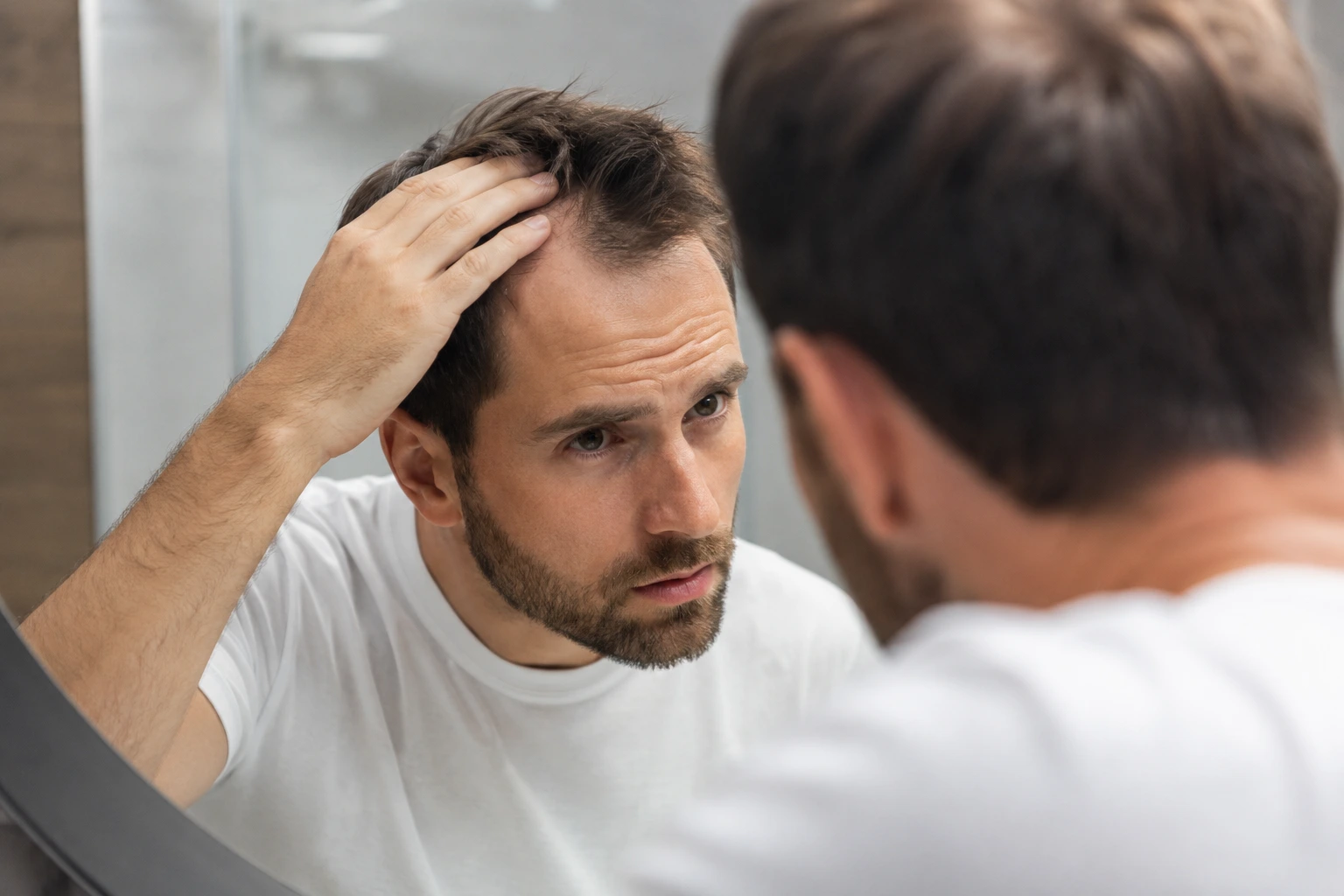
You’re noticing more hair in your shower drain, your part looks wider than it used to, and honestly it’s starting to freak you out – but understanding hair thinning early signs right now could be the difference between catching this early and watching it spiral.
Understanding the early signs
Hair thinning doesn’t announce itself loudly. It creeps up gradually, which is why most young adults miss the warning signals until things have already progressed. The early signs are subtle but detectable if you know what to look for. Start by paying attention to your shower drain after washing. If you’re noticing a noticeably larger clump of hair than usual, that’s your first clue. Next, examine your part line in natural light. Does it look wider than it did six months ago? Sometimes the scalp becomes more visible simply because there’s less hair covering it. You might also notice that your hair feels thinner when you run your fingers through it, or that hairstyles that used to feel full now look a bit flat. Some people describe it as their hair losing its body or bounce. These changes happen gradually, which is why documenting them over time helps. Take a photo of your part line now, then compare it monthly. Small shifts become obvious when you have visual proof.
- Pay attention to the amount of hair you find in your shower or on your pillow
- Check for any widening gaps in your hair part
- Monitor any changes in the thickness of your hair strands
What causes hair thinning
Understanding why your hair is thinning matters because the cause determines your solution. Genetics plays a huge role, especially if your parents or grandparents experienced hair loss. If that’s your situation, you’re dealing with pattern hair loss, which tends to follow a predictable path. Hormonal imbalances are another major culprit, particularly for young women dealing with polycystic ovary syndrome or thyroid issues. Stress is surprisingly powerful too. When you’re under chronic stress, your body shifts hair follicles into a resting phase prematurely, leading to noticeable shedding weeks or months later. Nutrition gaps matter more than most people realize. If you’re not getting enough iron, zinc, biotin, or protein, your hair suffers first because your body prioritizes vital organs. Certain medical conditions like alopecia areata or scalp infections can also trigger thinning. The key is identifying your specific cause because treating the wrong problem wastes time and money. A dermatologist can run tests to rule out deficiencies or hormonal issues, giving you a clear direction forward.
📘 Fix your day in under 2 minuteschoose where to begin:
Preventive measures
Once you know what’s causing your hair thinning, prevention becomes actionable. Start with nutrition. Eat foods rich in iron like spinach and red meat, include protein at every meal since hair is made of protein, and consider a biotin supplement if your diet is lacking. Stress management isn’t just about feeling better, it directly impacts your hair growth cycle. Find what works for you, whether that’s exercise, meditation, or simply setting boundaries with work. Your hair care routine matters too. Stop using tight hairstyles that pull on your scalp, switch to a silk pillowcase to reduce friction, and use a gentle shampoo designed for sensitive scalps. Avoid excessive heat styling and harsh chemical treatments. If you’re female and suspect hormonal issues, talk to your doctor about testing and potential solutions. For everyone, consistent sleep and regular exercise improve overall circulation, which nourishes hair follicles. These aren’t quick fixes, but they address root causes and work over time. Most people see improvements within three to six months of consistent effort.
Seeking professional advice
If you’ve been noticing hair thinning early signs for more than a few months, or if the shedding feels excessive, professional evaluation becomes important. A dermatologist can examine your scalp under magnification, assess hair density, and identify patterns that point to specific conditions. They might order blood work to check for thyroid problems, iron deficiency, or hormonal imbalances. A trichologist specializes specifically in hair and scalp health and can offer detailed analysis of your hair loss pattern. Don’t wait until you’re significantly bald to seek help. Early intervention often means better outcomes and more treatment options. Your doctor might recommend topical treatments like minoxidil, oral medications, or lifestyle adjustments tailored to your situation. Some people benefit from low-level laser therapy or platelet-rich plasma treatments. The point is that professional guidance gives you a personalized plan rather than guessing. Many young adults feel embarrassed about hair loss, but dermatologists see this constantly and approach it clinically and supportively.
Embracing changes
Hair thinning is genuinely common among young adults, affecting millions regardless of gender or background. Knowing this doesn’t make it less frustrating, but it does mean you’re not alone and that solutions exist. Being proactive right now, while you’re noticing early signs, puts you in the best position to slow or even reverse the process. Some cases of early hair thinning respond well to intervention, especially when caught early. Others require ongoing management, but that’s manageable with the right approach and mindset. The journey toward healthier hair isn’t about perfection or instant results. It’s about consistent action, patience, and adjusting your strategy as you learn what works for your body. Track your progress over months, not weeks. Celebrate small wins like reduced shedding or improved hair texture. If one approach doesn’t work, try another. Your hair health is worth the effort, and taking control of it now sets you up for better outcomes down the road.
Recognizing early hair thinning signs is crucial for young adults. Understanding the causes, preventive measures, and seeking professional advice can help in managing and improving hair health proactively.
Are hair thinning signs reversible?
In many cases, early hair thinning signs can be reversed with appropriate interventions like lifestyle changes, dietary adjustments, or medical treatments. However, prompt action is key to achieving positive outcomes.
How common is hair thinning in young adults?
Hair thinning can affect individuals of all ages, including young adults. Genetics, stress, nutrition, and lifestyle factors play a significant role in the prevalence of hair loss among this demographic.
Disclaimer: This article is for informational purposes only and is not a substitute for professional medical advice. Always consult a healthcare professional for personal guidance.
This guide has been prepared and reviewed by the GlobalHealthBeacon editorial team and reflects current medical research as of 2026. It provides structured, evidence-based information to support informed health decisions.
