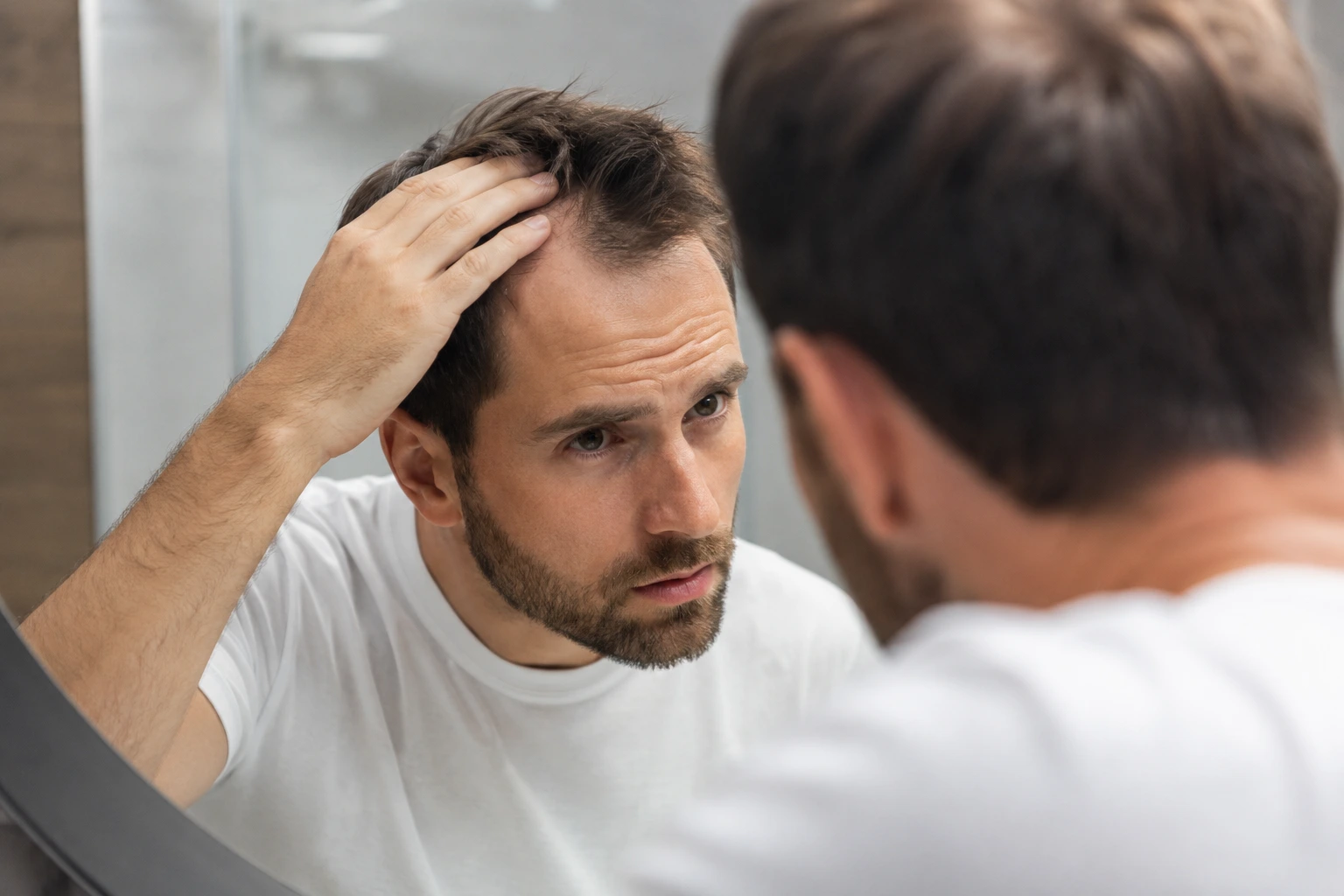
You’re noticing more hair in the shower drain than usual, your part looks wider, and you can’t shake the feeling that something’s off with your hair thinning early signs, so let’s cut through the confusion and figure out what’s actually happening.
Understanding the early signs
Hair thinning doesn’t announce itself loudly. It creeps up gradually, which is why so many young adults miss the initial warning signals until they’re staring at their reflection wondering when things changed. The process typically starts with subtle shifts: you might notice more strands collecting in your shower drain than before, or catch yourself spending extra time styling your part because it seems wider than it used to be. Some people describe it as their hair feeling thinner overall, like it used to have more body and volume but now lies flatter against the scalp. Pay attention to how your hair feels when you run your fingers through it. Does it feel less dense than six months ago? Are you seeing more of your scalp when you look down? These aren’t just cosmetic observations; they’re your body’s early signals that something in your hair growth cycle needs attention.
- Monitor your hair shedding daily and note any significant increase beyond the typical 50-100 hairs per day.
- Check your part line weekly by taking photos from the same angle to track changes objectively.
- Feel your hair texture regularly to detect shifts in thickness, density, or overall body.
Identifying potential causes
Understanding why your hair is thinning is half the battle. For young adults, the culprits are often interconnected. Genetics play a major role, but so do lifestyle factors that are entirely within your control. Stress is a significant player; when you’re under chronic pressure, your body shifts hair follicles into a resting phase prematurely, leading to noticeable shedding weeks or months later. Nutrition gaps are another common cause. If you’re skipping meals, relying on processed foods, or not getting enough protein, iron, or B vitamins, your hair suffers first. Hormonal shifts matter too, especially for women navigating birth control changes or irregular cycles. Even your daily habits count: excessive heat styling, tight hairstyles that pull on the scalp, or using harsh products can accelerate thinning. Medical conditions like thyroid disorders or autoimmune issues can also trigger hair loss. The key is identifying which factors apply to your situation so you can address them strategically.
📘 Fix your day in under 2 minuteschoose where to begin:
Taking preventative measures
Prevention starts with the basics and builds from there. First, audit your diet. Are you eating enough protein, healthy fats, and micronutrients like zinc, iron, and biotin? If not, that’s your starting point. Add more leafy greens, nuts, seeds, fatty fish, and eggs to your meals. Second, manage stress actively. This isn’t optional advice; chronic stress directly impacts hair health. Find what works for you: exercise, meditation, journaling, or spending time outdoors. Even 20 minutes daily makes a difference. Third, evaluate your hair care routine. Switch to sulfate-free shampoos, reduce heat styling to two or three times weekly, and let your hair air-dry when possible. When you do use heat, always apply a heat protectant spray first. Fourth, be gentle with your scalp. Avoid tight ponytails and braids that create tension. Finally, consider adding targeted supplements or hair growth products with proven ingredients like minoxidil or natural alternatives like saw palmetto, but discuss these with a healthcare provider first to ensure they’re right for you.
Seeking professional advice
If you’ve been noticing changes for more than a few weeks or if the thinning feels sudden and significant, it’s time to see a professional. Start with your primary care doctor to rule out underlying medical conditions like thyroid dysfunction, anemia, or nutritional deficiencies. They can order blood tests if needed. If your doctor rules out systemic issues, ask for a referral to a dermatologist who specializes in hair loss. A dermatologist can examine your scalp, assess the pattern of thinning, and determine whether you’re experiencing androgenetic alopecia (genetic hair loss), telogen effluvium (stress-related shedding), or another condition. They might perform a pull test or take a scalp biopsy in some cases. Once they’ve identified the cause, they can recommend targeted treatments like topical minoxidil, oral medications, or other interventions. Don’t delay this step if thinning is accelerating. Early intervention often yields better results, and professional guidance ensures you’re not wasting time or money on treatments that won’t work for your specific situation.
Embracing natural remedies
While waiting for professional appointments or alongside medical treatments, natural remedies can support your hair health journey. Scalp massages increase blood flow to hair follicles; spend five minutes daily massaging your scalp with your fingertips in circular motions. You can enhance this by using essential oils like rosemary or peppermint mixed with a carrier oil like coconut or jojoba oil. DIY hair masks using ingredients like avocado, egg, honey, or yogurt nourish your scalp and strands without harsh chemicals. Apply these once weekly, leave them on for 15-20 minutes, then rinse thoroughly. Consider switching to a silk pillowcase to reduce friction and breakage while you sleep. Stay hydrated; drinking enough water supports overall health including hair growth. Some people find success with scalp treatments containing neem oil or tea tree oil, which have antimicrobial properties. These natural approaches work best as part of a comprehensive strategy that includes nutrition, stress management, and professional care. They’re not magic fixes, but they’re valuable tools that complement other interventions and help you feel proactive about your hair health.
Recognize the early signs of hair thinning by monitoring shedding and scalp changes, identify underlying causes ranging from genetics to stress to nutrition, implement preventative measures through diet and stress management, consult healthcare professionals for proper diagnosis and treatment, and incorporate natural remedies to support your hair health journey.
Is hair thinning reversible?
The reversibility of hair thinning depends on the underlying cause. In some cases, early intervention with appropriate treatments and lifestyle changes can help reverse hair thinning to a certain extent.
Are there any natural remedies for hair thinning?
Natural remedies like scalp massages, using essential oils, and incorporating nutrient-rich foods in your diet can support hair health. While these remedies may not offer guaranteed results, they can contribute to overall hair well-being.
Others also read:
Disclaimer: This article is for informational purposes only and is not a substitute for professional medical advice. Always consult a healthcare professional for personal guidance.
This guide has been prepared and reviewed by the GlobalHealthBeacon editorial team and reflects current medical research as of 2026. It provides structured, evidence-based information to support informed health decisions.
