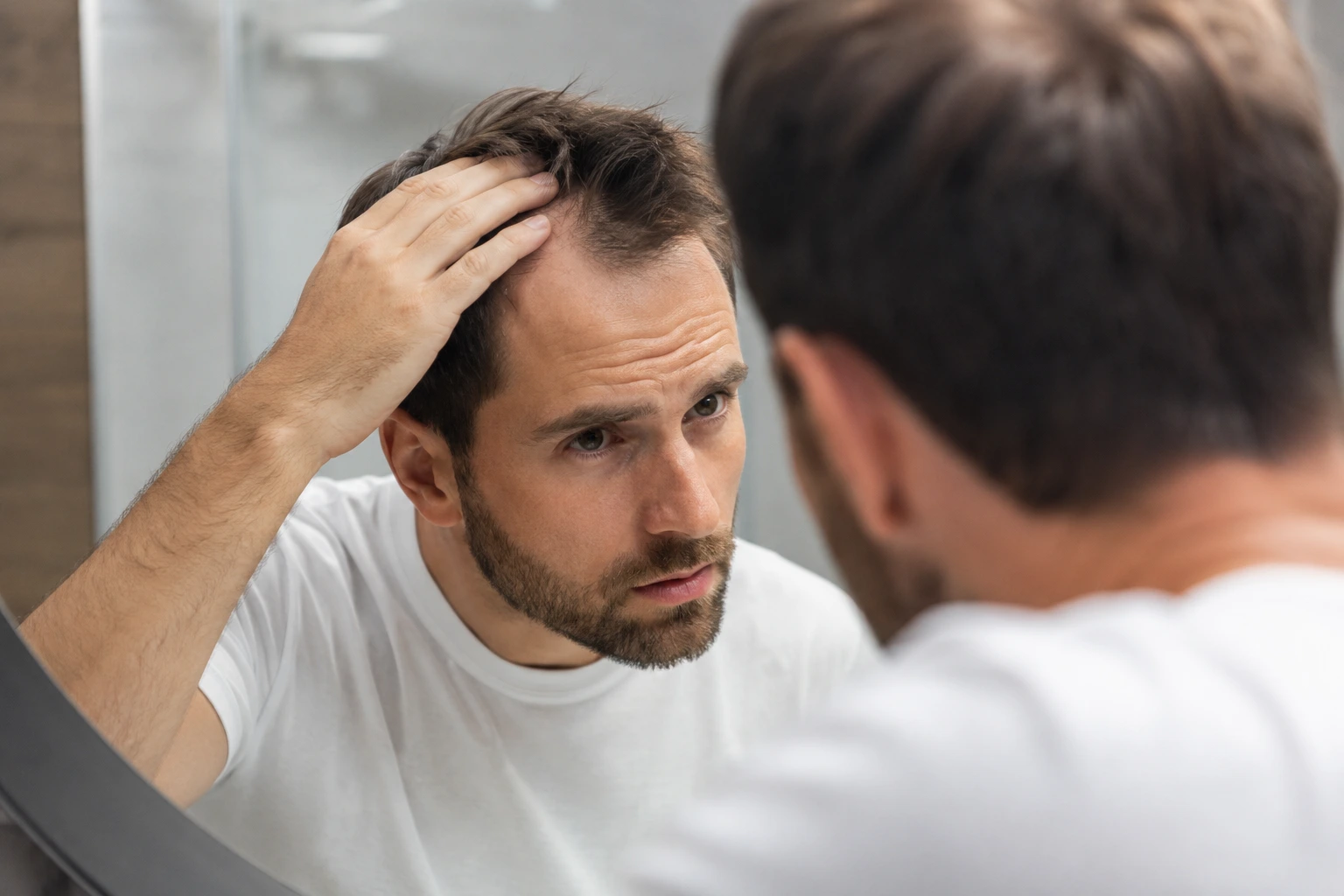
You’re noticing more hair on your pillow, in the shower drain, and your part looks wider than it used to, and those hair thinning early signs are making you wonder what’s actually happening up there.
Understanding hair growth cycles
Your hair doesn’t grow continuously. Instead, it moves through three distinct phases that repeat throughout your life. The anagen phase is the active growth period, where hair cells divide rapidly and push the strand upward, typically lasting between two to seven years. During this time, your hair is at its thickest and strongest. Next comes the catagen phase, a brief transitional period lasting just two to three weeks, where growth slows and the hair follicle begins to shrink. Finally, the telogen phase is the resting stage, lasting around two to four months, when the hair sits dormant before eventually shedding to make room for new growth. As you age, this entire cycle tends to accelerate and shorten. What once took five years might now take only three, meaning your hair spends less time in the active growth phase. This compression of the cycle means individual hairs never reach their full potential thickness or length, resulting in finer, shorter strands overall.
Hormonal changes and hair thinning
Hormones act like chemical messengers that directly influence how your hair follicles behave. In women, the decline in estrogen and progesterone during and after menopause can trigger noticeable hair thinning, particularly around the crown and part line. Men experience a different but equally significant shift as testosterone levels gradually decrease with age. What many people don’t realize is that it’s not the hormone itself but rather how sensitive individual follicles are to hormonal changes. Some follicles are genetically programmed to be more responsive to these fluctuations than others. When hormonal levels drop, affected follicles may shrink in a process called miniaturization, producing thinner, shorter hairs that are more fragile and prone to breaking. A woman in her late fifties might suddenly notice her hair feels less full despite not losing dramatically more strands. A man might see his hairline receding or his crown thinning gradually over several years. These changes happen because the hormonal environment your follicles have adapted to for decades is shifting, and some follicles simply can’t adjust as effectively.
Scalp health and nutrition
Your scalp is living tissue that requires proper nourishment to support healthy hair growth, yet many people neglect it as part of their overall wellness routine. The hair follicle is one of the most metabolically active structures in your body, constantly working to produce new cells and protein. Without adequate nutrition, this process falters. Biotin, a B-vitamin, supports keratin production, the primary protein in hair. Vitamin D regulates the hair growth cycle and is often deficient in older adults, especially those with limited sun exposure. Iron carries oxygen to follicles, and deficiency can push hair prematurely into the shedding phase. Zinc supports protein synthesis and immune function in the scalp. Many seniors unknowingly have subtle nutritional gaps due to reduced appetite, medication interactions, or digestive changes. For example, someone taking certain blood pressure medications might absorb fewer nutrients from food. Another person might have reduced stomach acid, making it harder to extract minerals from meals. Beyond nutrition, scalp circulation matters too. A healthy scalp has good blood flow delivering nutrients and oxygen. Gentle scalp massage, staying hydrated, and managing inflammation through diet can all support this process.
- Consume a balanced diet rich in fruits, vegetables, lean proteins, and whole grains to provide essential nutrients your hair follicles need to function optimally.
- Stay hydrated throughout the day by drinking adequate water, as dehydration affects nutrient transport and scalp health from within.
- Consider using scalp treatments or products recommended by dermatologists, and discuss any supplements with your healthcare provider to ensure they won’t interact with current medications.
🔬 Science-backed benefits in 2 minuteschoose where to begin:
Genetics and hair thinning
Your genes are perhaps the strongest predictor of whether you’ll experience hair thinning as you age. If both your parents had thinning hair, your likelihood increases significantly. If your mother’s father was bald, you may have inherited sensitivity to hormonal changes that affect hair follicles. Genetics don’t just determine whether you’ll thin, but also the pattern, timeline, and severity. Some people inherit genes that make their follicles extremely sensitive to hormonal shifts, while others have follicles that remain resilient throughout life. A man whose father started losing hair at forty might begin noticing changes around the same age, while his brother with the same parents might retain a full head of hair into his eighties. The difference lies in which specific genes each inherited and how they express. Understanding your genetic predisposition isn’t about accepting defeat. Rather, it’s about setting realistic expectations and recognizing that certain interventions might be more effective for you than others. If you know hair thinning runs in your family, discussing this history with a dermatologist early allows for proactive monitoring and earlier intervention if desired.
Stress and hair thinning
Chronic stress doesn’t just affect your mood and sleep, it directly disrupts your hair growth cycle through multiple biological pathways. When you’re under prolonged stress, your body releases cortisol and adrenaline, hormones that can push hair follicles prematurely from the growth phase into the shedding phase. This condition, called telogen effluvium, can result in noticeable hair loss weeks or months after a stressful event. A person might experience significant stress during a major life change, then notice excessive shedding three months later, not immediately connecting the two events. The stress response also diverts resources away from non-essential functions like hair growth, prioritizing survival mechanisms instead. Additionally, stress impairs immune function, potentially triggering inflammation in the scalp that interferes with follicle health. Managing stress through regular exercise, which increases blood flow and reduces cortisol, can help protect your hair. Mindfulness practices, adequate sleep, and maintaining social connections all support both mental health and hair health. Even simple activities like walking in nature, gardening, or spending time with grandchildren can reduce stress levels and support your body’s ability to maintain healthy hair growth.
Professional consultation and treatment options
A dermatologist can perform specific examinations to identify the root cause of your hair thinning rather than guessing at solutions. They might examine your scalp under magnification, ask detailed questions about your medical history and medications, or order blood tests to check for nutritional deficiencies or thyroid issues. Once the underlying cause is identified, treatment options become clearer. Topical minoxidil, available over the counter, works by extending the growth phase and increasing blood flow to follicles. Oral medications like finasteride work by modulating hormonal sensitivity in follicles. Low-level laser therapy stimulates cellular activity in dormant follicles. Platelet-rich plasma injections use concentrated growth factors from your own blood. Newer treatments continue to emerge as research advances. The right choice depends on your specific situation, the cause of your thinning, your health status, and your goals. A dermatologist can explain realistic timelines, potential side effects, and success rates for your particular case, helping you make an informed decision rather than trying random products hoping something works.
Hair thinning in seniors results from interconnected factors including age-related changes in the hair growth cycle, hormonal shifts, genetic predisposition, scalp and nutritional health, and stress levels. Rather than a single cause, it’s usually a combination of these elements working together. Understanding which factors are most relevant to your situation empowers you to make informed decisions about your hair care and whether professional treatment might be beneficial. Consulting with a dermatologist provides personalized insights based on your unique circumstances.
Can hair thinning be reversed?
Some treatments can slow hair thinning or stimulate regrowth in certain cases, particularly when the underlying cause is identified and addressed early. However, completely reversing significant hair thinning may not be possible, especially if it’s driven by genetics or advanced age-related changes. A dermatologist can assess your specific situation and explain what’s realistically achievable with available treatments.
Is hair thinning in seniors a common occurrence?
Hair thinning is extremely common in older adults due to age-related changes in hormonal levels, the hair growth cycle, and genetics. Many seniors experience some degree of hair thinning, making it a normal part of aging rather than an unusual condition. If you’re concerned about the extent or rate of thinning, a dermatologist can help determine if it’s within normal aging patterns or if treatment might be appropriate.
Others also read:
Disclaimer: This article is for informational purposes only and is not a substitute for professional medical advice. Always consult a healthcare professional for personal guidance.
This article has been prepared and reviewed by the GlobalHealthBeacon editorial team and is based on current medical research and published scientific literature available in 2026. It provides structured, evidence-based information to support informed health decisions.
