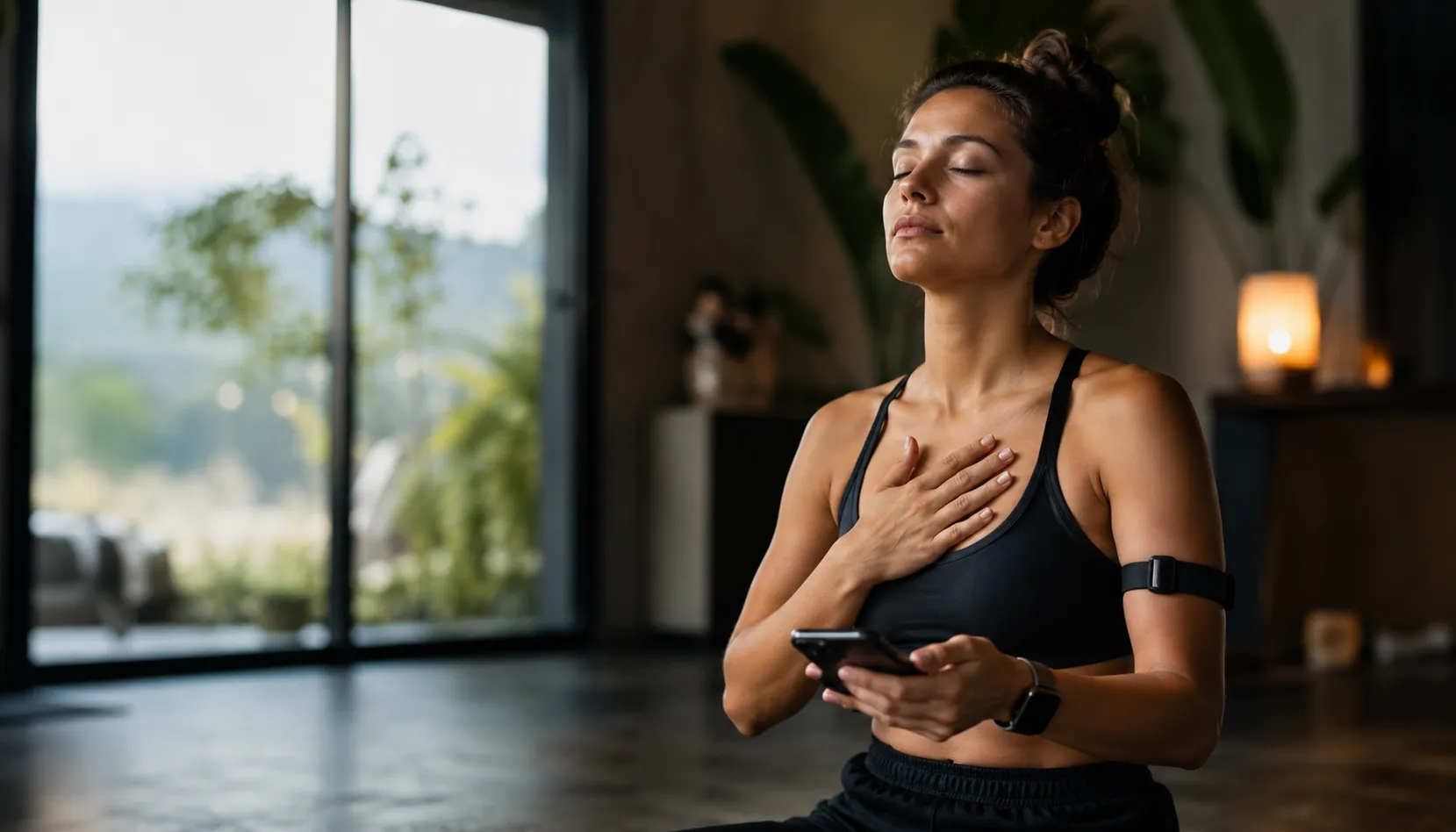
Your heart won’t stop racing even though you’re just sitting on the couch, and nobody seems to understand why your body feels so wired all the time, which is exactly why heart rate variability training might be the missing piece you’ve been searching for.
Understanding heart rate variability
Heart rate variability, or HRV, measures the millisecond-by-millisecond changes between your heartbeats. Think of it as your nervous system’s flexibility score. When you’re stressed, your heart tends to beat in a more rigid, predictable pattern. When you’re calm and resilient, those intervals vary more, which is actually a sign of better health. For women especially, HRV tells a deeper story because our bodies respond differently to hormones, stress cycles, and life phases. Imagine tracking HRV like reading your body’s emotional weather report. A high HRV suggests your parasympathetic nervous system, which promotes relaxation and recovery, is working well. A low HRV might signal that stress, anxiety, or poor sleep is taking its toll. Many women find that understanding their personal HRV baseline helps them recognize patterns they never noticed before, like how their cycle affects their stress capacity or how certain life events trigger physical responses.
- HRV reflects the body’s ability to adapt to various stressors and challenges.
- Low HRV is associated with chronic stress, anxiety, and poor cardiovascular health.
- Tracking HRV through wearable devices can help women better manage their stress and optimize their health.
Benefits of heart rate variability training
When Sarah started practicing heart rate variability training through guided breathing exercises, she noticed something unexpected: her anxiety attacks became less frequent and less intense. Within weeks, she felt more in control of her nervous system. Heart rate variability training includes techniques like box breathing, where you breathe in for four counts, hold for four, exhale for four, and hold again. Yoga, particularly restorative and yin styles, naturally enhances HRV by activating your parasympathetic nervous system. Meditation, even just ten minutes daily, has been shown to improve HRV significantly. These practices work because they literally retrain your body to shift out of fight-or-flight mode. Women often report feeling calmer, sleeping better, and having more emotional resilience after committing to HRV training. The beauty is that you don’t need expensive equipment or hours at a gym. A quiet corner, your phone, and consistency are enough to start rewiring your stress response.
💬 Ready to feel better in 2 minutes?choose where to begin:
Challenges of monitoring HRV in women
Here’s what most HRV apps don’t tell you: your menstrual cycle dramatically influences your readings. During the follicular phase, your HRV might be naturally higher. During the luteal phase, it typically dips. Jessica spent months thinking her HRV training wasn’t working until she realized she was comparing her day-fourteen readings to her day-twenty-eight readings. That’s like comparing apples to oranges. Women also experience HRV fluctuations tied to hormonal birth control, perimenopause, and even caffeine sensitivity differently than men. Sleep quality, hydration, and even the time of day you measure matter more for women. Wearable devices sometimes struggle with women’s smaller wrist circumferences or different skin tones, affecting accuracy. The key is tracking your personal trends over weeks and months rather than obsessing over individual daily numbers. Understanding your unique HRV patterns, including how your cycle influences them, transforms monitoring from frustrating to empowering.
Embracing the journey to heart health
Real heart health isn’t about achieving some perfect HRV number you saw online. It’s about listening to what your body is telling you and responding with compassion. When you feel overwhelmed, maybe that’s the day for gentle yoga instead of intense cardio. When your HRV is low, it might be your body asking for extra sleep or a walk in nature rather than pushing harder. Many women find community invaluable on this journey. Sharing your HRV experiences with friends or online groups normalizes the ups and downs and reminds you that struggling with stress is universal, not personal failure. Prioritizing self-care isn’t selfish; it’s the foundation of sustainable heart health. Some women journal alongside their HRV tracking, noting what they ate, how they slept, their stress levels, and their emotions. This detective work reveals your personal triggers and solutions. The journey to heart health through HRV training is deeply personal, and that’s its greatest strength.
Heart rate variability training offers women valuable insights into their stress levels and overall well-being. By engaging in practices that enhance HRV, women can improve their resilience to stress and promote heart health, all while supporting each other in their wellness journeys.
How can women improve their heart rate variability?
Women can improve their heart rate variability through activities like deep breathing exercises, meditation, and yoga, which help promote relaxation and resilience to stress.
What challenges do women face in monitoring heart rate variability?
Women may face challenges in monitoring heart rate variability due to hormonal fluctuations, menstrual cycle variations, and unique heart rate patterns. Understanding these factors is essential for accurate interpretation of HRV data.
Others also read:
Disclaimer: This article is for informational purposes only and is not a substitute for professional medical advice. Always consult a healthcare professional for personal guidance.
This article presents an experience-based perspective and has been reviewed by the GlobalHealthBeacon editorial team in 2026. It provides structured, evidence-based information to support informed health decisions.
