You’re tired of feeling stuck between two choices, wondering if you’re wasting your time sweating at home when the real gains happen at the gym, or if you’re just throwing money away on a membership you barely use, so let’s settle this once and for all with what the science actually says about home workouts versus gym results.
Benefits of home workouts
Home workouts eliminate the friction that often derails fitness routines before they even start. Consider Sarah, a busy mother of two who used to spend 45 minutes commuting to and from the gym three times weekly. By shifting to home-based training, she reclaimed nearly four hours per week. Beyond time savings, home workouts remove psychological barriers like gym anxiety or self-consciousness that prevent many women from starting. The financial advantage is substantial too, with annual gym memberships ranging from 300 to 1,200 dollars, whereas basic equipment like resistance bands and dumbbells cost a fraction of that upfront. Home environments also allow for personalized pacing without social pressure, making it easier to maintain consistency during life’s unpredictable moments. Women juggling careers, caregiving, or health challenges often find that home training removes the excuse of inconvenience, transforming sporadic exercise into a sustainable habit.
Advantages of gym workouts
Gyms function as specialized environments designed specifically for progressive physical adaptation. The equipment variety is genuinely significant: adjustable cable machines, leg presses, rowing machines, and free weights in incremental loads allow precise targeting of muscle groups that bodyweight alone cannot fully challenge. Group fitness classes create what researchers call social facilitation, where the presence of others and structured instruction enhance motivation and adherence. A woman training alongside peers in a spin class or strength class often pushes harder than she would alone at home. Gyms also provide expert guidance through certified trainers who can assess form, identify compensatory movement patterns, and adjust programming based on individual biomechanics. The structured environment signals to your brain that this is serious training time, not just casual movement, which strengthens habit formation. For women returning to exercise after injury or illness, the supportive atmosphere and professional oversight offer reassurance and safety.
Physiological impact: muscle growth
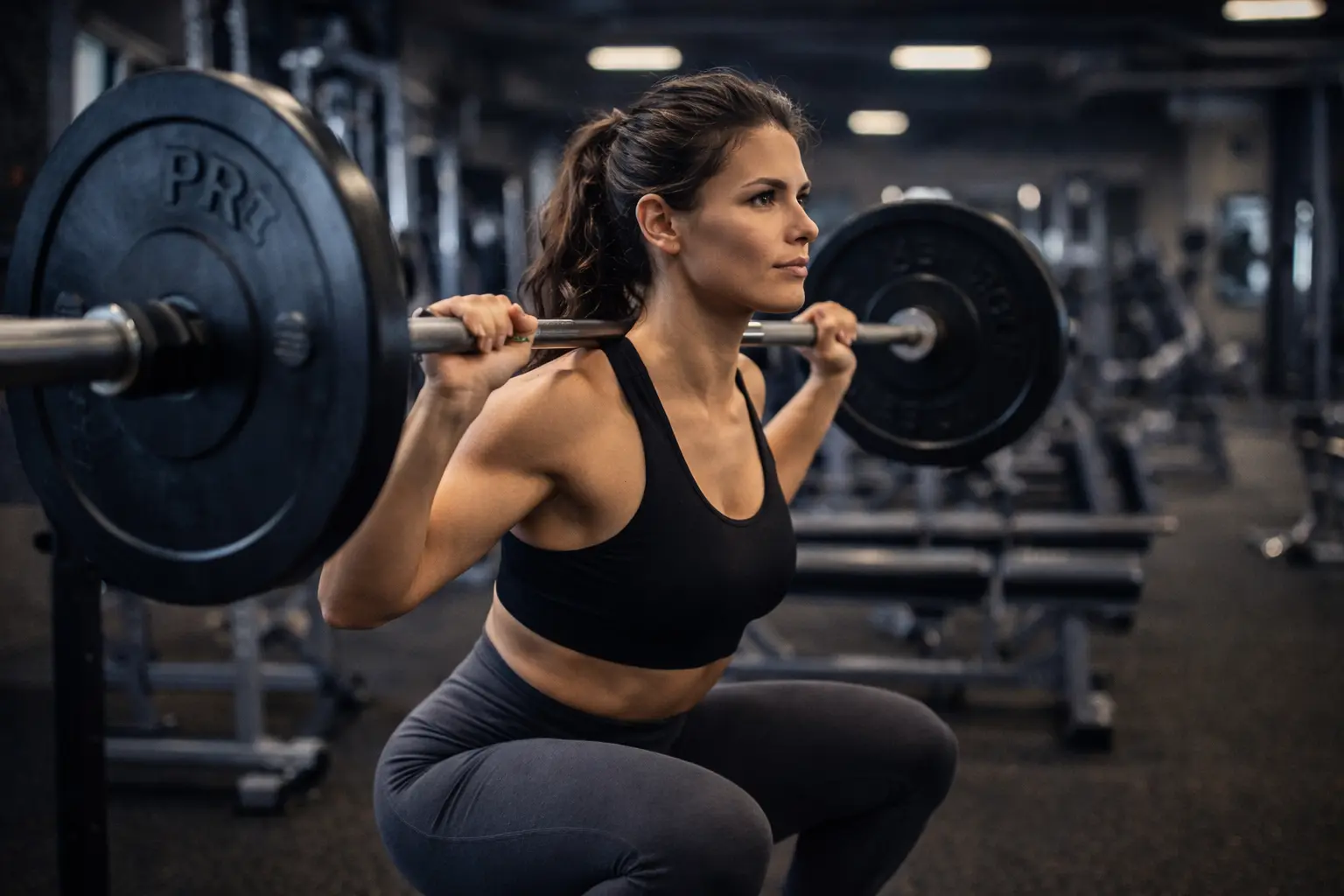
Muscle hypertrophy, the enlargement of muscle fibers, occurs through a specific biological process triggered by mechanical tension, metabolic stress, and muscle damage during resistance training. Both home and gym settings can activate this response, but the mechanisms differ meaningfully. In a gym, a woman can load a barbell with 100 pounds for squats, creating substantial mechanical tension that home bodyweight alone cannot replicate. However, home training using resistance bands, dumbbells up to 50 pounds, or advanced bodyweight progressions like archer push-ups and pistol squats can still generate sufficient stimulus for muscle growth. The critical factor is progressive overload, meaning you consistently increase the challenge over time. A woman doing 20 bodyweight squats weekly will plateau; one adding resistance bands or increasing reps strategically will continue adapting. Research shows that muscle growth depends more on consistency, proper nutrition, and progressive challenge than on location. The advantage gyms hold is the ease of progressive overload through equipment variety, but dedicated home trainers achieve similar results through creative programming and patience.
- Focus on progressive overload by incrementally increasing weight, reps, or resistance every one to two weeks to challenge your muscles beyond their current capacity.
- Incorporate compound exercises like squats, deadlifts, push-ups, and rows that engage multiple muscle groups simultaneously for comprehensive development.
- Alternate between higher rep ranges (12 to 15 reps) for metabolic stress and lower rep ranges (6 to 10 reps) for mechanical tension to maximize growth stimulus.
- Ensure adequate protein intake of 0.7 to 1 gram per pound of body weight daily to provide amino acids necessary for muscle repair and synthesis.
- Prioritize recovery by sleeping seven to nine hours nightly and allowing 48 hours between training the same muscle groups to permit adaptation.
🔬 Science-backed benefits in 2 minuteschoose where to begin:
Cardiovascular fitness and weight loss
Cardiovascular adaptations occur when the heart and lungs are challenged to deliver oxygen more efficiently, a process that happens equally well at home or in a gym. A woman running on a treadmill at the gym and one doing jump rope intervals at home are both elevating heart rate and burning calories. The difference lies in variety and sustainability. Gyms offer rowing machines, ellipticals, stationary bikes, and stair climbers, allowing women to vary stimulus and prevent boredom or overuse injuries from repetitive impact. Home cardio relies more heavily on bodyweight movements like burpees, mountain climbers, or jumping jacks, which are effective but can feel monotonous. For weight loss specifically, the equation is straightforward: calorie expenditure must exceed intake. A 150-pound woman burns roughly 300 calories running at moderate intensity for 30 minutes, whether on a gym treadmill or outdoors. The gym’s advantage is the ability to sustain longer sessions on lower-impact equipment, which matters for women with joint concerns. Home training excels in time efficiency, delivering cardiovascular benefits in shorter, high-intensity bursts.
Consistency and habit formation
Habit formation requires environmental design and behavioral anchoring, two areas where gyms and home workouts excel differently. A gym membership creates what behavioral psychologists call commitment and consistency bias, where the financial investment and public commitment strengthen follow-through. Imagine a woman who schedules gym classes at 6 AM on specific days; the external structure and social expectation make cancellation psychologically costly. Home workouts offer a different consistency advantage: zero friction. A woman who keeps dumbbells by her bedroom can squeeze in strength work before breakfast without changing clothes or driving anywhere. Research on habit formation suggests that the first 66 days are critical for automaticity, and home training’s convenience often wins during this phase. However, gyms excel at sustaining habits beyond the initial period because the environment itself becomes a cue for exercise behavior. The ideal approach depends on personality: those who thrive with external structure benefit from gym commitments, while those who value autonomy and flexibility maintain consistency better at home. Many successful women alternate between both, using gyms for structured phases and home training during demanding life periods.
Overall verdict
The scientific evidence does not crown one option superior; instead, it reveals that effectiveness depends on adherence, progressive challenge, and individual circumstances. A woman who consistently performs home workouts with proper form and progressive overload will achieve better results than one with an expensive gym membership she rarely uses. Conversely, a woman who thrives in structured gym environments and uses the equipment strategically will outperform someone who sporadically exercises at home. The most important variables are consistency, adequate nutrition, proper recovery, and progressive challenge, all of which are achievable in either setting. Consider your personality, schedule, budget, and fitness goals honestly. If you have joint issues, a gym’s low-impact equipment might be essential. If you have limited time and high anxiety, home training removes barriers. If you love community and variety, the gym provides both. The best workout environment is the one you will actually use consistently, because the most effective training program is always the one you stick with.
Both home workouts and gym training can deliver meaningful fitness results for women when approached with consistency and progressive challenge. Home workouts offer unmatched convenience and cost-effectiveness, making them ideal for busy schedules and reducing barriers to starting. Gym workouts provide equipment variety, professional guidance, and social motivation that accelerate progress and sustain long-term habits. The choice should reflect your personality, lifestyle, goals, and what environment you will realistically commit to using regularly.
Can home workouts build muscle like gym workouts?
Yes, home workouts can stimulate muscle growth effectively using resistance bands, adjustable dumbbells, and advanced bodyweight progressions. The key is progressive overload, meaning you consistently increase challenge over time. Gyms offer an advantage in ease of progression through heavier weights and varied equipment, but dedicated home training with proper nutrition and recovery produces similar muscle-building results. The limiting factor is usually consistency and effort, not location.
Which is better for weight loss, home workouts, or gym sessions?
Both home and gym workouts contribute to weight loss through calorie expenditure combined with a balanced diet, which is the primary driver of fat loss. Gyms offer more cardio equipment variety, allowing longer, lower-impact sessions that some women prefer. Home workouts excel at time-efficient, high-intensity training that fits busy schedules. The superior option is whichever you will perform consistently, because adherence matters far more than location when managing body composition.
Others also read:
Disclaimer: This article is for informational purposes only and is not a substitute for professional medical advice. Always consult a healthcare professional for personal guidance.
This article has been prepared and reviewed by the GlobalHealthBeacon editorial team and is based on current medical research and published scientific literature available in 2026. It provides structured, evidence-based information to support informed health decisions.
← Back to the Main page on: home workouts versus gym results
