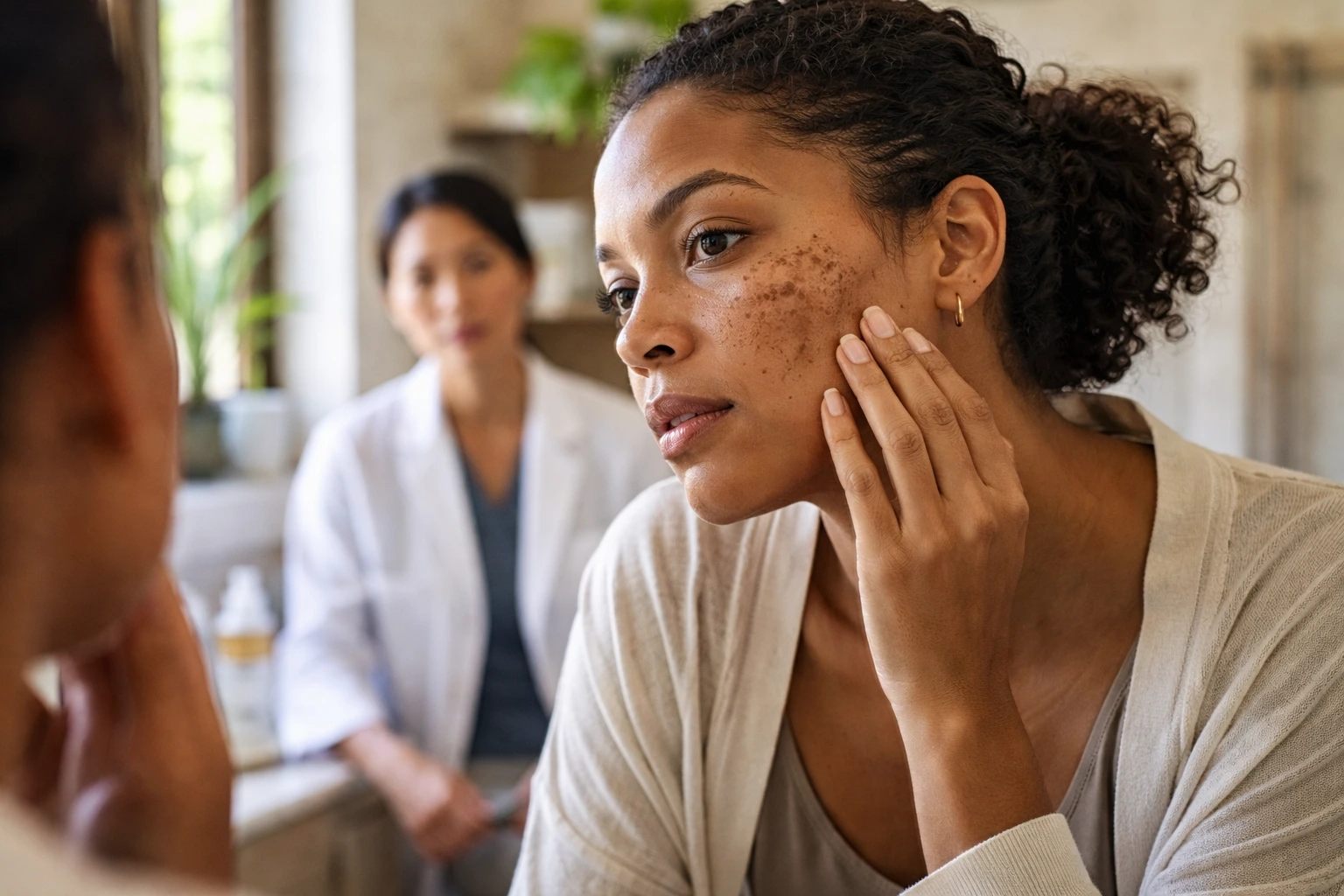
You’re scrolling through photos and suddenly notice those stubborn dark patches on your face or body that weren’t there before, and now you’re desperately searching for hyperpigmentation treatment options that actually work.
Understanding hyperpigmentation
Hyperpigmentation happens when your skin produces too much melanin, the pigment responsible for your skin color. Think of it like your skin’s color dial getting stuck on high. This can show up as flat, dark patches on your face, neck, hands, or other sun-exposed areas. The condition is incredibly common in young adults, especially those with darker skin tones, and it’s triggered by multiple factors working together. Sun exposure is the biggest culprit, but hormonal shifts from birth control or pregnancy can also spark it. Even acne scars or inflammation from picking at your skin can lead to post-inflammatory hyperpigmentation, where the affected area darkens as it heals. Understanding what caused your hyperpigmentation is your first real step toward fixing it, because different causes respond better to different treatments.
- Identify the trigger factors that contribute to hyperpigmentation.
- Consult a dermatologist to get an accurate diagnosis and personalized treatment plan.
- Protect your skin from further damage by using sunscreen daily.
Topical treatments for hyperpigmentation
Topical treatments are usually your first line of defense, and they work by either blocking melanin production or speeding up skin cell turnover so darker cells shed faster. Hydroquinone is the gold standard, a prescription-strength ingredient that directly inhibits the enzyme responsible for melanin production. Retinoids like tretinoin boost cell turnover and can fade discoloration over weeks to months, though they make your skin sun-sensitive so sunscreen becomes non-negotiable. Kojic acid and niacinamide are gentler over-the-counter options that work more gradually but are less irritating if you have sensitive skin. Vitamin C serums brighten and protect simultaneously, while azelaic acid is particularly effective for post-inflammatory hyperpigmentation. The key mistake most people make is expecting overnight results. These products need consistent use for 8 to 12 weeks before you’ll see meaningful fading. Apply them to clean, dry skin, layer carefully with other products, and always use SPF 30 or higher during the day because these actives increase sun sensitivity.
📘 Fix your day in under 2 minuteschoose where to begin:
Professional procedures for hyperpigmentation
When topical treatments plateau or you’re dealing with stubborn, deep hyperpigmentation, professional procedures deliver faster, more dramatic results. Chemical peels use concentrated acids to remove the outer layers of skin where pigmentation sits, revealing clearer skin beneath. Laser therapy targets melanin directly with focused light energy, breaking up pigmented cells so your body can naturally clear them away. Microdermabrasion physically exfoliates the skin’s surface, which works well for mild to moderate discoloration. Fractional laser treatments are particularly effective because they treat only portions of skin at a time, reducing downtime while still delivering significant results. A dermatologist might also recommend combination approaches, like using a peel followed by laser sessions spaced weeks apart for maximum impact. The trade-off is cost and recovery time. Most procedures require multiple sessions spaced 4 to 6 weeks apart, and you’ll experience temporary redness, peeling, or sensitivity afterward. Results are typically visible within 2 to 3 months as your skin heals and regenerates.
Lifestyle changes for hyperpigmentation
Your skin’s ability to heal and respond to treatment depends heavily on what’s happening inside your body. Sleep deprivation stresses your system and increases inflammation, which can worsen hyperpigmentation or slow your treatment results. Aim for 7 to 9 hours nightly so your skin can repair itself during deep sleep cycles. Stress triggers cortisol release, which can activate melanin production, so managing stress through exercise, meditation, or even just walks outside genuinely helps. Your diet matters too. Antioxidant-rich foods like berries, leafy greens, and dark chocolate protect your skin from oxidative damage that darkens pigmentation. Staying hydrated keeps your skin barrier strong and supports cell turnover. If you’re on hormonal birth control and notice hyperpigmentation worsening, talk to your doctor about adjusting your dose or method, as hormones are a major trigger. Smoking accelerates skin aging and reduces your skin’s ability to heal, so quitting accelerates your results. These lifestyle shifts won’t replace treatment, but they create the ideal internal environment for whatever topical or professional treatment you choose to work faster and more effectively.
Home remedies and prevention tips
Home remedies can support your treatment plan, though they work slowly and results vary widely. Aloe vera has anti-inflammatory properties that calm irritated skin, and some studies suggest it may have mild skin-lightening effects. Green tea extract is rich in antioxidants and has shown promise in reducing melanin production when applied topically. Lemon juice is tempting because of its natural acidity, but it’s actually risky because it can irritate skin, cause photosensitivity, and sometimes worsen hyperpigmentation, so skip it. Turmeric masks have anti-inflammatory benefits but won’t dramatically fade dark patches. The real game-changer is prevention. Daily sunscreen with SPF 30 or higher is non-negotiable because UV exposure is the primary trigger for hyperpigmentation worsening. Reapply every 2 hours if you’re outside, and don’t skip it on cloudy days because UV rays penetrate clouds. Wear hats and seek shade during peak sun hours between 10 am and 4 pm. Avoid picking at acne or scars because post-inflammatory hyperpigmentation is harder to treat than the original blemish. Once you’ve treated your hyperpigmentation, these prevention habits keep it from coming back.
Hyperpigmentation treatment involves understanding the root cause, considering topical products, exploring professional procedures, making lifestyle changes, and using home remedies cautiously. Prevention through sun protection and skincare routines is key.
Can hyperpigmentation be completely cured?
While hyperpigmentation can be lightened and managed effectively with various treatments, complete eradication may not always be possible. Consistent care and protection can help control and reduce its appearance.
Are there any natural remedies that effectively treat hyperpigmentation?
Some natural remedies like aloe vera and green tea extract have shown potential in lightening hyperpigmentation. However, results can vary, and it’s advisable to consult a dermatologist before using home remedies.
Disclaimer: This article is for informational purposes only and is not a substitute for professional medical advice. Always consult a healthcare professional for personal guidance.
This guide has been prepared and reviewed by the GlobalHealthBeacon editorial team and reflects current medical research as of 2026. It provides structured, evidence-based information to support informed health decisions.
