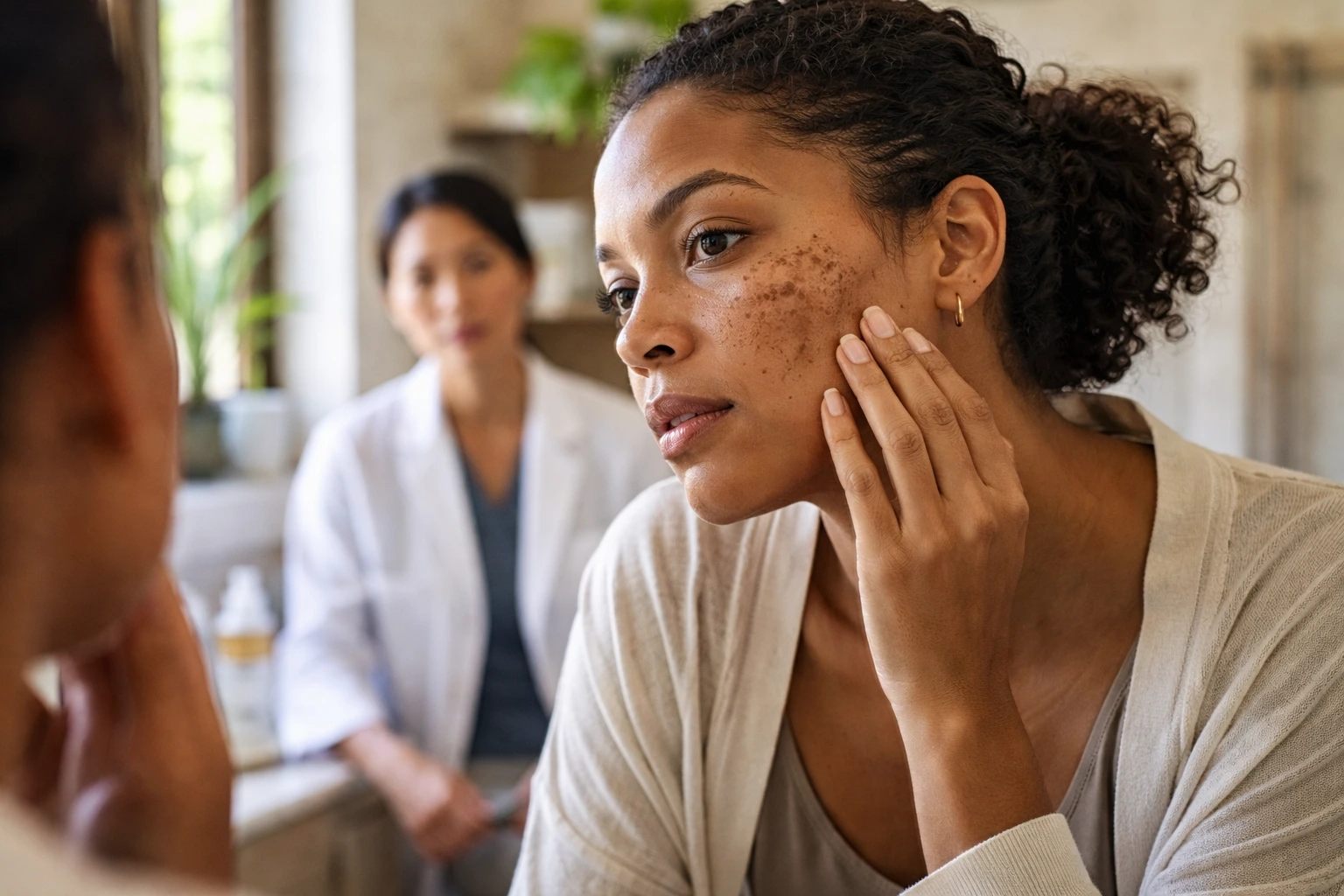
Dark patches spreading across your face or body can feel like they’re stealing your confidence, but understanding hyperpigmentation treatment options is the first step toward taking back control of your skin.
Understanding hyperpigmentation
Hyperpigmentation occurs when your skin produces excess melanin, the pigment responsible for skin color. Think of melanin as your skin’s natural sunscreen, but sometimes it goes into overdrive. This can happen after sun exposure damages skin cells, triggering them to pump out more melanin as a protective response. Hormonal shifts during pregnancy or from birth control can also spark uneven pigmentation. Even acne scars or eczema flare-ups leave behind dark marks as your skin heals. For young adults, hyperpigmentation often appears as stubborn dark spots on the cheeks, forehead, or jawline. Understanding the root cause matters because treating post-inflammatory hyperpigmentation from acne requires a different approach than addressing sun damage. The condition is more common in people with darker skin tones, where melanin production is naturally higher and more visible when concentrated.
Topical treatments
Topical treatments work by either slowing melanin production or speeding up skin cell turnover to fade existing pigment. Hydroquinone, a gold-standard ingredient, inhibits the enzyme tyrosinase that melanin needs to form. Retinoids like tretinoin boost cell turnover, essentially pushing out pigmented cells faster and revealing fresher skin underneath. Vitamin C serums work as antioxidants, protecting skin from further damage while brightening existing spots. Many young adults see results within 8 to 12 weeks of consistent use, though patience is essential. A common mistake is expecting overnight results or abandoning treatment after a few weeks. Another pitfall: using these actives without sunscreen. UV exposure actually worsens hyperpigmentation by triggering more melanin production, undoing your treatment progress. Start with lower concentrations if your skin is sensitive, and always introduce one active ingredient at a time to avoid irritation.
Professional procedures
Dermatological procedures target hyperpigmentation at deeper skin layers where topical treatments cannot reach. Chemical peels use acids to dissolve the outer skin layer, removing pigmented cells and revealing clearer skin beneath. Laser therapy works by targeting melanin directly, breaking it down so your body can naturally clear it away. Microneedling creates controlled micro-injuries that trigger your skin’s healing response, which can fade pigmentation over time. Cryotherapy freezes pigmented spots, causing them to slough off. For young adults with stubborn post-inflammatory hyperpigmentation from severe acne, these procedures often deliver faster, more dramatic results than topical treatments alone. However, they carry risks like temporary redness, swelling, or in rare cases, post-procedure hyperpigmentation if not done correctly. This is why consulting a dermatologist who understands your specific skin type and condition is non-negotiable. They assess whether your hyperpigmentation is superficial or deep, then recommend the safest, most effective procedure.
- Schedule a consultation with a dermatologist to assess your hyperpigmentation and discuss your skin history.
- Discuss treatment options, expected timeline, potential risks, and recovery period with your dermatologist.
- Follow post-care instructions carefully, including sun protection and any prescribed skincare products.
🔬 Science-backed benefits in 2 minuteschoose where to begin:
Diet and lifestyle changes
Your skin reflects what happens inside your body. Antioxidant-rich foods like berries, leafy greens, and dark chocolate contain compounds that protect skin cells from oxidative stress, which can worsen hyperpigmentation. Staying hydrated helps your skin maintain its barrier function and supports cell turnover. Chronic stress elevates cortisol, which can trigger inflammation and melanin overproduction, so managing stress through exercise, meditation, or hobbies genuinely impacts your skin. UV protection is non-negotiable: daily sunscreen with at least SPF 30 prevents new hyperpigmentation from forming and stops existing spots from darkening. Young adults often underestimate sun damage because they do not see immediate results, but UV exposure is cumulative. Even 15 minutes of unprotected sun exposure daily adds up over weeks and months. Smoking and poor sleep also impair skin healing and increase inflammation, making hyperpigmentation more stubborn. These lifestyle shifts take weeks to show results, but they create the foundation for any treatment to work effectively.
Home remedies
Natural ingredients have been used for centuries to brighten skin, and modern research confirms some actually work. Aloe vera contains compounds that may inhibit melanin production and soothe inflammation from acne or sun damage. Licorice extract has been shown in studies to reduce hyperpigmentation by blocking tyrosinase, similar to how hydroquinone works but gentler. Green tea is packed with antioxidants that protect against further damage and may help fade existing spots over time. Niacinamide, found in many plant sources, strengthens your skin barrier and reduces inflammation. The reality: home remedies work, but slowly. You might see subtle improvements after 8 to 12 weeks of consistent use. They are ideal for mild hyperpigmentation or as maintenance after professional treatments. A common mistake is expecting home remedies to replace dermatological treatments for severe hyperpigmentation. They work best as part of a layered approach, combined with sunscreen and possibly topical actives. Consistency matters more than the specific remedy you choose.
Consistency is key
Hyperpigmentation did not appear overnight, and it will not disappear overnight either. Your skin cells turn over roughly every 28 days, so meaningful changes require at least 8 to 12 weeks of consistent treatment. Many young adults abandon their routine after 4 to 6 weeks because they expect faster results, then wonder why nothing changed. The truth: visible fading happens gradually, sometimes so slowly you do not notice until you compare photos from weeks apart. Addressing the root cause matters as much as treating the spot itself. If your hyperpigmentation came from acne, you need to manage breakouts. If it came from sun damage, daily sunscreen is non-negotiable. If it came from hormonal changes, you might need to wait for hormones to stabilize while supporting your skin with treatments. A holistic approach means combining topical treatments, sun protection, lifestyle habits, and possibly professional procedures. Track your progress with photos taken in consistent lighting. Celebrate small wins. This is a marathon, not a sprint, but the payoff is skin you feel confident in.
Hyperpigmentation responds to a multi-layered approach combining topical treatments like hydroquinone and retinoids, professional procedures such as laser therapy or chemical peels, lifestyle changes including sun protection and antioxidant-rich diet, and natural remedies like licorice extract and niacinamide. Success requires consistency, patience, and addressing the underlying cause of your hyperpigmentation. Results typically emerge over 8 to 12 weeks or longer, depending on severity and treatment choice.
Are at-home treatments effective for hyperpigmentation?
At-home treatments including topical actives and natural remedies can fade mild to moderate hyperpigmentation, but results are gradual, typically appearing after 8 to 12 weeks of consistent use. For severe or stubborn hyperpigmentation, professional procedures recommended by a dermatologist often deliver faster and more significant results.
How long does it take to see results from hyperpigmentation treatments?
Timeline varies based on severity and treatment type. Topical treatments and home remedies usually show subtle improvements after 8 to 12 weeks. Professional procedures like laser therapy may show results within 2 to 4 weeks but require multiple sessions. Patience and consistent use are essential for any treatment to work effectively.
Others also read:
Disclaimer: This article is for informational purposes only and is not a substitute for professional medical advice. Always consult a healthcare professional for personal guidance.
This article has been prepared and reviewed by the GlobalHealthBeacon editorial team and is based on current medical research and published scientific literature available in 2026. It provides structured, evidence-based information to support informed health decisions.
← Back to the Main page on: hyperpigmentation treatment options
