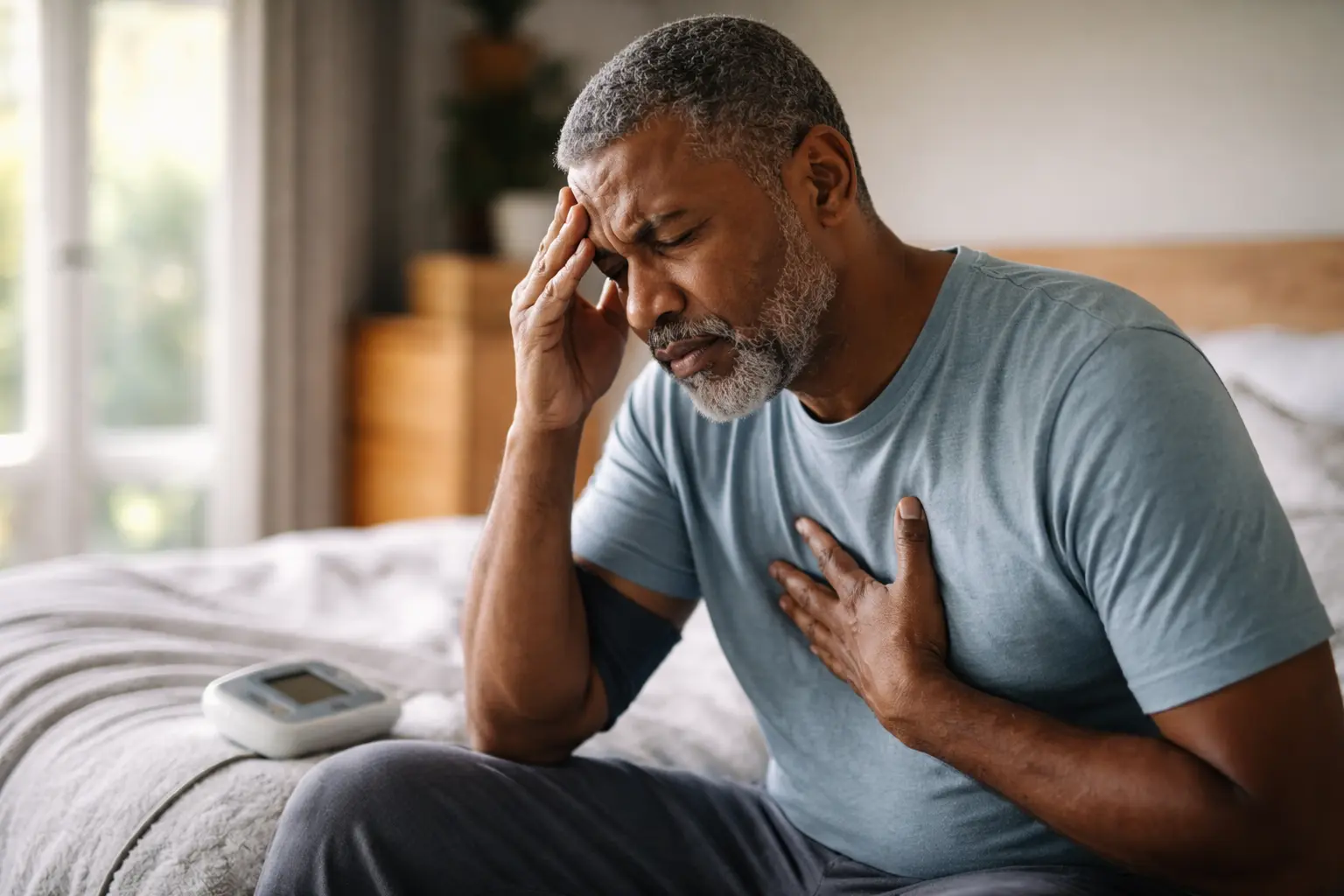
Your chest suddenly feels tight, your head is pounding like nothing you’ve ever felt before, and something deep down tells you something is seriously wrong – that’s what hypertensive crisis symptoms feel like, and you need to know exactly what’s happening to your body right now.
Recognizing the signs
Hypertensive crisis symptoms often announce themselves suddenly and unmistakably. You might be going about your day when a severe headache hits that feels different from any migraine you’ve experienced before – not just painful, but accompanied by a sensation of pressure behind your eyes. Shortness of breath can creep in quietly or strike all at once, making you feel like you cannot get enough air into your lungs even when you are sitting still. Vision changes might appear as blurred sight, seeing spots, or experiencing tunnel vision. Chest pain or tightness can feel alarming, especially in young adults who do not expect heart-related symptoms. Confusion or difficulty concentrating is another warning sign that your blood pressure has spiked dangerously high. Some people also report nosebleeds, severe anxiety, or a sense of impending doom. The key is that these symptoms cluster together and feel urgent. Monitoring your blood pressure regularly gives you a baseline to recognize when something has shifted dramatically. If you notice any combination of these signs, your body is sending a clear message that demands immediate attention.
- Severe headache with pressure or throbbing sensation is a hallmark sign of hypertensive crisis.
- Shortness of breath, chest pain, or tightness suggests your cardiovascular system is under extreme stress.
- Vision changes, confusion, nosebleeds, and a sense of impending doom are critical warning signals that require emergency care.
Taking immediate action
The moment you recognize hypertensive crisis symptoms, your priority is getting emergency medical care. Do not wait, do not try to manage it at home with rest or home remedies, and do not convince yourself it will pass. Call 911 or your local emergency number immediately. If you are with someone else, have them call while you sit or lie down in a safe position. If you are alone and able to drive safely, go directly to the nearest emergency room, but calling an ambulance is the safer choice because paramedics can begin monitoring and treatment en route. Once you arrive at the hospital, be clear and direct about your symptoms. Tell them exactly when the symptoms started, what you were doing, and whether you have a history of high blood pressure or are on any medications. Emergency staff will check your blood pressure, run an EKG to assess your heart, and possibly order blood tests or imaging to rule out organ damage. Do not minimize your symptoms or feel embarrassed about seeking help. Hypertensive crisis is a medical emergency that can cause stroke, heart attack, or kidney damage within hours if left untreated. Getting to the hospital quickly can be the difference between a full recovery and permanent complications.
📘 Fix your day in under 2 minuteschoose where to begin:
Understanding the risks
Hypertensive crisis is not just high blood pressure that feels uncomfortable. It is a dangerous condition where your blood pressure spikes so severely that it begins damaging your organs and blood vessels. A stroke can occur when the pressure ruptures a blood vessel in your brain or causes a clot. A heart attack happens when the intense pressure and stress cause your heart muscle to fail or a coronary artery to become blocked. Your kidneys, which filter waste through delicate blood vessels, can suffer acute kidney injury when exposed to such extreme pressure. Fluid can accumulate in your lungs, making it harder to breathe. Your eyes can experience retinopathy, where the blood vessels in the retina bleed or leak. The longer hypertensive crisis goes untreated, the greater the risk of permanent organ damage. Young adults sometimes underestimate this risk because they assume serious health events happen only to older people, but hypertensive crisis does not discriminate by age. Factors like uncontrolled high blood pressure, stress, stimulant use, certain medications, or underlying kidney disease can trigger a crisis at any age. Understanding these risks is not meant to frighten you but to motivate you to take your blood pressure seriously and seek help immediately if symptoms appear.
Preventing future crises
After experiencing a hypertensive crisis, prevention becomes your new priority. Start by understanding what triggered it. Work with your doctor to identify whether it was uncontrolled high blood pressure, medication non-adherence, stress, diet, or an underlying condition. Regular exercise is foundational. Aim for at least 150 minutes of moderate aerobic activity per week, such as brisk walking, cycling, or swimming. These activities strengthen your heart and help regulate blood pressure naturally. Your diet matters enormously. Reduce sodium intake to less than 2,300 milligrams per day, increase potassium-rich foods like bananas and leafy greens, and limit processed foods that hide salt. Manage stress through meditation, deep breathing exercises, journaling, or activities you enjoy. If you have been prescribed blood pressure medication, take it exactly as directed, even on days when you feel fine. Many young adults skip doses because they feel healthy, but that is when medication is doing its job. Schedule regular check-ups with your healthcare provider to monitor your blood pressure trends. Keep a blood pressure log at home using a reliable monitor. Limit caffeine and alcohol, both of which can elevate blood pressure. Sleep matters too, so aim for seven to nine hours nightly. Small, consistent changes compound into powerful protection against future crises.
Seeking support
Managing hypertensive crisis symptoms and the anxiety that follows is not something you should do alone. Reach out to your primary care doctor or a cardiologist who can create a personalized management plan tailored to your situation. If you are struggling emotionally after a crisis, consider talking to a therapist or counselor who understands health anxiety. Many young adults feel embarrassed or isolated after a health scare, but these feelings are completely normal and worth addressing. Support groups, whether in-person or online, connect you with others who have experienced similar events and understand what you are going through. Ask your healthcare provider about resources in your area. Family and friends can also play a crucial role. Let them know what you need, whether that is help remembering to take medication, accompaniment to appointments, or simply someone to talk to when you feel anxious. Do not hesitate to ask questions during doctor visits. Write them down beforehand so you remember. Understanding your condition, your treatment plan, and your warning signs empowers you to take control of your health. You are not alone in this journey, and seeking support is a sign of strength, not weakness.
Hypertensive crisis symptoms including severe headache, chest pain, shortness of breath, and vision changes demand immediate emergency care. Recognizing these signs early, understanding the serious risks of organ damage, and taking swift action can save your life. Prevention through lifestyle changes, medication adherence, and regular monitoring helps protect you from future crises.
How common are hypertensive crisis symptoms in young adults?
While less common in young adults than in older populations, hypertensive crisis symptoms can still occur due to various factors like genetic predisposition, uncontrolled high blood pressure, stress, stimulant use, certain medications, or underlying kidney disease. Young adults should not assume they are immune to this condition.
Can hypertensive crisis be prevented with lifestyle changes alone?
Lifestyle modifications play a key role in preventing hypertensive crises, but individual cases may require medication and close monitoring by healthcare professionals. If you have been diagnosed with high blood pressure, follow your doctor’s complete treatment plan, which may include both lifestyle changes and medications.
Disclaimer: This article is for informational purposes only and is not a substitute for professional medical advice. Always consult a healthcare professional for personal guidance.
This guide has been prepared and reviewed by the GlobalHealthBeacon editorial team and reflects current medical research as of 2026. It provides structured, evidence-based information to support informed health decisions.
