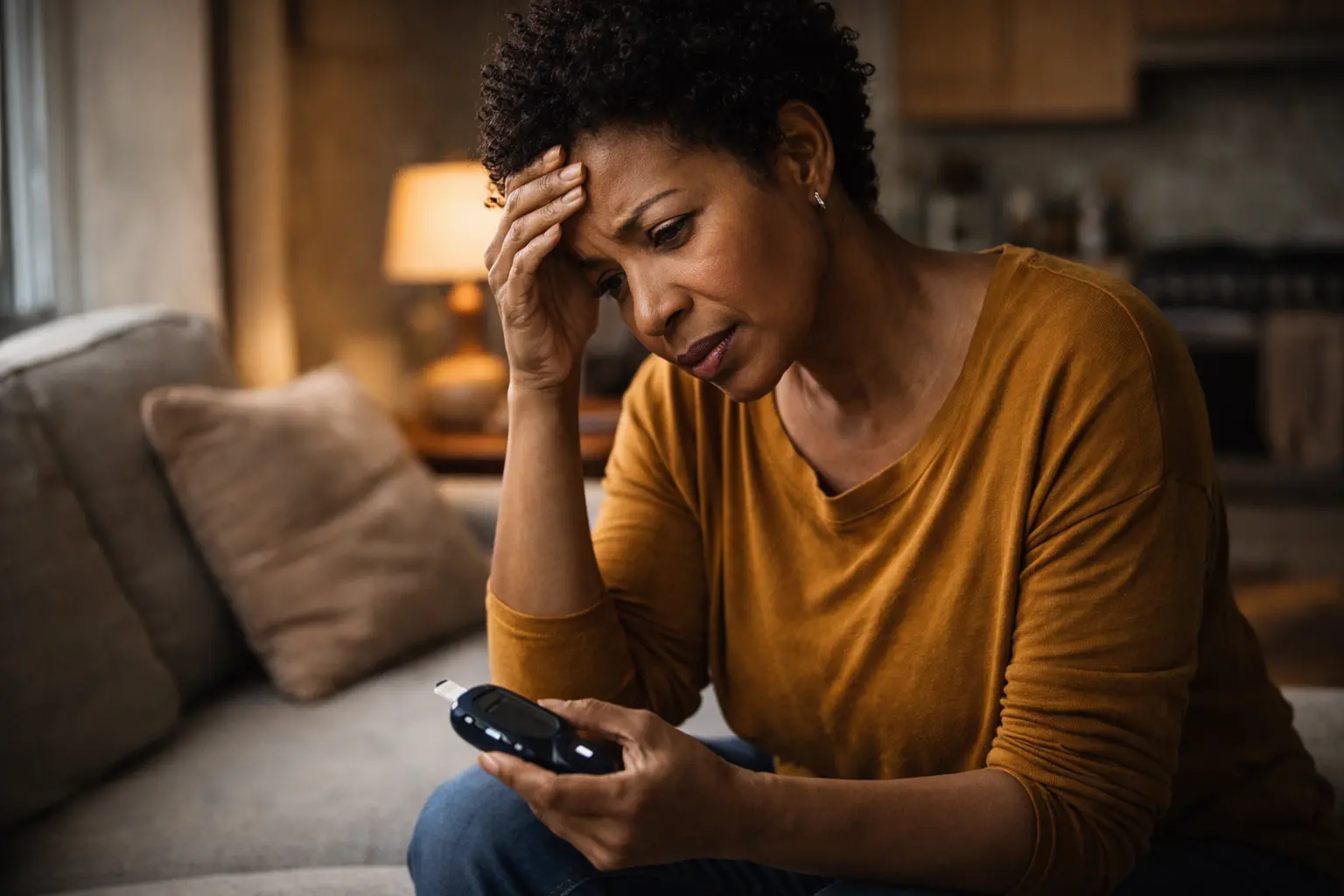
You’re gaining weight despite eating less, your afternoons blur into an exhausting fog, and your skin has developed these strange dark patches you can’t explain—these are insulin resistance symptoms, and you’re not imagining them.
What are insulin resistance symptoms?
Insulin resistance symptoms often creep up so gradually that you might not connect the dots at first. One day you notice your jeans fitting differently, then the afternoon energy crashes become routine, and suddenly you’re wondering why a salad doesn’t satisfy you anymore. Women describe it as their bodies working against them. You might see unexplained weight gain, especially around your midsection, even when your eating habits haven’t changed. Chronic fatigue becomes your shadow, making a morning workout feel impossible or a simple afternoon meeting feel like climbing a mountain. Some women notice dark, velvety patches appearing on their neck or underarms, a condition called acanthosis nigricans that signals deeper metabolic shifts. Sugar cravings intensify, leaving you reaching for that third coffee or candy bar by mid-afternoon. These symptoms don’t announce themselves loudly; they whisper, accumulate, and eventually demand your attention.
- Unexplained weight gain
- Chronic fatigue
- Acanthosis nigricans (skin discoloration)
Managing insulin resistance symptoms
Managing insulin resistance symptoms isn’t about perfection or dramatic overnight changes. It’s about building small, sustainable habits that compound over time. Many women find that adding movement they actually enjoy makes the biggest difference, whether that’s a 20-minute walk, dancing in the kitchen, or a gentle yoga practice. Eating matters too, but not in the restrictive way you might think. Focusing on fiber-rich foods, whole grains, and lean proteins helps stabilize blood sugar throughout the day, reducing those intense cravings and energy dips. One woman shared how swapping her morning toast for eggs and vegetables transformed her afternoon energy levels within two weeks. Sleep often gets overlooked, yet it’s foundational. When you’re well-rested, your body handles insulin more efficiently. Stress management also plays a quiet but powerful role, since chronic stress elevates cortisol, which worsens insulin resistance. These lifestyle adjustments work together, creating momentum that feels less like fighting your body and more like finally cooperating with it.
💬 Ready to feel better in 2 minutes?choose where to begin:
Seeking professional help
Recognizing when to reach out to a healthcare provider is crucial, and there’s no shame in asking for guidance. A doctor can order tests to measure your fasting insulin levels, glucose tolerance, and other markers that reveal whether insulin resistance is actually happening. This clarity matters because you’re no longer guessing or blaming yourself. Your provider can discuss personalized strategies tailored to your health history, medications, and lifestyle. Some women benefit from working with a registered dietitian who specializes in metabolic health, gaining specific meal plans and shopping strategies. Regular check-ups become your accountability partner and early warning system, catching changes before they escalate. Monitoring blood sugar patterns, whether through a simple log or a continuous glucose monitor, gives you real data about how different foods and activities affect your body. This information transforms insulin resistance from a mysterious enemy into something you can actually understand and influence. Professional support isn’t weakness; it’s wisdom.
Embracing change
Living with insulin resistance symptoms requires patience and self-compassion, especially on days when progress feels invisible. The truth many women discover is that managing this condition becomes easier once you stop fighting yourself and start listening to your body’s signals. You’re not broken, and you’re absolutely not alone in this journey. Thousands of women have walked this path, faced the same frustrations, and found their way to feeling better. Some took three months to notice changes, others six, but they all kept going. The wins accumulate quietly: sleeping through the night without waking hungry, having energy for your kids or work without that 3 PM crash, clothes fitting differently, skin clearing up. These victories matter. Your commitment to understanding your health, making adjustments, and seeking support when needed is powerful. This isn’t about achieving perfection or following someone else’s plan. It’s about honoring your body’s needs and building a sustainable life where you feel like yourself again.
Insulin resistance symptoms like unexplained weight gain and chronic fatigue can feel isolating and confusing, but they’re manageable with the right approach. By understanding what your body is signaling, making gradual lifestyle adjustments, and partnering with healthcare providers, you can take control of your health and feel like yourself again.
What are common signs of insulin resistance in women?
Common signs of insulin resistance in women include unexplained weight gain, chronic fatigue, intense sugar cravings, and acanthosis nigricans (dark patches on skin). Many women also experience afternoon energy crashes and difficulty losing weight despite diet efforts. Consulting a healthcare provider for proper testing and diagnosis is essential.
How can women improve insulin sensitivity?
Women can enhance insulin sensitivity through consistent movement you enjoy, eating fiber-rich and whole foods, prioritizing quality sleep, and managing stress. Monitoring how different foods affect your energy and blood sugar patterns provides valuable insight. Working with a dietitian or healthcare provider creates a personalized plan that fits your life and goals.
Others also read:
Disclaimer: This article is for informational purposes only and is not a substitute for professional medical advice. Always consult a healthcare professional for personal guidance.
This article presents an experience-based perspective and has been reviewed by the GlobalHealthBeacon editorial team in 2026. It provides structured, evidence-based information to support informed health decisions.
