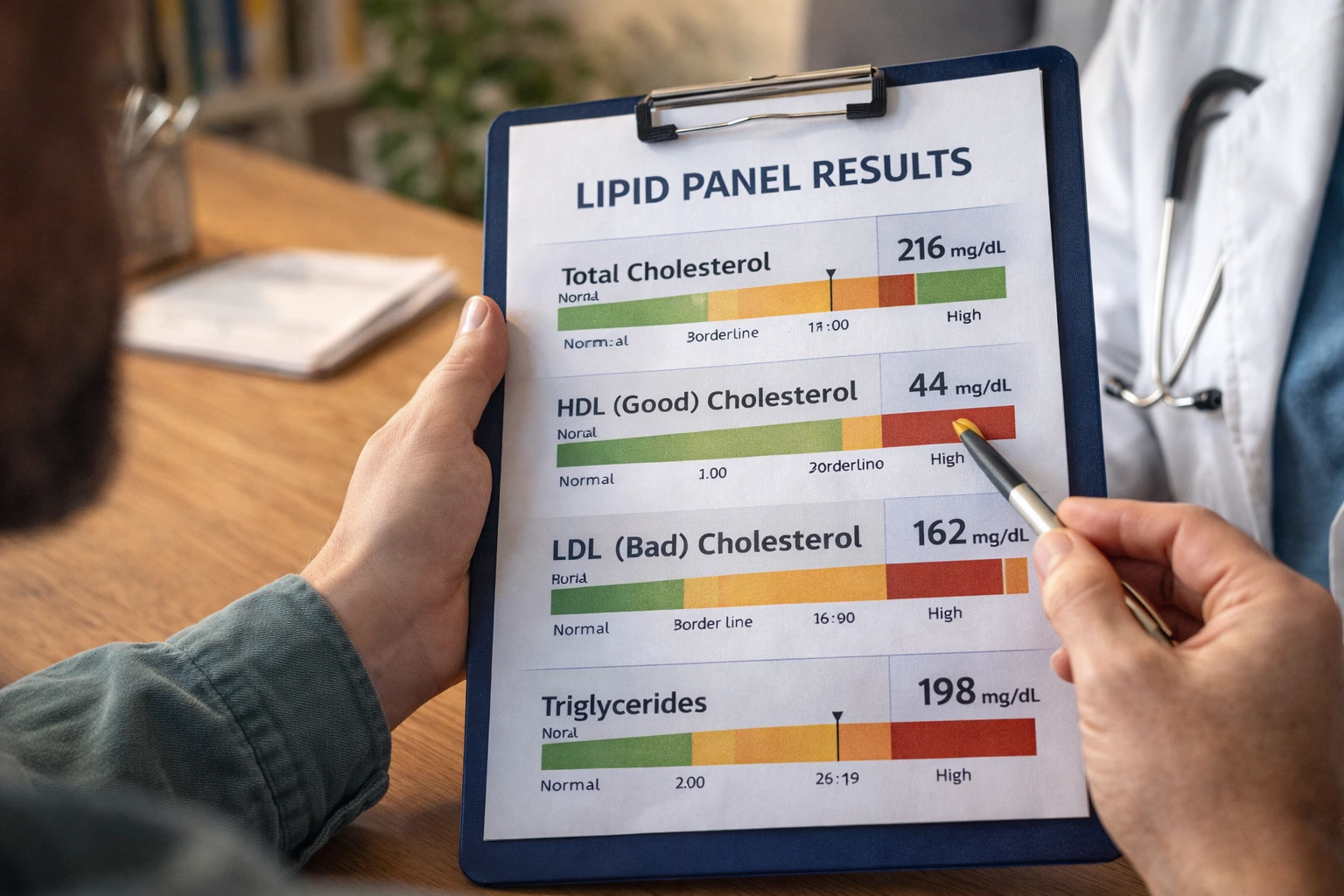
Your doctor hands you a lab report with numbers you don’t recognize, and suddenly you’re spiraling about what your lipid panel results explained actually means for your heart and your future.
Understanding lipid panel results
A lipid panel is essentially a snapshot of your cholesterol and fat levels in the bloodstream, and it breaks down into four key measurements that tell a story about your cardiovascular health. Think of it like a health report card for your heart. Total cholesterol adds up all the cholesterol circulating in your blood, while LDL cholesterol is the type that builds up in your arteries like sludge in a pipe, increasing your risk of heart disease and stroke. HDL cholesterol works the opposite way, acting like a cleanup crew that removes excess cholesterol from your arteries. Triglycerides are a third type of fat in your blood that spike when you consume excess calories, especially from carbs and alcohol. For a young adult, these numbers matter now because the habits you build in your 20s and 30s determine your cardiovascular health decades down the line. Getting your baseline lipid panel early gives you a clear picture of where you stand and what adjustments might prevent serious problems later.
- Total cholesterol should ideally be below 200 mg/dL.
- LDL cholesterol levels should be less than 100 mg/dL for optimal heart health.
- HDL cholesterol is considered the good cholesterol and should be above 60 mg/dL for men and above 50 mg/dL for women.
- Triglyceride levels should be below 150 mg/dL to lower heart disease risk.
Interpreting the results
Reading your lipid panel requires understanding what each number means in the context of your overall health picture. Imagine you get your results back and your LDL is 120 mg/dL, your HDL is 35 mg/dL, and your triglycerides are 200 mg/dL. On the surface, this looks concerning because your bad cholesterol is elevated and your good cholesterol is low, which is a dangerous combination that increases your cardiovascular risk significantly. However, context matters. If you’re 25 and this is your first panel, it might signal that your current lifestyle choices like frequent fast food, minimal exercise, and high stress are catching up with you. A healthcare provider will look at your age, family history, smoking status, blood pressure, and other factors to calculate your actual risk. High total cholesterol combined with high LDL and low HDL creates a compounding risk, while high triglycerides often indicate you’re consuming too many calories or refined carbs. The good news is that at a younger age, these numbers are often reversible with lifestyle changes before medication becomes necessary.
📘 Fix your day in under 2 minuteschoose where to begin:
Lifestyle changes and management
The most powerful tool you have is your daily behavior, and small shifts can dramatically improve your lipid panel within weeks. Start with your diet by reducing saturated fats found in fatty meats, full-fat dairy, and processed foods, and replacing them with heart-healthy options like fatty fish rich in omega-3s, nuts, seeds, and olive oil. A young adult might swap their usual breakfast of bacon and eggs for oatmeal with berries and almonds, or trade afternoon soda for sparkling water with lemon. Physical activity is equally critical; aim for at least 150 minutes of moderate cardio per week like brisk walking, cycling, or running, which directly raises your HDL and lowers triglycerides. If you smoke, quitting is non-negotiable because smoking damages your arteries and worsens every lipid panel metric. Stress management through meditation, yoga, or even journaling helps because chronic stress elevates cortisol, which drives up triglycerides and cholesterol. Many young adults see improvements in 4 to 12 weeks with consistent effort. If lifestyle changes alone don’t bring your numbers into range after three to six months, your doctor may prescribe statins or other medications to prevent future cardiovascular events.
Follow-up and monitoring
Your first lipid panel is just the beginning of an ongoing conversation with your health. Most adults should recheck their lipid panel every four to six years if numbers are normal, but if you have elevated cholesterol or are making lifestyle changes, more frequent testing every three months helps you track progress and stay motivated. Think of it like checking your bank account while saving for a goal; regular check-ins keep you accountable and show you whether your efforts are working. When you return for follow-up appointments, bring a list of any changes you’ve made, including diet modifications, new exercise routines, or stress management practices. Your healthcare provider can then adjust recommendations based on your results and how your body responds. If you’ve started medication, follow-up testing ensures the dosage is effective and that you’re not experiencing side effects. Young adults who establish this monitoring habit early catch problems before they become serious and develop a proactive relationship with their health rather than a reactive one.
Empower yourself with knowledge
Understanding your lipid panel results puts you in control of your cardiovascular destiny at an age when change is still remarkably achievable. Your numbers are not a fixed verdict on your health; they’re a wake-up call and a roadmap. By learning what total cholesterol, LDL, HDL, and triglycerides actually mean, you move from confusion and anxiety to clarity and action. Take your results seriously, discuss them with your doctor, and commit to the lifestyle changes that matter most for your situation. Whether that’s overhauling your diet, committing to regular exercise, managing stress, or taking medication if prescribed, each step compounds over time. The cardiovascular disease that affects many older adults doesn’t appear overnight; it develops silently over decades from the choices made in youth. By taking action now based on your lipid panel results, you’re investing in a future where you have the energy, health, and vitality to do the things you love without the burden of preventable disease.
Lipid panel results play a significant role in assessing heart health. Understanding these numbers and taking appropriate actions based on your results can help you better manage your cholesterol levels and reduce your risk of heart disease.
What is the normal range for total cholesterol?
The ideal total cholesterol level should be under 200 mg/dL to maintain good heart health.
How can I improve my lipid panel results?
You can improve your lipid panel results by adopting a heart-healthy lifestyle, including a balanced diet, regular exercise, and stress management, alongside potential medication as prescribed by your healthcare provider.
Disclaimer: This article is for informational purposes only and is not a substitute for professional medical advice. Always consult a healthcare professional for personal guidance.
This guide has been prepared and reviewed by the GlobalHealthBeacon editorial team and reflects current medical research as of 2026. It provides structured, evidence-based information to support informed health decisions.
