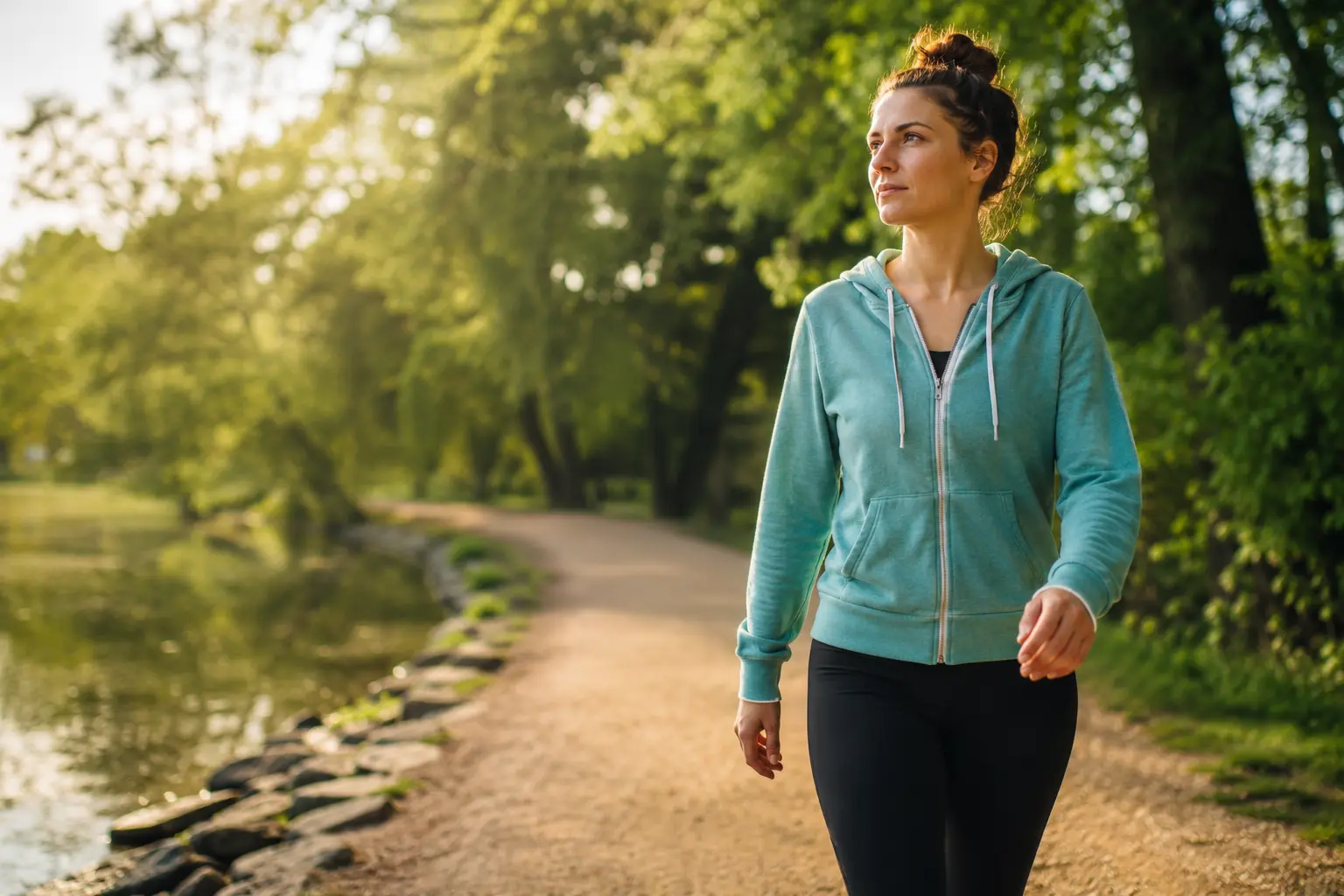
Your knees are screaming, your joints feel fragile, and you’re convinced that real cardio means pounding pavement until you can’t walk straight, but here’s the truth: low impact cardio options deliver serious cardiovascular results without the joint damage.
Walking for cardiovascular health
Walking is often overlooked as too simple to be effective, yet research consistently demonstrates its profound impact on cardiovascular function. When you walk briskly, your heart rate elevates to a sustainable aerobic zone where your body burns fat and strengthens cardiac muscle. Consider Sarah, a 58-year-old woman with mild arthritis who started with 20-minute walks three times weekly. Within eight weeks, her resting heart rate dropped by 8 beats per minute and her energy levels improved noticeably. The beauty of walking lies in its accessibility and sustainability. You can walk almost anywhere, adjust intensity by changing pace or terrain, and gradually build endurance without the recovery demands of high-impact exercise. Start with a comfortable pace where you can still hold a conversation, then gradually increase speed to achieve that cardiovascular benefit.
Swimming for total body workout
Water provides natural resistance while supporting your body weight, creating an ideal environment for cardiovascular training without joint stress. When you swim, you engage your shoulders, back, core, and legs simultaneously while your heart works harder to pump blood through multiple muscle groups. The buoyancy of water reduces impact forces by up to 90 percent compared to land-based exercise, making swimming particularly valuable for women with osteoarthritis or those recovering from injury. A typical swimming session might involve 20 minutes of steady-paced laps followed by interval work, alternating between faster and slower speeds. Many women find that water aerobics classes provide structure and motivation while offering the same joint-protective benefits. The cooling effect of water also helps regulate body temperature during intense effort, allowing you to work harder without overheating.
Cycling for joint-friendly cardio
Cycling, whether outdoors or stationary, offers a smooth pedaling motion that eliminates the impact forces associated with running or jumping. Your legs move through a consistent range of motion while your cardiovascular system responds to increasing resistance and speed. Imagine cycling through your neighborhood at a moderate pace where your breathing becomes deeper but controlled, your leg muscles engage rhythmically, and your heart rate climbs into the aerobic training zone. Stationary bikes provide additional advantages: precise resistance control, consistent surface conditions, and the ability to multitask while exercising. Many women prefer stationary cycling because they can adjust intensity instantly and monitor their effort through built-in metrics. The key to effective cycling is finding the right seat height and handlebar position to prevent lower back strain. Start with moderate resistance and focus on maintaining a steady cadence of 80 to 100 revolutions per minute.
- Adjust the seat height for proper alignment.
- Start with a comfortable resistance level.
- Maintain a steady pace to elevate your heart rate.
- Incorporate interval training for added intensity.
- Monitor your form to prevent strain on your back and knees.
🔬 Science-backed benefits in 2 minuteschoose where to begin:
Elliptical training for low impact intensity
The elliptical machine simulates running mechanics without the jarring impact of your feet striking the ground repeatedly. Your feet stay in contact with the pedals throughout the entire motion, creating a smooth gliding pattern that challenges your cardiovascular system while protecting your joints. The machine engages your quadriceps, hamstrings, glutes, and core while your upper body can work harder by pushing and pulling the handles. Many women find the elliptical less intimidating than treadmills because the controlled motion feels more stable and predictable. You can adjust both resistance and incline to increase difficulty, allowing progressive training as your fitness improves. A typical 30-minute elliptical session at moderate intensity can burn 200 to 300 calories while strengthening your lower body and improving aerobic capacity. The machine’s smooth motion also makes it suitable for women with knee concerns or those returning to exercise after time away.
Dancing for cardio and fun
Dancing transforms cardiovascular exercise into an enjoyable social activity that engages your mind and body simultaneously. Whether you choose salsa, ballet, Zumba, or gentle folk dancing, you’re activating your heart, building coordination, and releasing endorphins that improve mood. The rhythmic nature of dance naturally encourages sustained effort at moderate intensity, perfect for building aerobic capacity. Many women find that dancing feels less like exercise and more like play, which increases adherence and consistency. A 45-minute dance class can elevate your heart rate to training zones while you focus on steps and music rather than fatigue. Dance also improves balance and proprioception, valuable skills for fall prevention in midlife and beyond. Group dance classes provide social connection and accountability, factors that research shows significantly improve long-term exercise adherence in women.
Aerobic exercise for stamina
Structured aerobic classes designed specifically for low-impact training offer guided instruction, motivating music, and community support. Water aerobics classes combine the joint-protective benefits of water with choreographed movements that keep your heart rate elevated throughout the session. Low-impact aerobics classes use step touches, side steps, and controlled movements instead of jumping or running, making them accessible for various fitness levels. Step aerobics performed on a low platform provides intensity variation by adjusting step height and speed. These classes typically last 45 to 60 minutes and include warm-up and cool-down periods, ensuring proper cardiovascular conditioning. The structured environment helps you maintain consistent effort while the instructor provides form corrections and modifications. Many women appreciate the social aspect of group classes, where shared effort and encouragement create accountability and enjoyment.
Low impact cardio options like walking, swimming, cycling, elliptical training, dancing, and aerobic exercises offer effective ways to elevate your heart rate and improve cardiovascular health without straining your joints. Incorporate these research-backed options into your fitness routine for a balanced workout regimen.
Are low impact cardio exercises as effective as high impact ones?
Yes, low impact cardio exercises can be equally effective in improving cardiovascular health and burning calories. They are gentler on the joints, making them suitable for individuals with joint issues or those looking for a more sustainable workout routine.
Can low impact cardio exercises help with weight loss?
Absolutely! Low impact cardio exercises like walking, swimming, and cycling can contribute to weight loss by burning calories and improving overall fitness levels. Pairing these exercises with a balanced diet can support your weight loss goals.
Others also read:
Disclaimer: This article is for informational purposes only and is not a substitute for professional medical advice. Always consult a healthcare professional for personal guidance.
This article has been prepared and reviewed by the GlobalHealthBeacon editorial team and is based on current medical research and published scientific literature available in 2026. It provides structured, evidence-based information to support informed health decisions.
