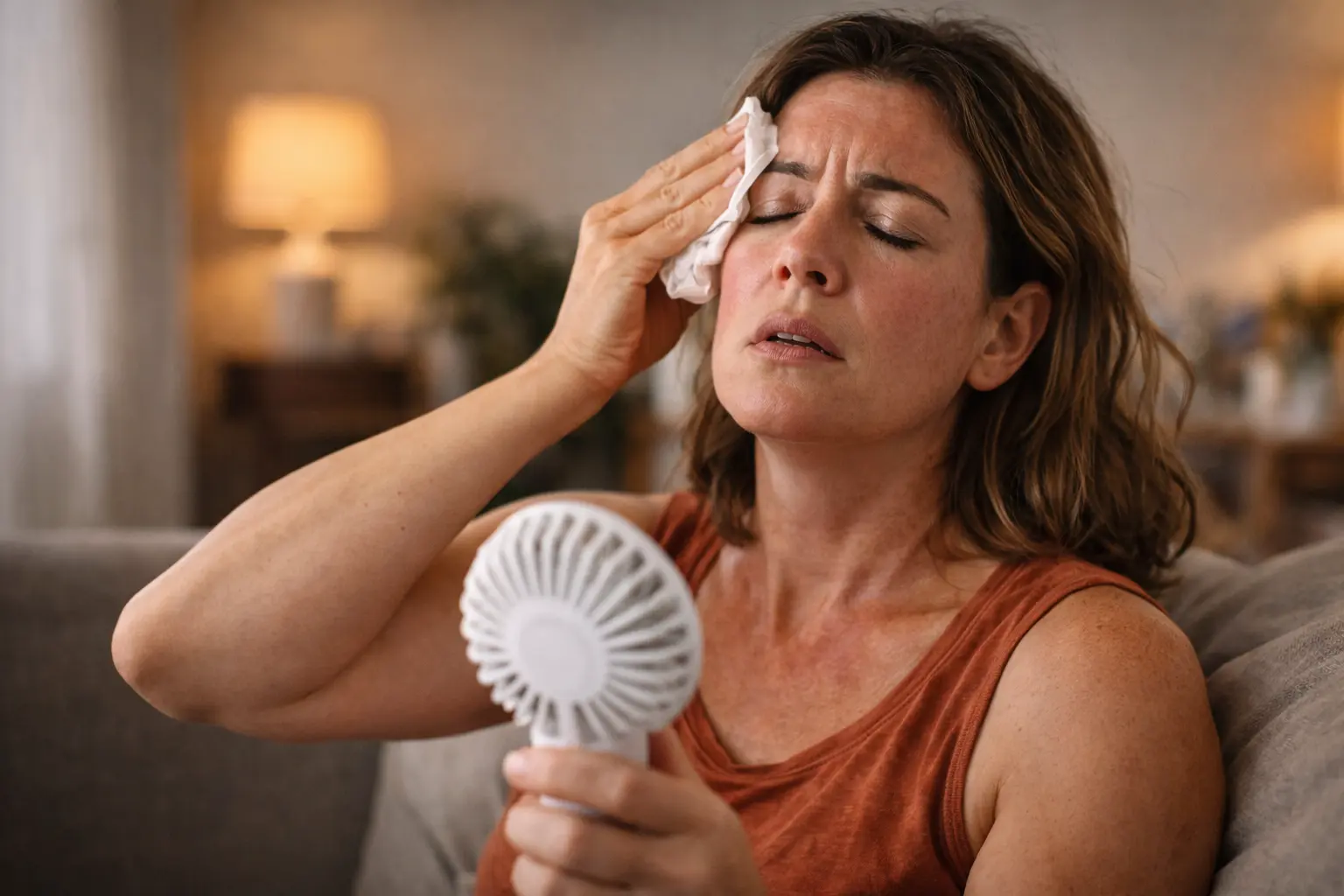
One minute you’re sitting at your desk and the next you’re drenched in sweat with your heart racing like you just sprinted a mile, and menopause hot flashes are turning your life upside down when you least expected it.
What are menopause hot flashes?
Menopause hot flashes are sudden waves of intense heat that sweep through your body without warning, often leaving you drenched in sweat and flushed from head to toe. They happen because your body’s estrogen levels are dropping, which confuses your brain’s temperature control center. Imagine your internal thermostat getting stuck on high for a few minutes, then suddenly resetting. These episodes can feel like someone turned up the heat in the room, except the room is your own body. They typically last anywhere from a few seconds to several minutes, though it can feel much longer when you’re experiencing one. Some people describe the sensation as a wave of heat starting in the chest and rising to the face, while others feel it spread throughout their entire body. The intensity varies wildly from person to person, and even from one hot flash to the next.
- They typically last for a few minutes and can occur multiple times a day, sometimes even at night while you sleep.
- Hot flashes can disrupt sleep and daily activities, affecting your quality of life and leaving you exhausted and frustrated.
- Triggers like stress, caffeine, alcohol, spicy foods, hot environments, and even tight clothing can make hot flashes worse or happen more frequently.
Managing hot flashes
Managing hot flashes starts with practical, immediate strategies you can use right now. Dress in layers so you can quickly remove clothing when a hot flash hits, keeping lightweight fabrics like cotton or moisture-wicking materials close to your skin. Keep a small handheld fan at your desk, in your bag, or near your bed for instant relief when heat strikes. Some people swear by keeping a cold water bottle nearby to sip from or press against their neck. Identify your personal triggers by keeping a simple log of when hot flashes happen and what you were doing beforehand. Notice patterns like whether they spike after your morning coffee, during stressful meetings, or after eating spicy food. Once you know your triggers, you can actively avoid them or at least prepare yourself mentally. For example, if you know caffeine makes them worse, gradually reduce your intake rather than quitting cold turkey. If stress is a trigger, build in short breaks throughout your day to breathe and reset.
📘 Fix your day in under 2 minuteschoose where to begin:
Natural remedies
Natural approaches can help reduce both the frequency and intensity of hot flashes when combined with lifestyle changes. Deep breathing exercises work because they calm your nervous system, which directly impacts your body’s temperature regulation. Try the 4-7-8 technique: breathe in for four counts, hold for seven, and exhale for eight. Practice this when you feel a hot flash starting to build. Yoga and meditation aren’t just trendy wellness activities, they actually lower cortisol levels and help your body manage the hormonal shifts happening during menopause. Even 10 to 15 minutes daily can make a noticeable difference. Adding soy-based products like tofu, edamame, or soy milk to your diet may help because they contain isoflavones, plant compounds that mimic estrogen. Some research suggests they can reduce hot flash frequency by up to 30 percent, though results vary. Herbal supplements like black cohosh or red clover are popular, but talk to your doctor before starting any supplement to make sure it won’t interact with other medications or health conditions you have.
Healthy lifestyle habits
Your daily habits directly influence how often and how intensely you experience hot flashes, so small changes can add up to real relief. Regular exercise, even just 30 minutes of walking or swimming most days, helps regulate your body temperature and reduces hot flash frequency. Exercise also improves sleep quality, which hot flashes often disrupt. Maintaining a healthy weight matters because excess body weight can trap heat and make hot flashes feel more intense. Getting seven to nine hours of sleep each night is crucial because sleep deprivation actually triggers more hot flashes, creating a frustrating cycle. Keep your bedroom cool, dark, and quiet, and consider moisture-wicking bedding if night sweats are a problem. Avoid smoking and limit alcohol because both can trigger hot flashes and make them feel worse. Even one or two drinks can set off a hot flash in some people. Stay hydrated by drinking plenty of water throughout the day, as dehydration can intensify symptoms. Think of these habits as building a foundation that makes your body more resilient to hormonal changes.
Seeking professional help
If hot flashes are seriously disrupting your work, sleep, relationships, or mental health, it’s time to talk to a healthcare provider instead of just pushing through. Many people wait too long hoping symptoms will improve on their own, but professional support can make a real difference in your quality of life. Your doctor can discuss hormone replacement therapy (HRT), which can be highly effective for moderate to severe hot flashes, though it does come with considerations you’ll want to discuss. Other medications like certain antidepressants or blood pressure medications can reduce hot flash frequency even though they weren’t originally designed for this purpose. Your provider might also recommend a specialist like a gynecologist or menopause specialist who focuses specifically on this life stage. Keep a symptom diary for a week or two before your appointment, noting how many hot flashes you have daily, how long they last, what triggers them, and how they affect your daily life. This information helps your doctor understand your situation better and recommend the most appropriate treatment plan for your specific needs.
Menopause hot flashes are sudden waves of intense heat caused by dropping estrogen levels during menopause. You can manage them naturally by staying cool through layered clothing and fans, identifying and avoiding personal triggers, practicing relaxation techniques like yoga and deep breathing, maintaining healthy lifestyle habits including exercise and sleep, and consulting a healthcare provider if hot flashes significantly impact your quality of life.
Can hot flashes occur before menopause?
Yes, hot flashes can start before menopause, during perimenopause, the transitional phase leading up to menopause. This phase can begin several years before menopause, sometimes as early as your 40s, and is when your body’s hormone levels begin fluctuating.
Are hot flashes a sign of a serious health condition?
Hot flashes are generally a normal part of the menopause process and are not usually a sign of a serious health condition. However, if they significantly impact your quality of life or if you have other concerning symptoms, it’s important to consult a healthcare provider to rule out other possibilities.
Disclaimer: This article is for informational purposes only and is not a substitute for professional medical advice. Always consult a healthcare professional for personal guidance.
This guide has been prepared and reviewed by the GlobalHealthBeacon editorial team and reflects current medical research as of 2026. It provides structured, evidence-based information to support informed health decisions.
