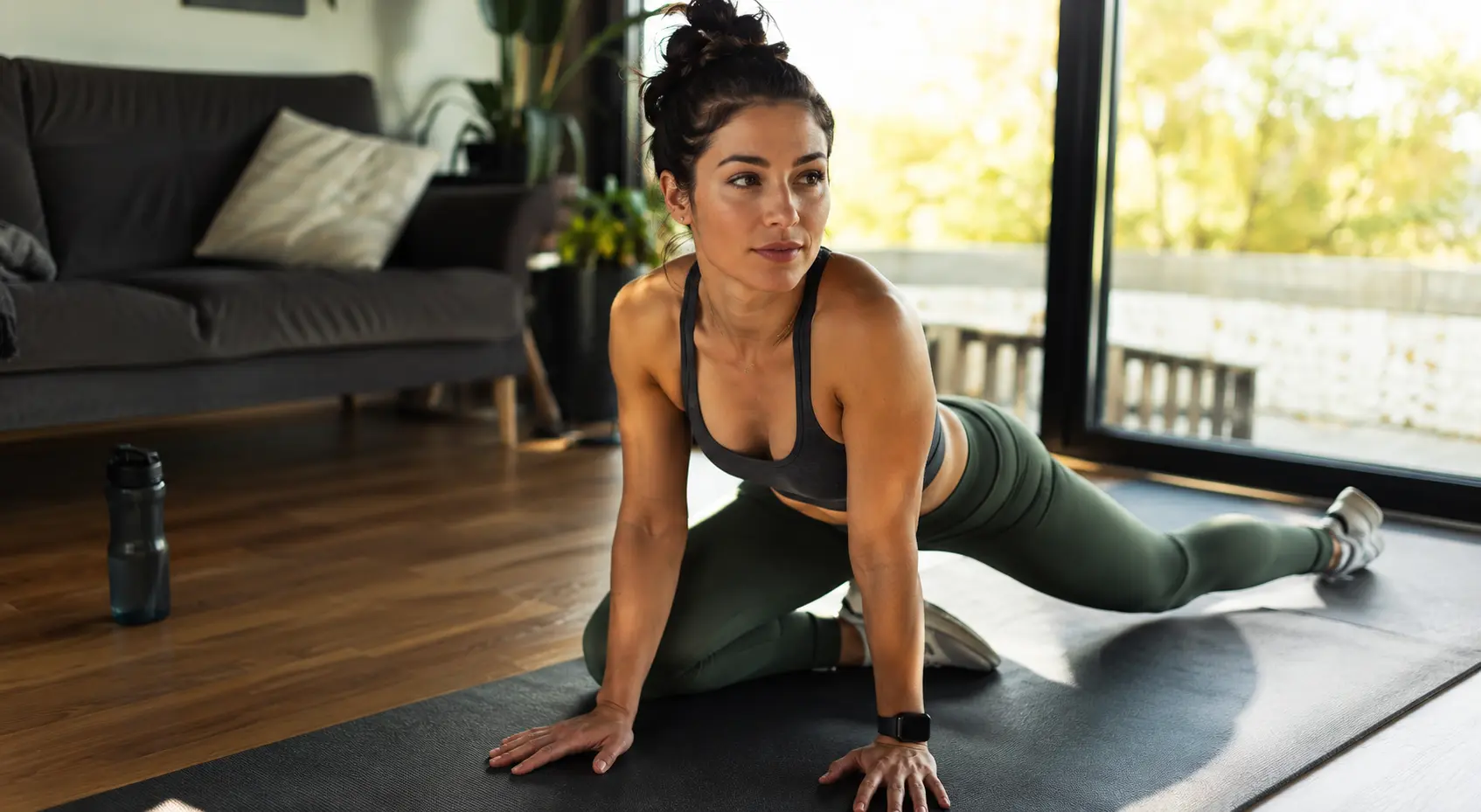
Your body feels stiff, tight, and limited in ways you can’t quite name, and you’re tired of feeling restricted by your own muscles – but a real mobility routine for beginners can change that faster than you think.
The importance of mobility exercises
Mobility exercises are foundational for women at every life stage, whether you’re in your twenties navigating a desk job or in your fifties managing the physical demands of daily life. These exercises go beyond simple stretching by actively improving how your joints move through their full range of motion. Think of mobility as the difference between being able to reach a shelf and being able to reach it comfortably while maintaining balance. For women specifically, hormonal changes throughout life can affect joint flexibility and muscle elasticity, making consistent mobility work essential. When you neglect mobility, everyday activities like picking up groceries, playing with children, or even getting out of bed can become uncomfortable. A proper mobility routine addresses these gaps by targeting the connective tissues, joints, and muscles that support your movements. Women who invest in mobility exercises report better posture, reduced back pain, and increased confidence in their physical abilities. The benefits extend beyond the gym too – improved mobility makes you more resilient to injuries and helps you move through life with greater ease and control.
- Enhances flexibility and range of motion
- Improves posture and body alignment
- Reduces the risk of injuries during workouts
Getting started: squats and lunges
Squats and lunges are the cornerstone movements for building lower body strength and hip mobility, and they’re far more accessible than many beginners realize. Start with bodyweight squats by standing with your feet shoulder-width apart, then slowly lower your hips as if sitting back into a chair, keeping your chest upright and weight in your heels. A common mistake is letting your knees cave inward or descending too quickly without control. Instead, move deliberately and pause at the bottom for a moment to feel the engagement in your quads and glutes. Lunges work similarly but in a different plane of motion – step forward, lower your back knee toward the ground, and push through your front heel to return to standing. Women often find lunges particularly helpful because they address the hip flexors, which become tight from sitting and can contribute to lower back pain. Start with ten to twelve repetitions of each exercise, focusing on form over speed. As your confidence grows, you can add variations like reverse lunges or walking lunges. These foundational movements prepare your body for more complex exercises while building the stability needed for daily activities like climbing stairs or getting up from a chair.
📘 Fix your day in under 2 minuteschoose where to begin:
Core stability: planks and bird dogs
Your core is far more than just your abs – it’s a complex system of muscles that stabilizes your entire spine and supports nearly every movement you make. Planks are one of the most effective ways to activate this system. Begin by getting into a push-up position with your forearms on the ground, elbows directly under your shoulders. Keep your body in a straight line from head to heels, engaging your core as if bracing for impact. Hold this position for twenty to thirty seconds initially, breathing steadily throughout. Many women hold their breath during planks, which actually reduces effectiveness and increases tension. Instead, breathe naturally and focus on maintaining that neutral spine position. Bird dogs complement planks beautifully by working your core in a dynamic way. Start on your hands and knees, then simultaneously extend your right arm forward and left leg backward, creating a straight line. Pause briefly, then return to start and repeat on the opposite side. This exercise teaches your core to stabilize while your limbs move, which translates directly to real-world activities. Together, these exercises create a strong foundation that prevents back pain, improves posture, and enables you to perform more advanced movements safely.
Upper body mobility: shoulder circles and arm raises
Your shoulders are among the most mobile joints in your body, but they’re also vulnerable to tightness and injury, especially if you spend hours at a desk or hunched over a phone. Shoulder circles are deceptively simple yet remarkably effective for warming up and improving shoulder mobility. Stand with your arms at your sides, then slowly raise your shoulders up toward your ears, roll them backward, and lower them down – this is one complete circle. Perform ten circles backward, then reverse direction for ten more. The key is moving slowly and deliberately, feeling the full range of motion rather than rushing through the movement. Arm raises come next and directly strengthen the muscles supporting your shoulders and upper back. Hold your arms at your sides with a slight bend in your elbows, then slowly raise them out to the sides until they reach shoulder height, pause, and lower back down. This movement targets your deltoids and helps counteract the forward shoulder posture that develops from modern life. Women often experience shoulder tension from carrying bags, holding stress in their neck, or poor ergonomics at work. These upper body mobility exercises address those issues directly. Perform fifteen to twenty arm raises and shoulder circles as part of your warm-up or cool-down routine.
Full body stretch: cat-cow pose
The cat-cow pose is a gentle, flowing movement that mobilizes your entire spine while calming your nervous system – making it the perfect way to finish your mobility routine. Start on your hands and knees with your wrists under your shoulders and knees under your hips. For the cow phase, drop your belly toward the ground, lift your gaze slightly upward, and let your shoulders roll back. This creates a gentle arch through your spine and opens your chest. Hold this position for a breath or two, feeling the stretch along your front body. Then transition to the cat phase by rounding your spine, tucking your chin toward your chest, and drawing your belly in. This movement stretches your back and releases tension in your neck and shoulders. Flow between these two positions slowly and mindfully, moving with your breath – inhale during cow, exhale during cat. Perform eight to ten rounds of this flowing movement. Many women find that cat-cow provides relief from the tension that accumulates throughout the day, especially in the neck, shoulders, and lower back. Unlike static stretches, this dynamic movement also promotes spinal mobility and flexibility. The gentle nature of cat-cow makes it suitable for all fitness levels and can be performed daily without risk of overtraining.
Mobility exercises for women are essential for improving flexibility, preventing injuries, and enhancing overall physical performance. Incorporating squats, lunges, planks, bird dogs, shoulder circles, arm raises, and the cat-cow pose can help beginners kickstart their fitness journey with a strong foundation.
How often should I do mobility exercises as a beginner?
It is recommended to perform mobility exercises at least 2-3 times a week to see improvements in flexibility, range of motion, and strength. Consistency is key to reaping the benefits of these exercises.
Can I do mobility exercises if I have existing injuries?
If you have existing injuries, it’s important to consult with a healthcare professional or physical therapist before starting any new exercise routine. They can provide guidance on modifications or alternative exercises that are safe for your specific condition.
Others also read:
Disclaimer: This article is for informational purposes only and is not a substitute for professional medical advice. Always consult a healthcare professional for personal guidance.
This guide has been prepared and reviewed by the GlobalHealthBeacon editorial team and reflects current medical research as of 2026. It provides structured, evidence-based information to support informed health decisions.
