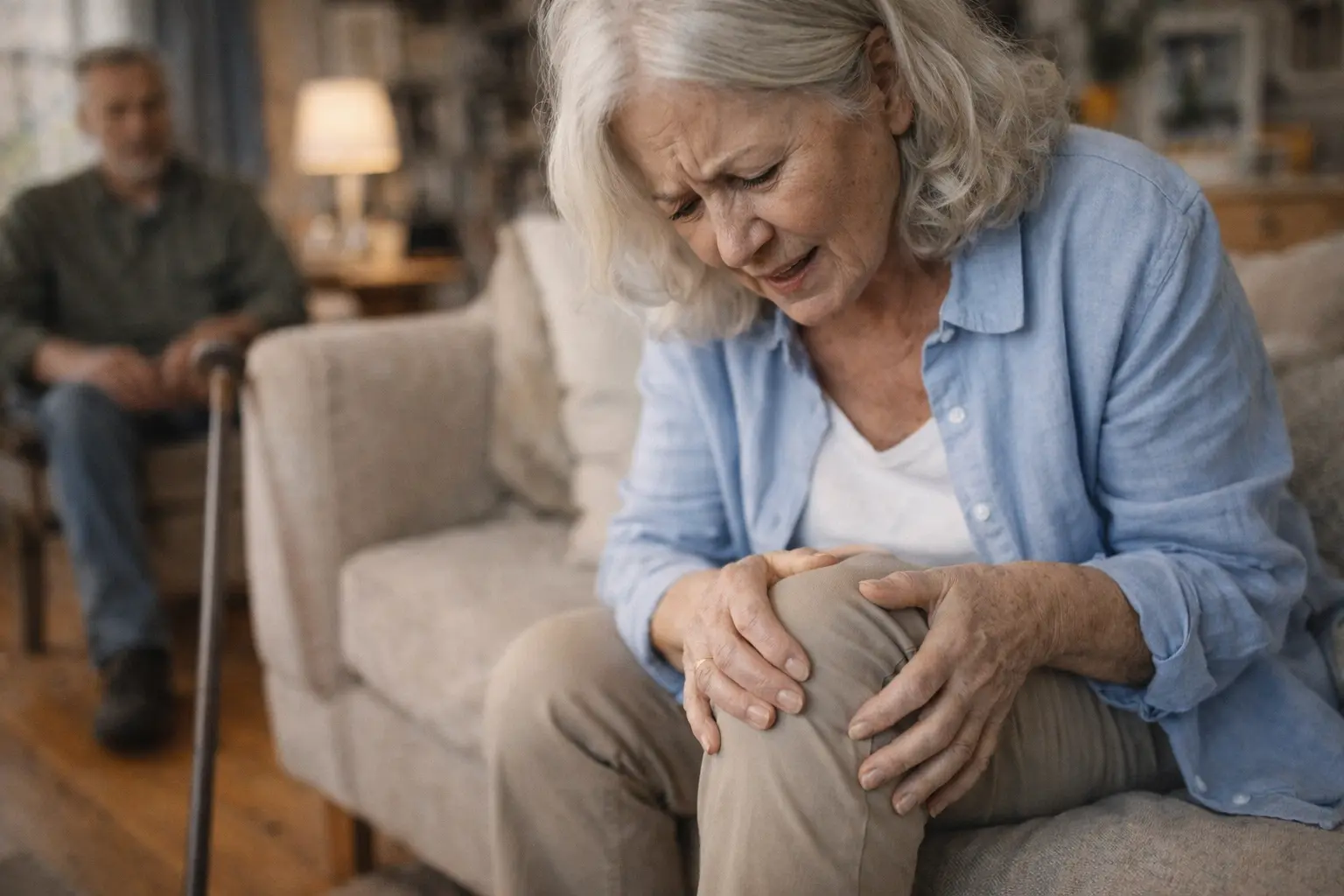
Your knees scream when you stand up, your hands won’t cooperate in the morning, and simple tasks feel like climbing mountains – osteoarthritis symptoms explained so you finally understand what’s happening to your body and what you can actually do about it.
Understanding osteoarthritis symptoms
Osteoarthritis creeps up on you quietly. One day you notice your knee feels stiff after sitting through your favorite TV show. The next week, opening a jar becomes a two-handed operation that leaves your wrists aching. This is osteoarthritis, and it happens because the protective cartilage in your joints gradually wears down over time. Think of it like the tread on a tire slowly disappearing. When that cushioning is gone, bone rubs against bone, causing the pain, stiffness, and swelling that makes you feel trapped in your own body. Many seniors describe it as feeling rusty in the morning, like they need an hour just to get their joints moving properly. The symptoms often hit hardest in your hands, knees, hips, and lower back because these joints bear so much of your weight and get used constantly throughout your life.
- Joint pain that worsens with movement or activity and improves with rest
- Stiffness in the affected joints, especially after periods of inactivity or first thing in the morning
- Swelling and tenderness in the joints that may feel warm to the touch
Coping strategies for daily life
Sarah, a 68-year-old grandmother, used to dread her morning routine until she made small changes that transformed her days. She started using a reacher tool to pick up items from the floor, installed grab bars in her bathroom, and began wearing compression gloves at night. These simple modifications sound minor, but they gave her back her independence and confidence. The key is working with your body instead of against it. Gentle movement like a 20-minute walk or slow stretching helps keep joints mobile without overloading them. Using heat pads before activity and ice after activity can reduce inflammation and pain. Keeping your weight stable takes pressure off your joints, especially your knees and hips. Many seniors find that pacing themselves throughout the day, taking frequent breaks, and avoiding repetitive motions helps them accomplish more without triggering flare-ups. It’s about being smart, not just tough.
💬 Ready to feel better in 2 minutes?choose where to begin:
Treatment options and lifestyle changes
Your healthcare provider has more tools in their toolkit than you might realize. Some seniors benefit from over-the-counter pain relievers or topical creams that you rub directly on sore joints. Others find that prescription medications or injections provide relief that allows them to stay active. Physical therapy is often underrated but incredibly powerful – a trained therapist can show you specific exercises that strengthen the muscles supporting your joints, which takes pressure off the damaged cartilage. Many people see real improvement within weeks. Lifestyle adjustments matter just as much as any medication. Eating a diet rich in anti-inflammatory foods, staying hydrated, getting quality sleep, and managing stress all play roles in how your body feels day to day. Some seniors swim regularly because water supports your body weight while letting you move freely. Others find that tai chi or gentle yoga gives them both movement and mental peace. The best treatment plan is one you’ll actually stick with, so work with your doctor to find what fits your life.
Embracing self-care and support
Living with arthritis isn’t just a physical challenge – it’s emotional too. You might feel frustrated that you can’t garden like you used to or angry that your body won’t cooperate. These feelings are completely valid and more common than you’d think. That’s why connecting with others who truly understand makes such a difference. Support groups, whether in person or online, let you share experiences with people facing the same struggles. You realize you’re not alone, and you pick up practical tips from people who’ve already figured out creative solutions. Stress and anxiety actually make pain feel worse, so practices like meditation, gentle breathing exercises, or simply sitting quietly with a cup of tea can genuinely help. Staying connected with family and friends, pursuing hobbies you enjoy, and maintaining a sense of purpose all contribute to better overall health and resilience. Self-care means treating yourself with the same compassion you’d show a good friend going through a tough time.
Osteoarthritis symptoms can feel overwhelming, but you’re not powerless against them. Understanding what’s happening in your joints takes away some of the mystery and fear. With practical daily strategies, a personalized treatment plan from your healthcare provider, and genuine self-care practices, managing arthritis after 65 becomes less about fighting your body and more about working with it. Many seniors discover that this phase of life, while challenging, can still be full of activity, connection, and purpose.
How can exercise help with osteoarthritis?
Exercise strengthens the muscles around your affected joints, which takes pressure off the damaged cartilage and reduces pain. It also improves flexibility and keeps your joints mobile. Low-impact activities like swimming, walking on flat surfaces, water aerobics, or gentle yoga are ideal for seniors because they build strength without jarring your joints. Even 20 to 30 minutes most days can make a noticeable difference in how you feel.
Are there natural remedies for osteoarthritis?
Some people report relief from natural approaches like turmeric, ginger, glucosamine, or omega-3 supplements, though research results are mixed. Before trying any supplement or alternative treatment, talk with your healthcare provider to make sure it’s safe for you, won’t interact with medications you’re taking, and is actually effective for your situation.
Others also read:
Disclaimer: This article is for informational purposes only and is not a substitute for professional medical advice. Always consult a healthcare professional for personal guidance.
This article presents an experience-based perspective and has been reviewed by the GlobalHealthBeacon editorial team in 2026. It provides structured, evidence-based information to support informed health decisions.
