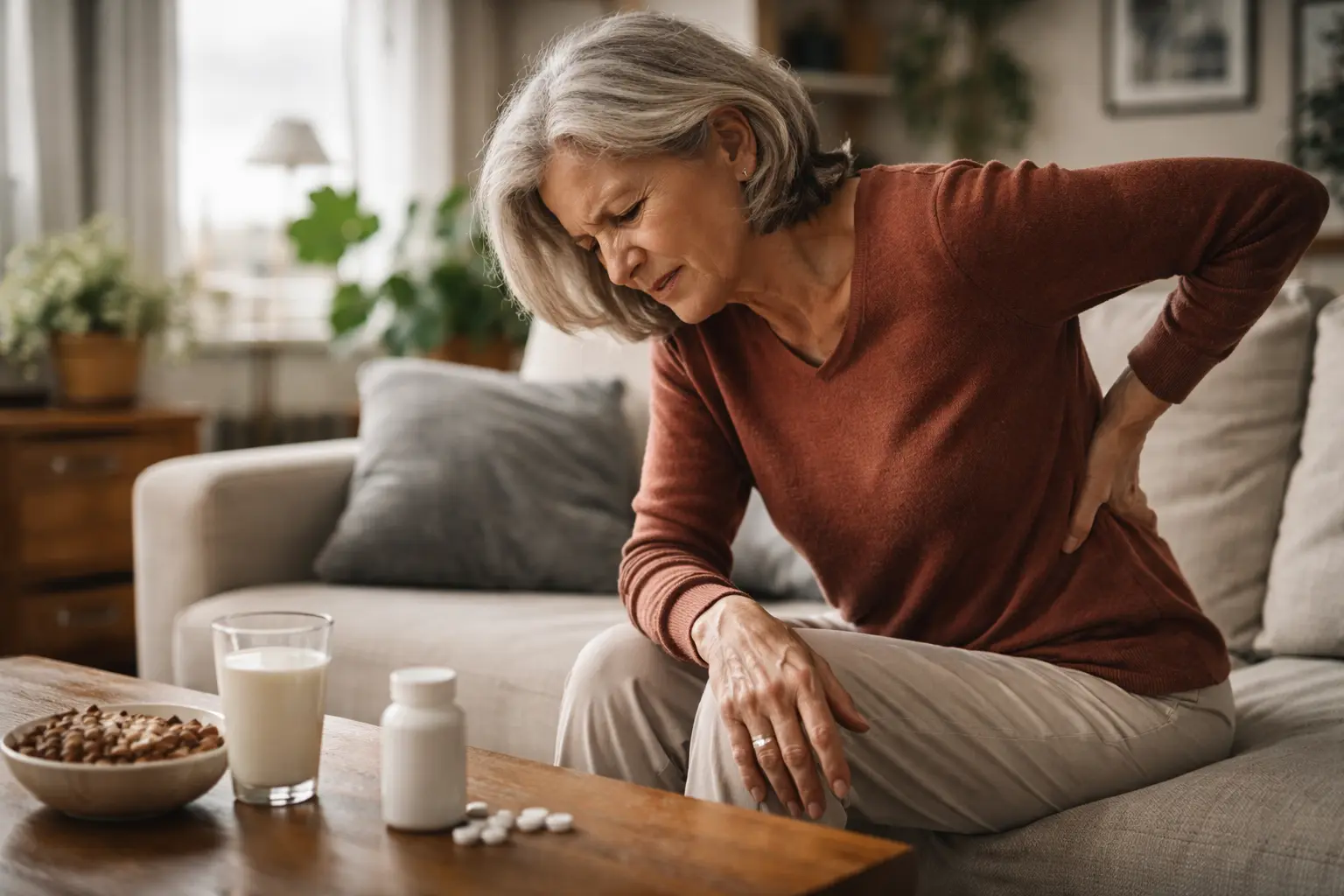
You’re noticing your bones feel more fragile, your posture is changing, and you’re terrified of a simple fall turning into a fracture – these are the real signals that osteoporosis risk factors might already be at work in your body.
Age and menopause connection
The relationship between aging, menopause, and bone health is one of the most significant shifts your body will experience. When you enter menopause, typically between ages 45 and 55, your estrogen levels drop dramatically. Estrogen is like a protective shield for your bones, actively working to maintain bone density and strength. Without it, your bones begin losing density at an accelerated rate, sometimes up to 3 percent per year in the first five to seven years after menopause. Consider Sarah, a 52-year-old woman who noticed her height seemed to decrease slightly and her clothes fit differently. A bone density scan revealed she had already lost 15 percent of her bone mass in just three years post-menopause. This isn’t unusual. The bone loss during this transition period is one reason why osteoporosis develops in one in three women over age 50. Understanding this timeline helps you recognize that your bones need extra attention and support during and after menopause.
- Menopausal women are at a higher risk of osteoporosis.
- The decline in estrogen levels post-menopause weakens bones.
- Regular bone density scans can help monitor changes and assess risk.
Dietary deficiencies impact
Your bones are living tissue that constantly rebuilds itself, and this process requires specific nutrients as building blocks. Calcium and vitamin D are the primary players, but many women fall short of recommended daily intake without realizing it. Calcium needs range from 1,000 to 1,200 mg daily depending on age, yet the average woman consumes only 700 mg. Vitamin D, which helps your body absorb calcium, is equally critical and often deficient, especially in women with limited sun exposure or those living in northern climates. Think about your typical day: a breakfast without dairy, a lunch salad without leafy greens, and dinner without salmon or fortified foods. These small gaps compound over months and years. Beyond these two nutrients, magnesium, phosphorus, and vitamin K also play supporting roles in bone formation. A woman who skips dairy products, avoids fortified foods, and doesn’t supplement may be slowly weakening her skeletal structure without any obvious symptoms until a fracture occurs.
📘 Fix your day in under 2 minuteschoose where to begin:
Sedentary lifestyle and bone health
Bones respond to physical stress by becoming stronger, a principle called Wolff’s Law. When you don’t move regularly, your bones receive no signal to maintain or build density, so they gradually weaken. Weight-bearing exercises, where your bones work against gravity, are especially powerful for bone health. Walking, jogging, dancing, or climbing stairs all count. Resistance training, where you work against weights or resistance bands, also stimulates bone formation. A woman who spends most of her day sitting at a desk, drives to work, and relaxes on the couch in the evening is unknowingly accelerating bone loss. Compare this to a woman who takes a 30-minute walk most days, does light strength training twice weekly, and stays generally active throughout her day. Over five years, the difference in bone density between these two scenarios can be substantial. The good news is that it’s never too late to start. Even women in their 60s and 70s can improve bone density through consistent, appropriate exercise. The key is consistency and choosing activities you’ll actually do regularly.
Family history and genetics
Your genetic blueprint significantly influences your baseline bone density and how quickly you lose bone mass over time. If your mother, grandmother, or siblings have osteoporosis, your risk is considerably higher. Genetics account for approximately 60 to 80 percent of bone density variation between individuals. This doesn’t mean you’re destined to develop osteoporosis, but it does mean you should be more proactive and vigilant. Imagine two women of the same age and lifestyle, but one has a family history of osteoporosis while the other doesn’t. The woman with family history might benefit from earlier bone density screening, more aggressive preventive measures, and closer monitoring. She might also want to discuss with her doctor whether hormone therapy or other medications are appropriate for her situation. Knowing your family history empowers you to take action sooner rather than waiting for symptoms to appear. If you don’t know your family’s bone health history, it’s worth asking relatives about osteoporosis, fractures, or height loss.
Medication and health conditions
Certain medications and underlying health conditions can significantly impact bone density and increase fracture risk. Corticosteroids, commonly prescribed for conditions like asthma, rheumatoid arthritis, and lupus, can reduce bone density by 1 to 3 percent per year when used long-term. Anticonvulsant medications used for seizure disorders can interfere with vitamin D metabolism, reducing calcium absorption. Thyroid disorders, whether overactive or underactive, affect bone turnover rates. Autoimmune diseases like rheumatoid arthritis trigger inflammation that accelerates bone loss. Gastrointestinal conditions that affect nutrient absorption, such as celiac disease or Crohn’s disease, can lead to calcium and vitamin D deficiencies. A woman taking a corticosteroid for asthma management might not realize her medication is quietly affecting her bones. If you’re on long-term medications or have been diagnosed with a chronic health condition, discussing bone health with your doctor is essential. Your healthcare provider can assess your individual risk, recommend appropriate screening, and suggest protective measures or alternative medications if necessary.
Age and menopause, dietary deficiencies, sedentary lifestyle, family history, genetics, and medication or health conditions are key risk factors for osteoporosis in women. Understanding these factors can help women take proactive steps in maintaining bone health.
How can women reduce their risk of osteoporosis?
Women can reduce their risk of osteoporosis by ensuring an adequate intake of calcium and vitamin D, engaging in regular weight-bearing exercises, and getting regular bone density scans to monitor changes.
At what age should women start paying attention to osteoporosis risk factors?
Women should start paying attention to osteoporosis risk factors, especially after menopause, but it’s never too early to adopt bone-healthy habits like proper nutrition and exercise.
Others also read:
Disclaimer: This article is for informational purposes only and is not a substitute for professional medical advice. Always consult a healthcare professional for personal guidance.
This guide has been prepared and reviewed by the GlobalHealthBeacon editorial team and reflects current medical research as of 2026. It provides structured, evidence-based information to support informed health decisions.
