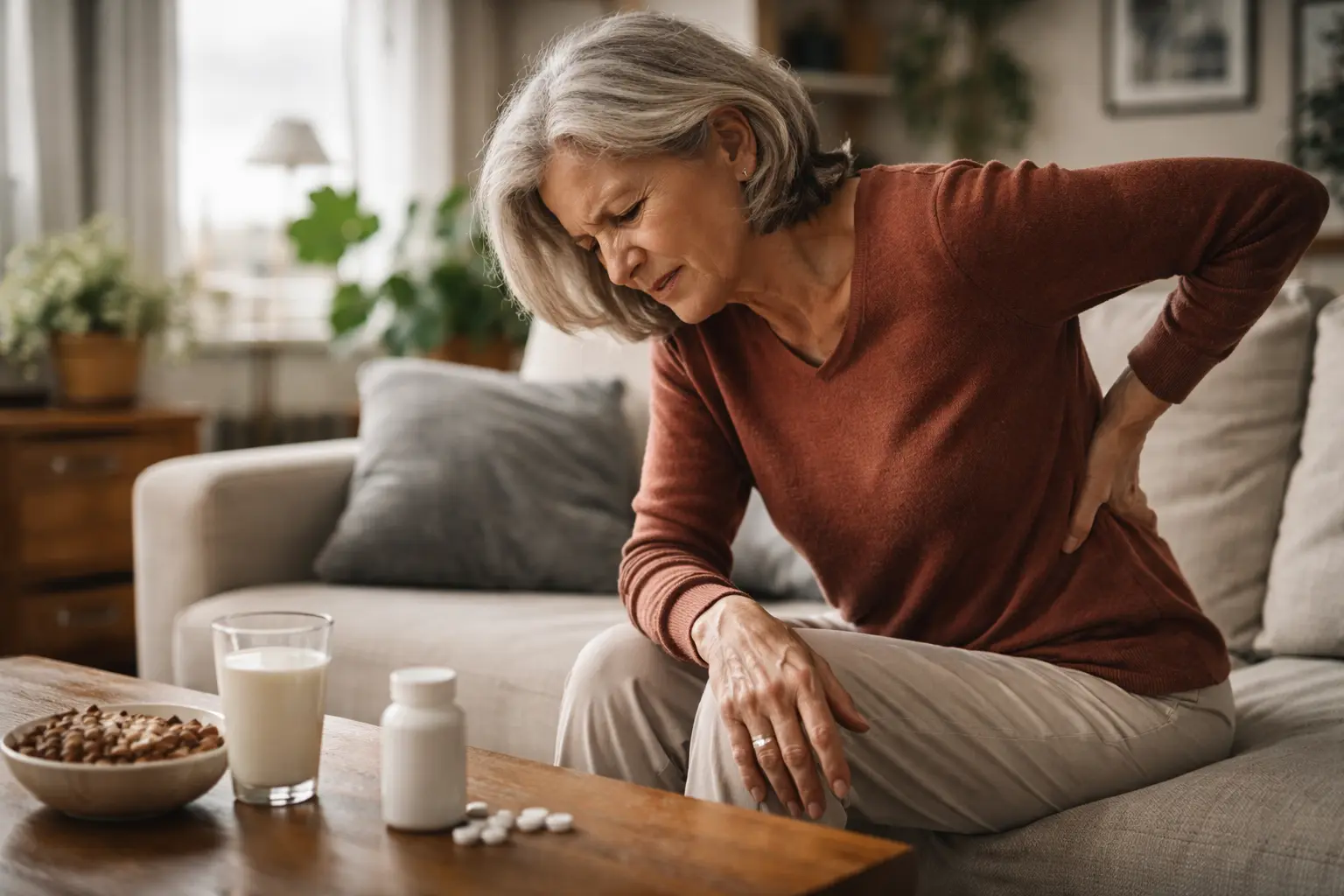
Your bones feel fine now, but the silent weakening happening inside could catch you off guard later, and understanding osteoporosis risk factors is the only way to stay ahead of it.
Hormonal influence on bone health
Estrogen is like a protective guardian for your bones. Throughout your reproductive years, this hormone maintains bone density by regulating the cells that build and break down bone tissue. Picture your bones as a constantly renewing structure, with old bone being removed and new bone being added in a careful balance. Estrogen keeps this process steady. But as women approach menopause, estrogen levels drop sharply, sometimes by 50 percent or more within just a few years. When this happens, bone loss accelerates dramatically. A woman can lose up to 10 percent of her bone mass in the first five years after menopause. This is why women in their 50s and 60s face a significantly higher risk of osteoporosis than men of the same age. The hormonal shift isn’t gradual or gentle; it’s a sudden change that your skeleton must adapt to, and many women don’t realize how profoundly this affects their long-term bone strength.
Nutritional deficiencies and bone health
Calcium and vitamin D aren’t just buzzwords on supplement bottles; they’re the actual building blocks your bones need to stay strong. Calcium provides the mineral structure that gives bone its hardness, while vitamin D enables your body to absorb that calcium in the first place. Without adequate vitamin D, your intestines can only absorb about 10 to 15 percent of dietary calcium. With sufficient vitamin D, that absorption jumps to 30 to 40 percent. Imagine eating calcium-rich foods but your body can’t actually use them because vitamin D is missing from the equation. Many women, especially those who live in northern climates or spend limited time outdoors, develop vitamin D deficiency without realizing it. A typical woman needs about 1,000 to 1,200 milligrams of calcium daily and 600 to 800 international units of vitamin D, but surveys show many fall short. Over time, this nutritional gap compounds, leaving bones progressively more fragile and vulnerable to fractures from minor falls.
Physical activity and bone density
Weight-bearing exercise works like a stimulus that tells your bones to stay strong. When you walk, jog, dance, or lift weights, you create mechanical stress on your skeleton, and your bones respond by maintaining or even increasing their density. This is fundamentally different from activities like swimming or cycling, which don’t create the same bone-strengthening stimulus. Research shows that women who engage in regular weight-bearing activity maintain significantly higher bone density than sedentary women of the same age. A 55-year-old woman who walks briskly for 30 minutes most days and does strength training twice weekly can have bone density comparable to a woman 10 years younger. The key is consistency and variety. Your bones adapt to the specific stresses you place on them, so mixing walking with resistance training and balance exercises creates a comprehensive strengthening effect. Even small amounts of daily movement matter; studies indicate that women who accumulate just 30 minutes of weight-bearing activity daily show measurably better bone health outcomes than those who are sedentary.
- Engage in weight-bearing exercises for at least 30 minutes a day, such as brisk walking, dancing, or hiking on varied terrain.
- Incorporate strength training exercises two to three times weekly, focusing on major muscle groups and progressive resistance.
- Ensure proper form and technique to prevent injuries during exercise; consider working with a trainer initially to establish correct movement patterns.
- Consult a healthcare provider before starting a new exercise routine, especially if you have existing health conditions or joint concerns.
🔬 Science-backed benefits in 2 minuteschoose where to begin:
Genetic predisposition to osteoporosis
Your family history is a powerful predictor of your bone health trajectory. If your mother, grandmother, or sister developed osteoporosis or experienced a fracture after age 50, your risk is substantially higher than the general population. Genetics influence about 60 to 80 percent of your peak bone mass, the maximum density your bones reach in early adulthood. This doesn’t mean you’re destined to develop osteoporosis if your relatives did, but it does mean you’re starting from a different baseline. A woman with a strong family history might reach peak bone mass at a lower level than someone without genetic risk, making her more vulnerable to crossing below the osteoporosis threshold as she ages. Think of it like inheriting a savings account with a smaller initial deposit; you have less cushion to draw from. Knowing your family history allows you to be more proactive with preventive measures. Women with genetic predisposition benefit especially from early screening, consistent exercise, optimal nutrition, and careful monitoring of other risk factors they can actually control.
Lifestyle factors and bone health
Smoking and excessive alcohol consumption are among the most modifiable threats to bone health, yet many women underestimate their impact. Smoking directly interferes with bone formation and reduces estrogen levels, creating a double blow to bone density. Women who smoke lose bone faster than non-smokers and reach menopause earlier, compounding the hormonal impact. Alcohol, when consumed in excess, interferes with calcium absorption and damages bone-forming cells. A sedentary lifestyle compounds these risks by removing the mechanical stimulus bones need to stay dense. Consider a 60-year-old woman who smokes, drinks wine daily, and spends most of her day sitting; her bones are aging faster than her chronological age suggests. Conversely, a woman of the same age who doesn’t smoke, limits alcohol to moderate amounts, and stays active can have significantly stronger bones. The encouraging part is that these factors are entirely within your control. Quitting smoking improves bone density within months. Reducing alcohol to moderate levels (one drink daily or less) allows your body to absorb and utilize calcium more effectively. Movement and activity provide immediate benefits.
Medical conditions and osteoporosis risk
Certain medical conditions create an environment where bones weaken faster than normal. Thyroid disorders, particularly hyperthyroidism, accelerate bone loss because excess thyroid hormone increases the rate at which bone is broken down. Rheumatoid arthritis triggers chronic inflammation that directly damages bone tissue and often requires medications that further affect bone density. Digestive diseases like celiac disease, Crohn’s disease, and irritable bowel syndrome impair nutrient absorption, making it difficult for your body to get the calcium and vitamin D it needs even if you consume adequate amounts. Type 2 diabetes presents a paradox: despite often having higher bone density on scans, diabetic women actually have weaker bones and higher fracture risk due to changes in bone quality. A woman managing multiple conditions faces compounded risk. For example, someone with both rheumatoid arthritis and celiac disease faces a particularly high osteoporosis risk. The good news is that effectively managing these underlying conditions, working closely with healthcare providers, and being aware of bone health as a specific concern can significantly reduce osteoporosis risk. Regular monitoring and preventive strategies become especially important when medical conditions are present.
Understanding the risk factors for osteoporosis is essential for women’s bone health. Hormonal changes, nutritional deficiencies, lack of physical activity, genetic predisposition, lifestyle factors, and underlying medical conditions all play a critical role in determining the likelihood of developing osteoporosis.
Can osteoporosis be prevented?
While osteoporosis cannot always be prevented, adopting a healthy lifestyle that includes a balanced diet rich in calcium and vitamin D, regular exercise, and avoiding smoking and excessive alcohol consumption can help reduce the risk.
At what age should women start screening for osteoporosis?
Women should consider bone density testing around the age of 65, or earlier if they have certain risk factors like family history, early menopause, or a history of fractures.
Others also read:
Disclaimer: This article is for informational purposes only and is not a substitute for professional medical advice. Always consult a healthcare professional for personal guidance.
This article has been prepared and reviewed by the GlobalHealthBeacon editorial team and is based on current medical research and published scientific literature available in 2026. It provides structured, evidence-based information to support informed health decisions.
