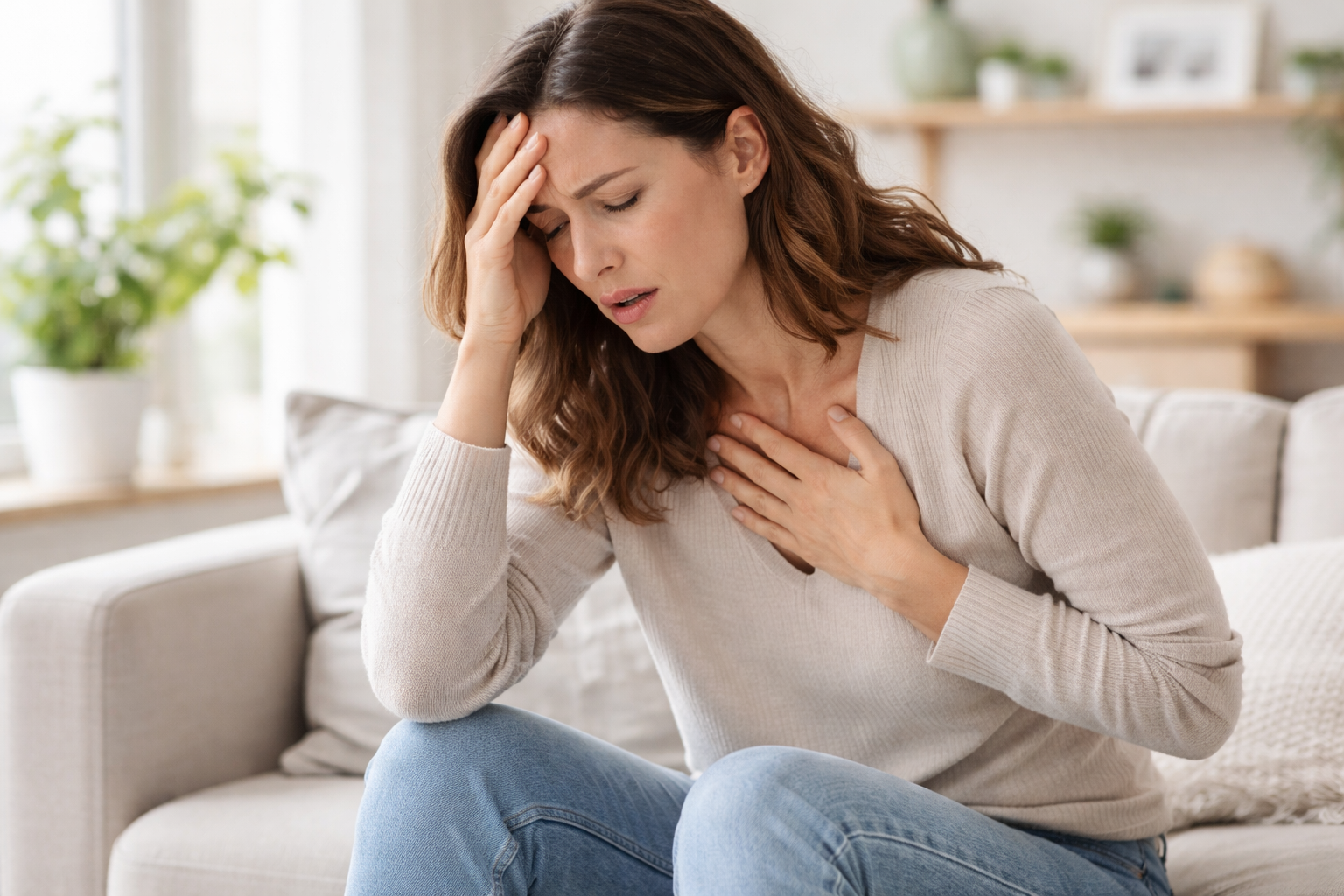
Your heart suddenly pounds like you just sprinted up five flights of stairs, your chest tightens, and a wave of dread washes over you for no clear reason – panic attack symptoms hit different when you’re trying to hold your life together, and you need to know what’s actually happening so you can take back control.
Recognizing panic attack symptoms
Panic attacks announce themselves through your body in ways that feel unmistakably real. Your heart rate spikes dramatically, sometimes reaching 100 to 150 beats per minute, creating a pounding sensation in your chest that can feel alarming. Breathing becomes shallow and rapid as your nervous system shifts into overdrive. Many young adults describe a crushing chest tightness that mirrors cardiac distress, which is why panic attacks are frequently mistaken for heart emergencies. Sweating breaks out across your body even in cool environments. Trembling or shaking affects your hands, legs, or entire frame. Beyond physical sensations, you may experience a detached feeling from reality, intense fear of losing control, or a crushing sense that something catastrophic is about to happen. Some people report numbness in their extremities, tingling sensations, or a feeling of unreality that makes the world seem distant. These symptoms typically peak within 5 to 10 minutes and gradually subside, though the fear they generate can linger much longer.
- Increased heart rate and palpitations are common physical symptoms that can feel like your heart is racing or skipping beats.
- Shortness of breath or a sense of choking can accompany a panic attack, making it difficult to take satisfying breaths.
- Feeling dizzy, lightheaded, or experiencing numbness or tingling sensations in your hands, feet, or face during an episode.
Understanding triggers and risk factors
Panic attacks rarely emerge from nowhere, though they can feel that way. Stress accumulation from work deadlines, relationship conflicts, or major life transitions often precedes episodes. Traumatic experiences or ongoing anxiety conditions create a foundation where panic attacks take root more easily. Genetics play a significant role – if your parents or close relatives experienced anxiety disorders or panic attacks, your risk increases substantially. Certain medical conditions like thyroid disorders, heart arrhythmias, or respiratory issues can trigger panic-like symptoms. Caffeine consumption, especially in high doses, acts as a powerful physical trigger by stimulating your nervous system. Substance use, withdrawal from medications, or hormonal fluctuations during your menstrual cycle can also precipitate attacks. Understanding your personal triggers requires honest reflection about what was happening before episodes occurred. Some young adults notice patterns around specific situations like crowded spaces, public speaking, or being away from home. Identifying these patterns gives you concrete information to work with rather than feeling helpless against random attacks.
📘 Fix your day in under 2 minuteschoose where to begin:
Coping strategies during a panic attack
When panic strikes, your immediate goal is to interrupt the escalation cycle and ground yourself in the present moment. Deep breathing is foundational – try the 4-7-8 technique where you inhale for four counts, hold for seven, and exhale for eight, which signals your nervous system to calm down. Grounding techniques anchor you to reality by engaging your senses deliberately. Name five things you can see, four you can touch, three you can hear, two you can smell, and one you can taste. This sensory inventory pulls your attention away from internal panic sensations. Progressive muscle relaxation, where you tense and release muscle groups systematically, provides both distraction and physical relief. Remind yourself that panic symptoms, while intensely uncomfortable, are not dangerous and will pass within minutes. Some young adults find it helpful to hold ice cubes, splash cold water on their face, or press their feet firmly into the ground to create physical anchoring. Having a trusted person nearby who understands what you are experiencing can provide reassurance and safety. Avoid the temptation to flee the situation or seek immediate medical attention unless you genuinely suspect a medical emergency, as avoidance reinforces panic patterns.
Seeking professional help and treatment
Professional evaluation is essential because panic symptoms overlap with serious medical conditions, and a healthcare provider can rule out physical causes through proper assessment. A mental health professional will conduct a thorough evaluation of your symptom patterns, frequency, and impact on daily functioning. Cognitive behavioral therapy, particularly exposure-based approaches, has strong evidence for treating panic disorder by gradually reducing fear responses. Medications like SSRIs or short-acting anti-anxiety medications can provide relief while you develop coping skills, though medication works best combined with therapy. Your provider will discuss the pros and cons of different treatment approaches based on your specific situation and preferences. Lifestyle modifications including regular exercise, consistent sleep schedules, and stress management techniques support professional treatment. Some young adults benefit from group therapy where they connect with others experiencing similar challenges, reducing isolation and shame. Treatment typically takes time – you may not see significant improvement for several weeks, so patience and consistency matter. Building a collaborative relationship with your provider where you communicate openly about what is and is not working ensures your treatment plan stays responsive to your actual needs.
Preventing future panic attacks
Prevention focuses on building resilience through consistent habits that stabilize your nervous system. Regular aerobic exercise like running, cycling, or swimming reduces baseline anxiety and improves your body’s stress response capacity. Aim for at least 150 minutes weekly to see meaningful benefits. Balanced nutrition that stabilizes blood sugar prevents the physical sensations that can trigger panic – avoid skipping meals and limit refined sugars. Sleep deprivation significantly increases anxiety sensitivity, so prioritize seven to nine hours nightly and maintain consistent sleep schedules even on weekends. Stress management techniques like meditation, yoga, or journaling provide outlets for processing daily tension before it accumulates. Limiting or eliminating caffeine removes a powerful physical trigger that many young adults overlook. Alcohol and recreational drugs may feel like they help temporarily but actually increase anxiety and panic frequency over time. Building strong social connections and maintaining open communication about your mental health reduces the isolation that amplifies anxiety. Regular check-ins with your mental health provider, even when you are doing well, help catch early warning signs before episodes escalate. Small consistent actions compound into significant protection against future panic attacks.
Understanding panic attack symptoms, triggers, coping strategies, seeking professional help, and preventive measures are essential to effectively manage this challenging condition.
Can panic attacks be mistaken for a heart attack?
Yes, panic attacks can mimic symptoms of a heart attack, such as chest pain, shortness of breath, and palpitations. It is essential to seek medical evaluation to rule out any underlying cardiac issues.
Can panic attacks occur without an apparent trigger?
Panic attacks can occur without an identifiable trigger in some cases. These episodes may be spontaneous and unpredictable, but understanding and managing symptoms can still be effective.
Disclaimer: This article is for informational purposes only and is not a substitute for professional medical advice. Always consult a healthcare professional for personal guidance.
This guide has been prepared and reviewed by the GlobalHealthBeacon editorial team and reflects current medical research as of 2026. It provides structured, evidence-based information to support informed health decisions.

