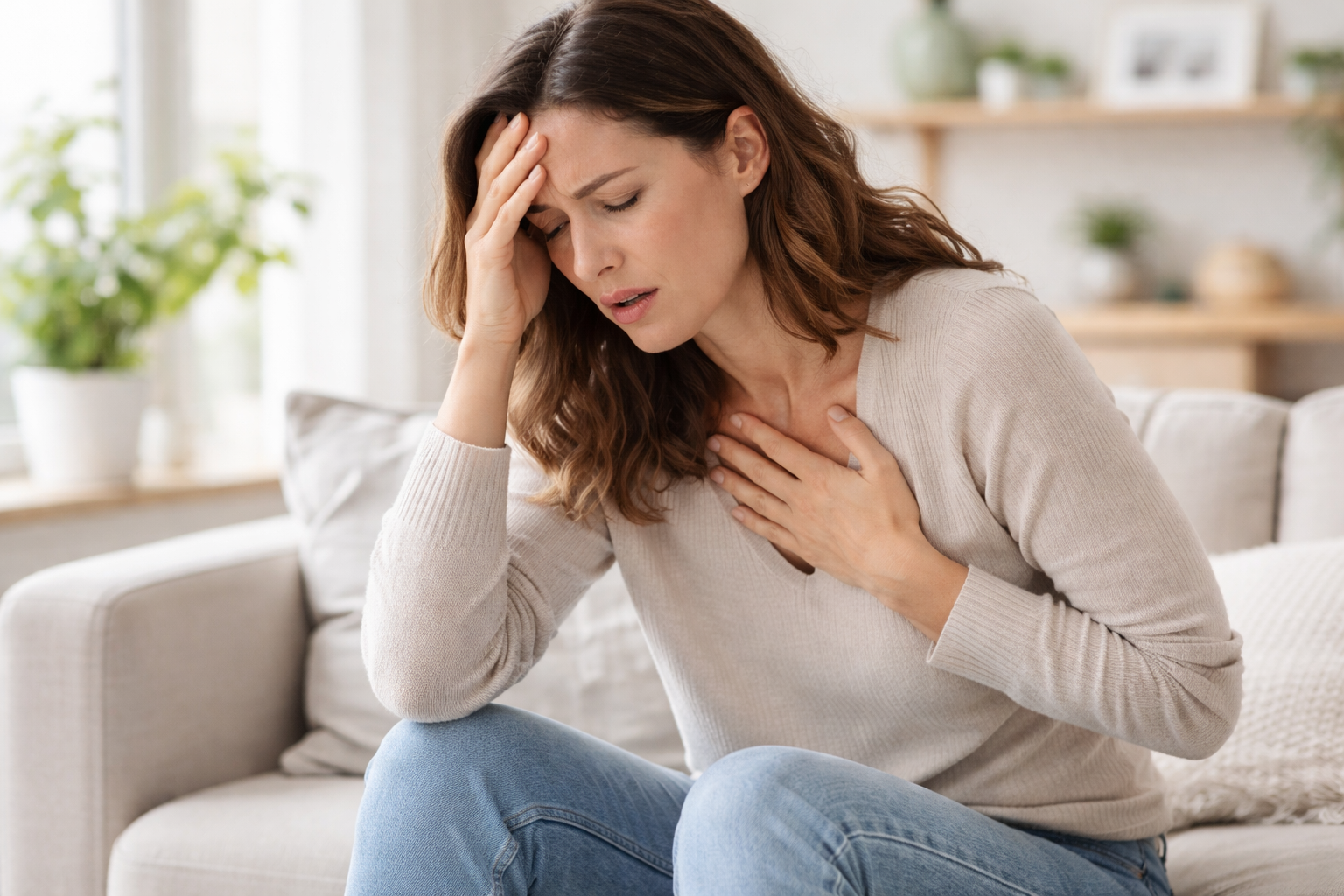
Your heart suddenly pounds like it’s trying to escape your chest, your breathing becomes shallow and frantic, and a wave of terror crashes over you for no reason you can explain—panic attack symptoms hit different when you’re a woman, and honestly, feeling this way month after month is absolutely exhausting.
Recognizing the signs
I remember the first time I felt it coming. My hands started tingling, my vision got blurry, and I just knew something was about to happen. That moment of recognition, as terrifying as it felt, became my superpower. Understanding what your body is trying to tell you before a full panic attack takes over is like learning to read your own internal weather system. For many women, these early warnings show up as a racing or pounding heart that feels completely out of sync with what you’re actually doing. You might notice shortness of breath even when you’re sitting still, a sudden wave of dizziness, or that creeping sense of dread that something terrible is about to occur. Some women describe tingling in their fingers or a tightness in their chest that makes them wonder if something is physically wrong. The sweating, the trembling, the feeling of unreality as if you’re watching yourself from outside your body—these are all legitimate signals your nervous system is in overdrive. Learning to spot these patterns means you can catch yourself before the panic spiral gets worse.
- Learn to recognize physical and emotional cues that indicate an oncoming panic attack.
- Practice deep breathing exercises to help control hyperventilation during moments of intense anxiety.
- Identify triggers or situations that commonly lead to panic attacks to better prepare and navigate through these scenarios.
Seeking professional help
There’s this moment when you realize you can’t white-knuckle your way through this alone, and that’s when reaching out to a mental health professional becomes not just helpful but necessary. I spent months thinking I could manage it myself, but talking to a therapist changed everything. A professional can help you understand why your nervous system is reacting this way and give you actual tools that work, not just generic advice. Cognitive-behavioral therapy, or CBT, is one approach that many women find genuinely effective because it teaches you to interrupt the thought patterns that fuel panic. Instead of letting catastrophic thoughts spiral, you learn to question them and replace them with more realistic perspectives. Some women benefit from medication that helps regulate the neurotransmitters involved in anxiety, while others find the combination of therapy and lifestyle changes is what finally brings relief. The key is finding what resonates with you and your specific situation. A professional can also rule out any underlying health conditions and create a personalized treatment plan rather than a one-size-fits-all approach.
💬 Ready to feel better in 2 minutes?choose where to begin:
Embracing self-care practices
Self-care isn’t just bubble baths and candles, though those can be nice. It’s about building daily habits that tell your nervous system it’s safe to calm down. I started with yoga twice a week, and honestly, feeling my body move intentionally instead of being controlled by panic was transformative. Mindfulness meditation doesn’t have to be complicated—even five minutes of sitting quietly and focusing on your breath can shift your entire nervous system from fight-or-flight mode to something more grounded. Regular exercise, whether it’s walking, dancing, swimming, or strength training, helps metabolize the stress hormones that build up during anxiety. Sleep became my secret weapon too. When I started protecting my sleep schedule and aiming for seven to nine hours, my panic attacks became less frequent and less intense. Nutrition matters more than people realize—cutting back on caffeine and eating balanced meals helped stabilize my mood and energy. These practices work together to create a foundation of resilience that makes you less vulnerable to panic episodes.
Building a support system
Panic can make you feel incredibly alone, even when you’re surrounded by people. I remember trying to hide my panic attacks from friends and family, thinking they wouldn’t understand or would judge me. But when I finally opened up to a few trusted people, something shifted. Having someone who gets it, who doesn’t minimize your experience or try to fix it immediately, changes everything. A support system might include close friends or family members who listen without judgment, a therapist or counselor who specializes in anxiety, online communities of women dealing with similar struggles, or support groups where you can share experiences and strategies. When you’re in the middle of a panic attack, knowing you can text a friend or call someone who understands can be the difference between spiraling and finding your way back to calm. Your support system doesn’t have to be huge—even one or two people who truly get it can make an enormous difference in how you navigate these challenging moments and feel less isolated in your experience.
By recognizing the signs, seeking professional help, embracing self-care practices, and building a support system, women can effectively manage their panic symptoms and reclaim a sense of control over their lives.
Can panic attacks be cured completely?
While panic attacks can be managed effectively with the right treatment and coping strategies, they may not be completely cured. With ongoing support and self-care practices, individuals can experience significant reduction in the frequency and severity of their symptoms.
Are there natural remedies that can help with panic symptoms?
Some individuals find relief from panic symptoms through natural remedies like herbal supplements, aromatherapy, and relaxation techniques. However, it’s essential to consult with a healthcare provider before incorporating any new remedies into your treatment plan.
Others also read:
Disclaimer: This article is for informational purposes only and is not a substitute for professional medical advice. Always consult a healthcare professional for personal guidance.
This article presents an experience-based perspective and has been reviewed by the GlobalHealthBeacon editorial team in 2026. It provides structured, evidence-based information to support informed health decisions.

