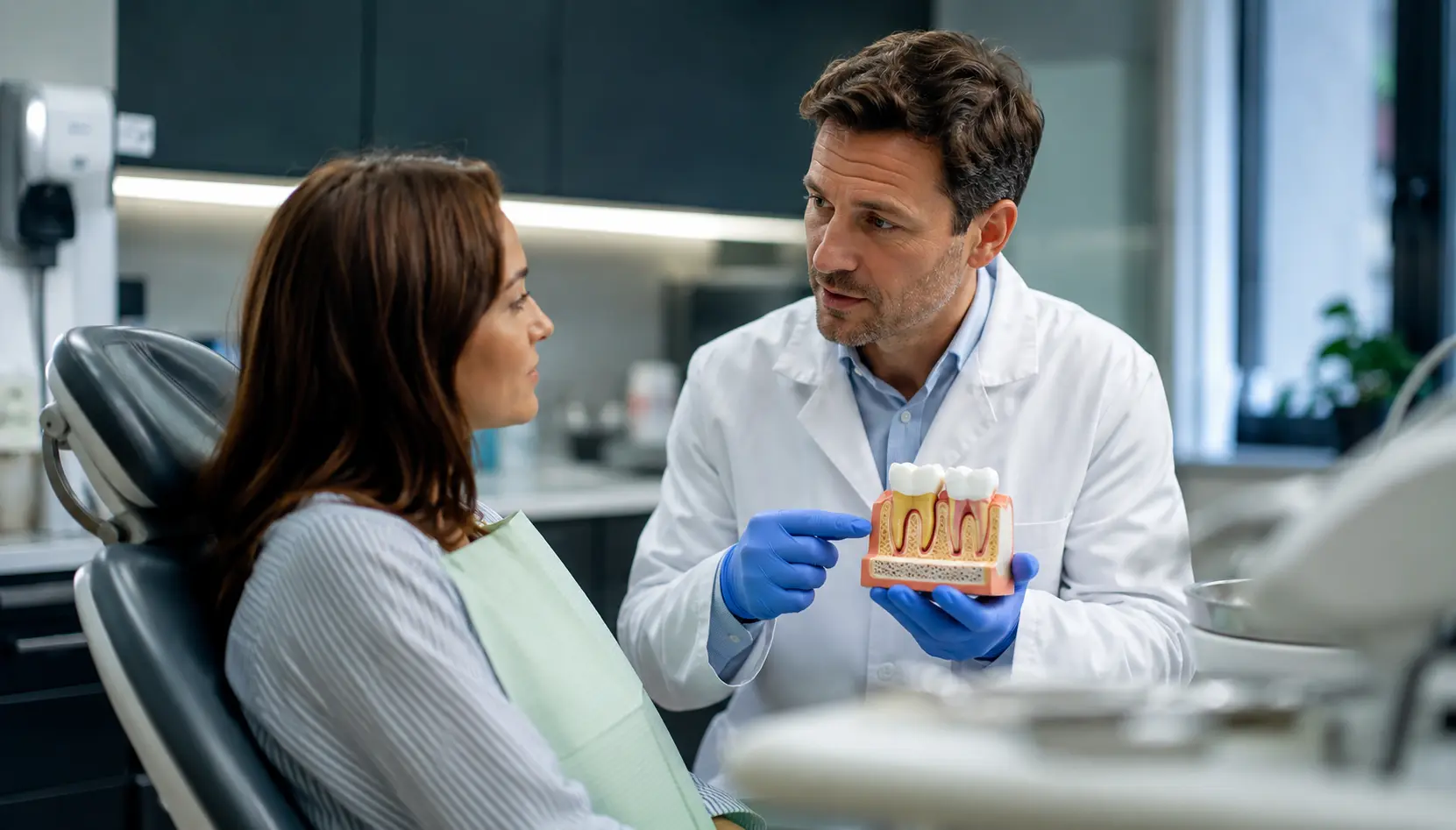
Your gums bleed when you brush, your breath smells no matter how much you floss, and loose teeth are starting to feel like your new normal, so here’s what a periodontist explained to me that changed everything.
What is a periodontist?
When I first heard the word periodontist, I honestly thought it was just a fancy dentist title. Turns out, these specialists are the gum experts your regular dentist refers you to when things get serious. They focus entirely on the soft tissues and bone supporting your teeth, tackling everything from gum recession that makes your teeth look weirdly long to deep periodontal pockets where bacteria hide and multiply. I learned that while your general dentist handles cavities and cleanings, periodontists dive deeper into the inflammatory diseases that can actually cost you teeth if left untreated. They’re trained to spot early warning signs most people miss, and they develop treatment plans specifically designed for your mouth’s unique situation.
- Performing scaling and root planing procedures to deep clean your gums
- Administering surgical treatments to address advanced gum diseases
- Providing guidance on at-home oral care routines to prevent future issues
When to see a periodontist
I kept ignoring the signs for months. My gums would bleed randomly, my breath felt off even after mouthwash, and sometimes my teeth felt slightly loose when I chewed. My dentist finally said those were red flags, and that’s when I realized I needed to see a specialist. A periodontist can pinpoint exactly what’s happening beneath your gumline using advanced imaging and detailed examinations. They look for things like bone loss, gum pocket depth, and signs of infection that regular checkups might miss. If you notice persistent bad breath that won’t quit, tender or swollen gums, or teeth that feel mobile, that’s your signal. Don’t wait like I did. Early intervention makes a massive difference in outcomes.
💬 Ready to feel better in 2 minutes?choose where to begin:
The periodontal treatment experience
Walking into that appointment, I didn’t know what to expect. The periodontist started with a thorough examination, measuring gum pockets with a tiny probe that honestly felt weird but wasn’t painful. X-rays revealed bone loss I couldn’t see or feel, which was sobering but helpful for understanding the full picture. Depending on severity, treatment might involve scaling and root planing, which is basically a deep clean under the gumline, or more involved procedures like gum grafts or pocket reduction surgery. The office used local anesthesia, so I felt pressure but no pain during the procedure. Afterward, they gave me detailed aftercare instructions: what to eat, how to rinse, when to take medication. The recovery was manageable, and knowing I was actively fixing the problem felt empowering.
Life transformations with periodontal care
Three months after treatment, I noticed my gums stopped bleeding entirely. My breath improved, my teeth felt solid again, and honestly, I smiled more because I felt confident about my oral health. That transformation is real for so many young adults who finally address gum disease instead of ignoring it. Beyond the physical changes, there’s a psychological shift. You stop worrying about tooth loss, you enjoy eating without discomfort, and you feel like you’re actually taking control of your health. Friends noticed I smiled differently. The confidence boost was unexpected but genuine. Periodontal care isn’t just about saving teeth; it’s about reclaiming your sense of wellness and knowing you made a smart choice before things got worse.
Understanding what a periodontist does is the first step toward taking your oral health seriously. These specialists offer targeted treatments for gum disease that go way beyond what your regular dentist can provide. Whether you’re dealing with bleeding gums, bone loss, or just want to prevent problems, knowing when and how to see a periodontist can literally save your teeth and boost your confidence.
Can I visit a periodontist directly, or do I need a referral?
While some periodontists accept direct appointments, it’s advisable to consult your regular dentist first. They can assess your condition and recommend a specialist if needed.
Are periodontal treatments painful?
Many periodontal procedures are performed under local anesthesia, ensuring minimal discomfort during the treatment. Your periodontist will also provide aftercare instructions to manage any mild soreness post-treatment.
Others also read:
Disclaimer: This article is for informational purposes only and is not a substitute for professional medical advice. Always consult a healthcare professional for personal guidance.
This article presents an experience-based perspective and has been reviewed by the GlobalHealthBeacon editorial team in 2026. It provides structured, evidence-based information to support informed health decisions.
