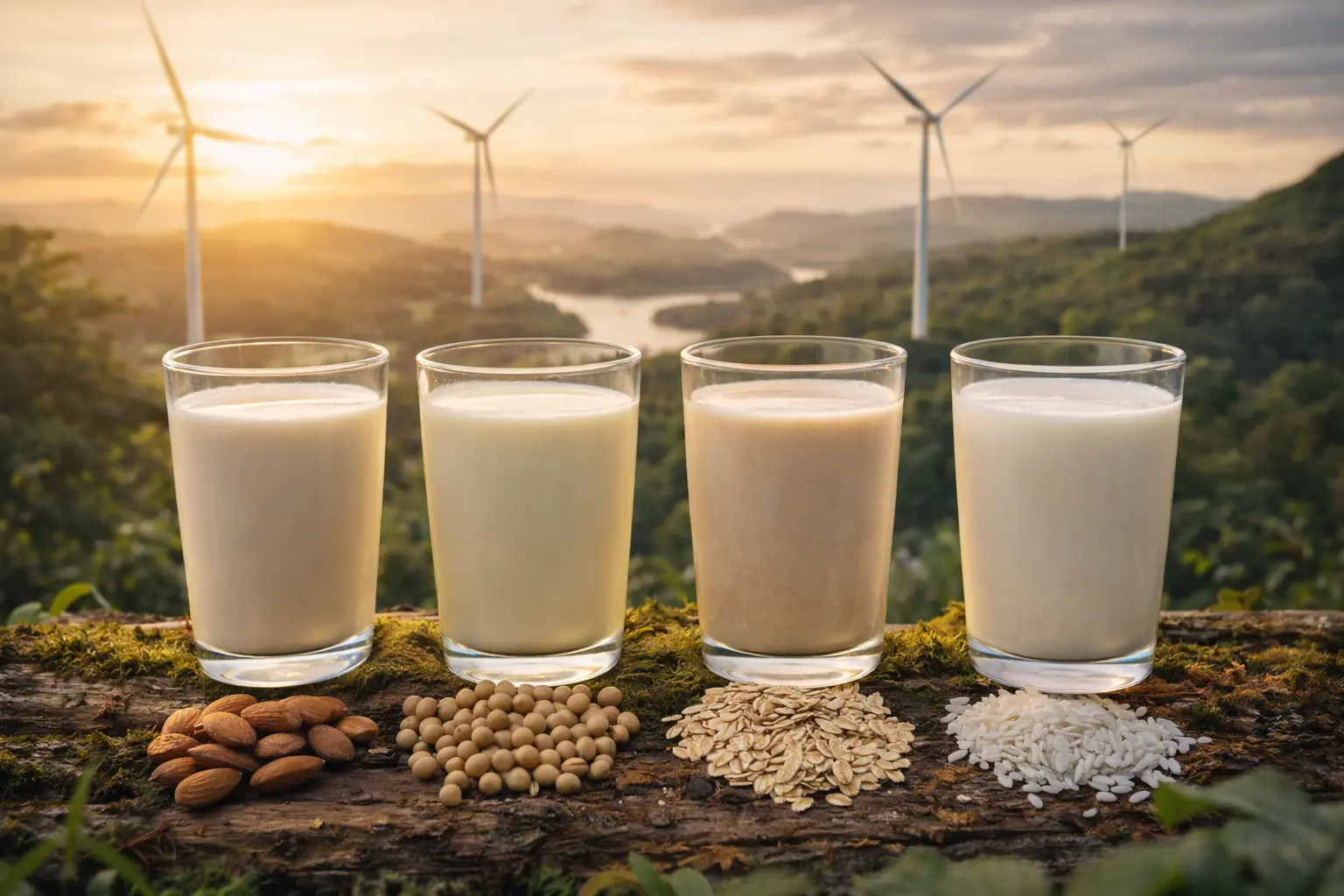
You’re worried that switching to plant-based milk might be wasteful or unhealthy, but the plant based milk environmental impact story is actually the opposite of what you think, and it could be exactly what your body and the planet need right now.
Understanding the environmental impact
When you pour a glass of dairy milk, you might not realize the resources behind it. Producing one liter of cow’s milk requires roughly 628 liters of water, plus significant land use and feed production. Plant-based milk tells a different story. Almond milk uses about 371 liters of water per liter, oat milk just 10 liters, and soy milk around 161 liters. Beyond water, dairy farming generates methane emissions that contribute substantially to climate change, while plant-based alternatives produce far fewer greenhouse gases. For seniors concerned about leaving a healthier world for grandchildren, these numbers matter. Choosing plant-based milk isn’t just a personal health decision; it’s a vote for sustainable farming practices. Many seniors find this knowledge empowering, turning a simple daily choice into meaningful environmental action.
- Reduces water usage by up to 95 percent compared to dairy
- Lowers greenhouse gas emissions significantly
- Decreases land usage and supports crop rotation
Health benefits of plant-based milk
Seniors often worry about bone health and heart function as they age. Plant-based milk addresses both concerns effectively. Unlike dairy milk, which contains saturated fat that can raise cholesterol levels, plant-based options are naturally low in saturated fat and cholesterol-free. This matters for your cardiovascular system, especially if you have a family history of heart disease. Most commercial plant-based milks are fortified with calcium and vitamin D, the exact nutrients your bones need to stay strong and prevent osteoporosis. A 65-year-old woman switching from dairy to fortified oat milk gets the same calcium protection without the digestive discomfort many seniors experience from lactose. Plant-based milk also contains compounds like phytosterols in soy varieties that actively support heart health. For seniors managing multiple health conditions, plant-based milk simplifies nutrition without sacrificing taste or convenience.
📘 Fix your day in under 2 minuteschoose where to begin:
Diverse plant-based milk alternatives
Walking down the grocery aisle, you’ll find more options than ever before. Oat milk has become popular for its creamy texture and neutral flavor, working beautifully in coffee without overpowering your morning ritual. Soy milk offers the highest protein content, making it ideal if you’re concerned about muscle maintenance in your senior years. Almond milk provides a lighter option with fewer calories, while coconut milk brings richness to smoothies and cooking. Cashew milk offers a buttery taste seniors often find comforting. Each variety has distinct nutritional profiles: soy provides complete amino acids, oat delivers beta-glucans for heart health, and almond is low in calories. Some seniors experiment with blends, mixing oat and soy for balanced nutrition and taste. The key is trying different brands and varieties until you find what feels natural in your routine. What works for your neighbor might not work for you, and that’s perfectly fine.
Making the switch to plant-based milk
Transitioning doesn’t require an overnight overhaul. Start small by replacing dairy milk in just one meal, perhaps your morning cereal or afternoon tea. This approach lets your taste buds adjust gradually without feeling deprived. Many seniors find success by trying plant-based milk in recipes where it blends seamlessly: smoothies mask subtle flavor differences, while baking tolerates most varieties without noticeable change. After a week or two, introduce plant-based milk into a second meal. By week three or four, you might naturally reach for it in your coffee without thinking twice. Some seniors keep both options available during transition, removing pressure and allowing flexibility. Common mistakes include expecting plant-based milk to taste identical to dairy (it won’t, and that’s okay) or choosing a variety that doesn’t suit your palate on the first try. Give yourself permission to experiment. If oat milk doesn’t work, try soy next. This gradual, pressure-free approach works better than dramatic dietary changes.
Environmental impact beyond milk
Choosing plant-based milk is meaningful, but it’s just one piece of a larger sustainability puzzle. Seniors can extend their environmental impact by shopping at farmers markets for locally grown produce, which reduces transportation emissions and supports community agriculture. Meal planning prevents food waste, a significant environmental problem that also saves money on your grocery budget. When you buy plant-based milk, look for brands using recyclable or compostable packaging instead of traditional plastic cartons. Reducing overall consumption matters too; buying what you need rather than excess reduces both waste and spending. Some seniors find community gardens or local food co-ops align perfectly with their values and social needs. These actions compound over time. A 70-year-old who switches to plant-based milk, reduces food waste, and buys local produce creates measurable environmental benefit while often improving their diet quality and social connections. Small daily choices, repeated consistently, reshape your impact.
Understanding the environmental impact of plant-based milk empowers seniors to make choices that benefit personal health and planetary health simultaneously. The science is clear: plant-based alternatives use fewer resources, lower emissions, and deliver the nutrients your aging body needs. With diverse options available and a gradual transition approach, switching feels manageable rather than restrictive. Your choice matters, and you have the knowledge to act.
Is plant-based milk suitable for seniors with lactose intolerance?
Yes, plant-based milk is an excellent choice for seniors with lactose intolerance. All plant-based options are naturally lactose-free and typically easier to digest than dairy. Many seniors report improved digestion, reduced bloating, and better overall comfort after making the switch.
Can seniors get enough calcium from plant-based milk?
Most commercial plant-based milk alternatives are fortified with calcium and vitamin D, providing amounts equal to or exceeding dairy milk. Check the nutrition label to ensure your chosen brand contains at least 30 percent of the daily value of calcium per serving.
Others also read:
Disclaimer: This article is for informational purposes only and is not a substitute for professional medical advice. Always consult a healthcare professional for personal guidance.
This guide has been prepared and reviewed by the GlobalHealthBeacon editorial team and reflects current medical research as of 2026. It provides structured, evidence-based information to support informed health decisions.
← Go to the plant based milk environmental impact main guide
