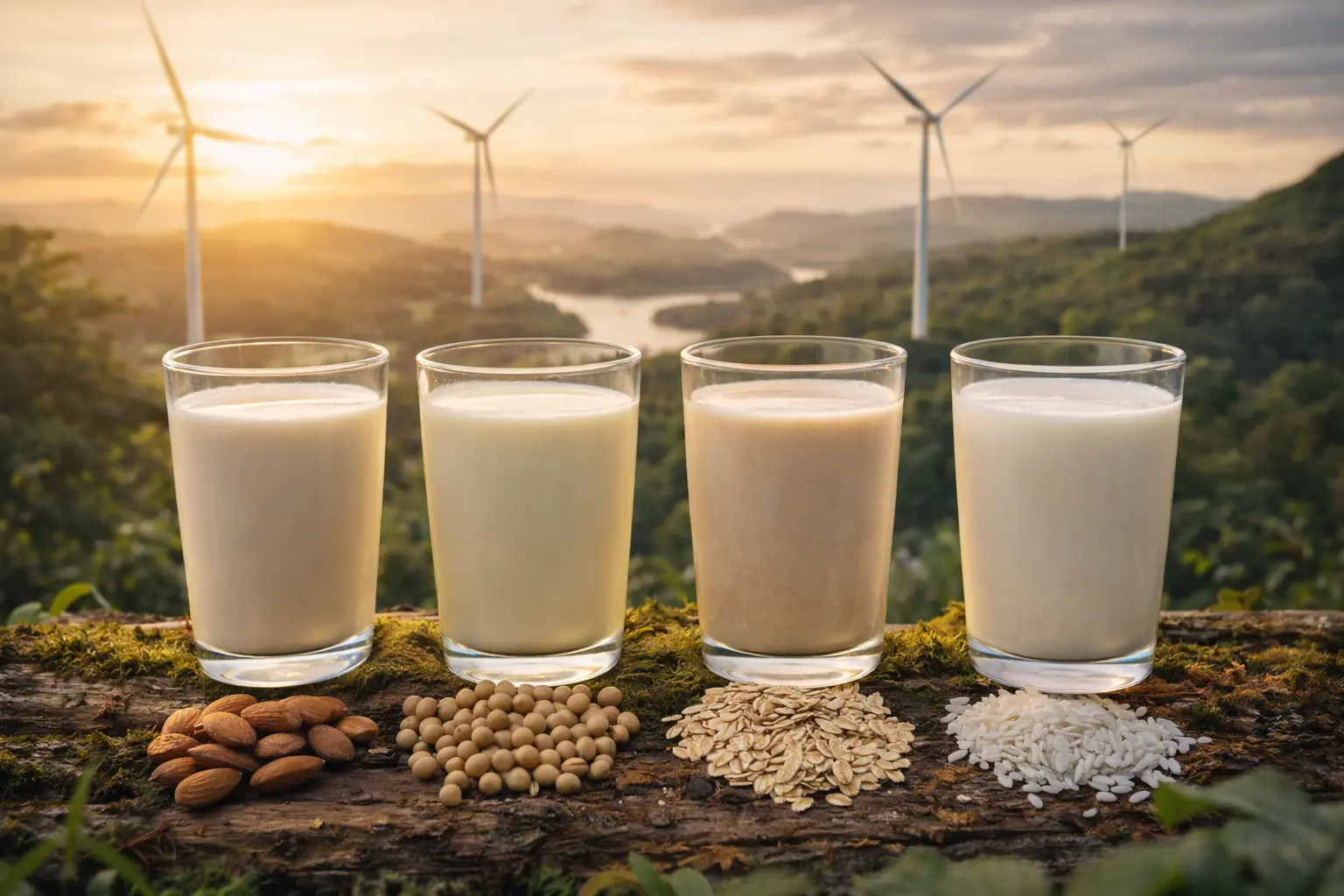
You’re standing in the grocery store staring at almond milk and regular dairy, wondering if your choice actually matters for the planet, and honestly the plant based milk environmental impact question is eating at you because everything feels like greenwashing these days.
Understanding plant-based milk production
Plant-based milk production starts with a surprisingly simple process that most people never think about. When you buy that carton of almond milk, it began with soaking raw almonds in water, grinding them into a fine paste, and then straining out the solids to create a liquid that mimics dairy milk’s consistency. The same basic principle applies to oat, soy, and coconut milk, though each has its own specific processing steps. What makes this relevant to environmental impact is understanding where these crops are grown, how much water they require during cultivation, and what happens to the byproducts. For instance, almond farming concentrates heavily in California, which has faced severe droughts, making water usage a critical concern. Oat milk, by contrast, grows in cooler climates with more natural rainfall. Soy milk production involves crushing soybeans and extracting protein-rich liquid, while coconut milk requires processing coconut meat. Each method has different resource demands, and the environmental footprint varies significantly depending on geography, farming practices, and transportation distances to processing facilities.
Dairy milk: a high-impact industry
Dairy farming operates on a fundamentally different scale than plant-based production, and the resource demands are substantial. A single dairy cow requires roughly 24 pounds of feed daily, plus significant water for drinking and cleaning facilities. Across the United States alone, dairy farms manage over 9 million cows, which collectively consume enormous quantities of grain, hay, and water. Beyond feed and water, dairy farming generates methane emissions from cattle digestion, a greenhouse gas roughly 28 times more potent than carbon dioxide over a 100-year period. The industry also requires land for grazing and feed cultivation, with dairy operations occupying millions of acres. Consider a typical dairy farm scenario: a 500-cow operation might use 1.5 million gallons of water daily just for cleaning and cooling systems, plus additional water for feed crops. The manure management alone creates environmental challenges, as it can contaminate groundwater and contribute to nutrient runoff in waterways. Transportation of milk to processing facilities and distribution centers adds further emissions. These interconnected factors make dairy production one of agriculture’s most resource-intensive sectors.
Comparing environmental footprints
When researchers compare the environmental impact of plant-based versus dairy milk, the data consistently shows significant differences across multiple metrics. Water usage provides one of the clearest comparisons: producing one liter of dairy milk requires approximately 628 liters of water when accounting for feed crop irrigation and animal hydration, while almond milk uses about 371 liters and oat milk uses roughly 48 liters. Greenhouse gas emissions tell a similar story, with dairy milk generating around 3.2 kilograms of CO2 equivalent per liter, compared to 0.9 kilograms for almond milk and 0.9 kilograms for oat milk. Land use differences are equally striking: dairy requires about 9 square meters per liter, while plant-based alternatives typically need 0.5 to 2 square meters depending on the crop. A young adult who switches from one glass of dairy milk daily to oat milk would reduce their annual water footprint by approximately 213,000 liters and their carbon emissions by roughly 850 kilograms. These numbers represent meaningful environmental impact at the individual level. However, it’s important to note that not all plant-based milks perform equally, and sourcing location matters significantly for overall sustainability.
- Consider the source of plant-based milk you choose, as locally sourced options may have a smaller environmental footprint. If you live in a region where oats are grown, oat milk becomes a particularly sustainable choice compared to almond milk shipped from California.
- Be mindful of packaging, as recyclable containers can further reduce the environmental impact of plant-based milk consumption. Look for brands using aluminum or glass packaging, and check whether your local recycling program actually processes the materials used.
- Explore different plant-based milk varieties to find a sustainable option that fits your taste preferences. Soy milk offers high protein content, coconut milk provides a creamy texture for coffee, and oat milk works well for baking and cooking applications.
🔬 Science-backed benefits in 2 minuteschoose where to begin:
Impact on biodiversity
Biodiversity loss represents one of the most overlooked consequences of food production choices, yet it’s deeply connected to how we source our milk. Dairy farming drives habitat destruction through pasture expansion, particularly in biodiverse regions like the Amazon rainforest, where land is cleared for cattle grazing and feed crop cultivation like soy. This conversion eliminates homes for countless species, from insects to large mammals, disrupting entire ecosystems. A single dairy farm expansion might destroy wetlands that serve as breeding grounds for migratory birds or grasslands that support endangered species. Plant-based milk production generally requires less land overall, meaning fewer ecosystems face conversion pressure. However, this isn’t a simple story of plant-based being universally better for biodiversity. Almond farming in California has contributed to habitat loss for native species, and soy cultivation sometimes involves clearing natural forests. The key difference is scale: producing the same amount of protein and calories requires substantially less land conversion for plant-based crops compared to dairy. When you choose plant-based milk, you’re typically supporting a system that leaves more natural habitat intact, though the specific environmental impact depends on which plant-based option you select and where it’s sourced.
Sustainable choices for the future
Making sustainable food choices feels overwhelming when you’re bombarded with conflicting information, but understanding the science behind plant-based milk environmental impact gives you actual power in your decisions. Every choice you make at the grocery store sends a market signal about what consumers value, influencing which products companies develop and how they allocate resources. When young adults choose plant-based alternatives, they’re not just reducing their personal environmental footprint; they’re participating in a shift that encourages agricultural innovation toward more sustainable practices. This doesn’t mean you need to be perfect or eliminate all animal products overnight. Some people find success with a flexible approach, like having plant-based milk for daily coffee and cereal while occasionally enjoying dairy products. Others commit fully to plant-based options and discover they actually prefer the taste and feel better knowing their choice aligns with their values. The long-term consequences of our collective consumption patterns are significant, with food production accounting for roughly 26 percent of global greenhouse gas emissions. By considering these impacts and making intentional choices, you’re contributing to building a food system that can sustain future generations without depleting resources or destroying ecosystems.
Conclusion
The scientific evidence surrounding plant-based versus dairy milk paints a clear picture: plant-based alternatives generally carry a substantially lower environmental burden across water usage, land requirements, and greenhouse gas emissions. This doesn’t mean the choice is simple or that plant-based milk is universally perfect, but the data consistently shows meaningful environmental advantages. Understanding these impacts empowers you to make informed decisions that align with your values and concerns about the planet’s future. The research also reveals that not all plant-based milks are created equal, and sourcing location matters as much as the product type itself. By educating yourself about these differences, you move beyond vague notions of being eco-friendly and into genuine understanding of how your food choices ripple through environmental systems. Whether you’re motivated by climate concerns, water scarcity issues, or biodiversity protection, the evidence supports plant-based milk as a more sustainable choice. The conversation around food and environment isn’t about judgment or perfection; it’s about making the most informed choices available to you with the knowledge you have.
Scientific research consistently demonstrates that plant-based milk production requires significantly less water, land, and generates fewer greenhouse gas emissions compared to dairy milk. By choosing plant-based alternatives, individuals can reduce their environmental footprint while contributing to broader sustainability goals. Understanding these impacts helps young adults make informed dietary choices that benefit both personal health and planetary wellbeing.
Is plant-based milk better for the environment than dairy milk?
Yes, scientific studies show that plant-based milk generally has a lower environmental impact in terms of water usage, land utilization, and greenhouse gas emissions compared to dairy milk. Oat milk uses approximately 48 liters of water per liter produced, while dairy milk requires about 628 liters. Greenhouse gas emissions from dairy milk are roughly 3.2 kilograms of CO2 equivalent per liter, compared to under 1 kilogram for most plant-based alternatives.
How can I reduce my environmental footprint when choosing plant-based milk?
You can reduce your environmental impact by selecting plant-based milk sourced locally or regionally, choosing recyclable or compostable packaging options, and experimenting with different varieties to find one that aligns with your preferences and local agricultural practices. Oat milk tends to be more sustainable in cooler climates, while soy milk offers excellent protein content. Check product labels for sourcing information and look for certifications indicating sustainable farming practices.
Others also read:
Disclaimer: This article is for informational purposes only and is not a substitute for professional medical advice. Always consult a healthcare professional for personal guidance.
This article has been prepared and reviewed by the GlobalHealthBeacon editorial team and is based on current medical research and published scientific literature available in 2026. It provides structured, evidence-based information to support informed health decisions.
← Back to the Main page on: plant based milk environmental impact
