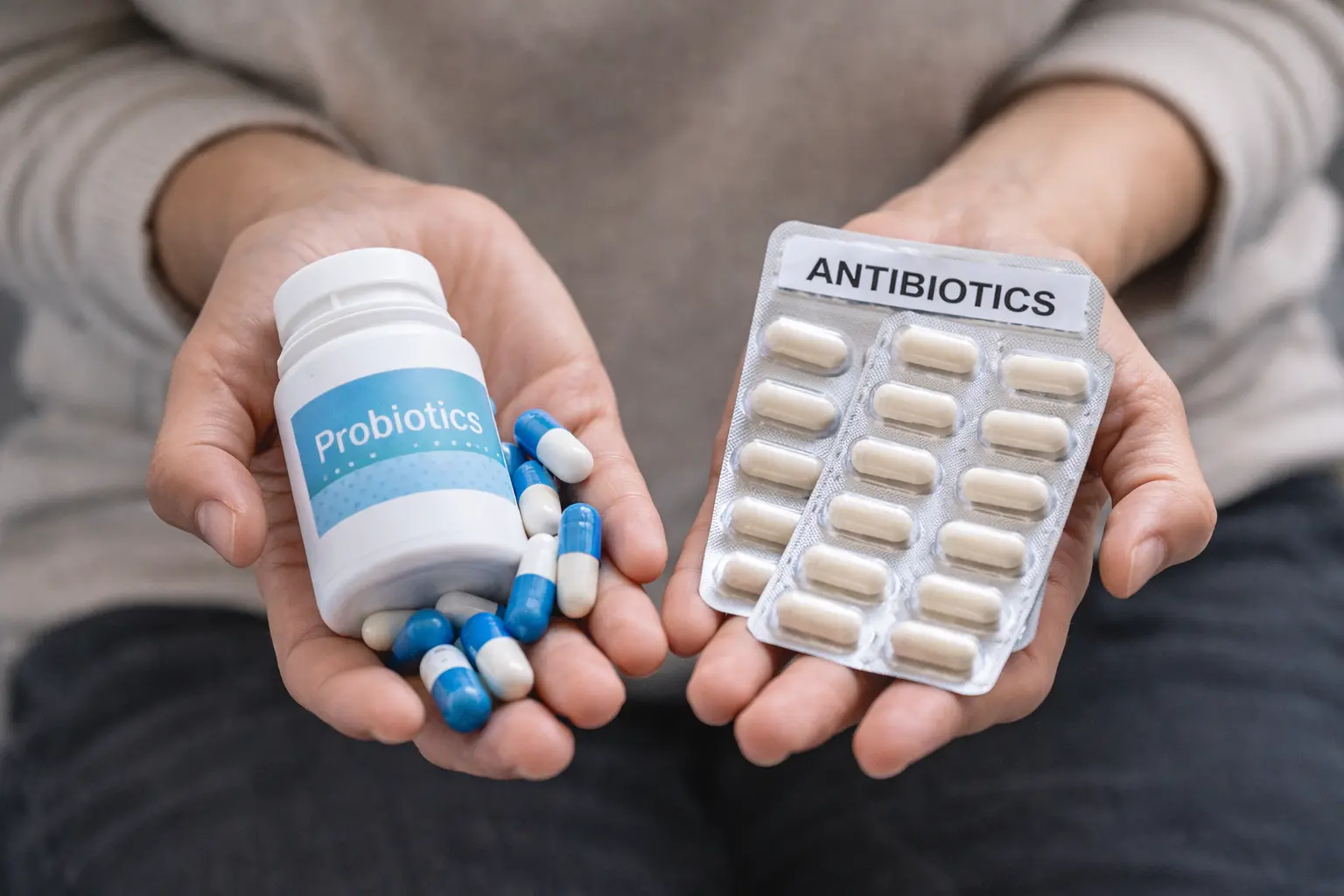
Your gut feels off after antibiotics, you’re bloated, your digestion is a mess, and suddenly everyone’s telling you to take probiotics versus antibiotics like they’re the same thing, but they’re completely different and nobody explains why.
The mighty microorganisms: probiotics in action
Probiotics are live microorganisms, primarily bacteria and some yeasts, that exist naturally in your digestive system and can be consumed through food or supplements. Think of them as reinforcements for your gut’s existing microbial community. When you eat fermented foods like yogurt, kefir, sauerkraut, or kimchi, you’re introducing billions of these beneficial organisms. Your gut microbiome contains trillions of microbes that influence everything from digestion to immune function. Probiotics work by colonizing your intestinal lining, competing with harmful bacteria for space and nutrients, and producing compounds that lower gut pH, making conditions inhospitable for pathogens. For example, Lactobacillus acidophilus produces lactic acid, which creates an acidic environment that pathogenic bacteria struggle to survive in. Young adults often experience digestive stress from irregular eating, high-stress lifestyles, or dietary changes. Probiotics help restore balance by supporting nutrient absorption, strengthening the intestinal barrier, and even influencing your immune response through the gut-associated lymphoid tissue.
The combatants: antibiotics unveiled
Antibiotics are pharmaceutical compounds designed to kill or inhibit the growth of bacteria, and they’re among the most powerful tools in modern medicine. When you develop a bacterial infection like strep throat, urinary tract infection, or skin infection, antibiotics target the specific pathogens causing illness. However, here’s where it gets complicated: antibiotics don’t discriminate perfectly between harmful and beneficial bacteria. A broad-spectrum antibiotic prescribed for a respiratory infection will eliminate pathogenic bacteria but also wipe out much of your protective gut flora in the process. This is why many people experience diarrhea or digestive upset during antibiotic treatment. Overuse and misuse of antibiotics have created a serious global health concern called antibiotic resistance, where bacteria evolve mechanisms to survive these drugs. Young adults might not realize that taking leftover antibiotics or not completing a full course contributes to this problem. The disruption to your microbiome can last weeks or even months after finishing antibiotics, affecting digestion, immune function, and overall wellness during a critical time in your life.
The showdown: understanding their differences
Probiotics and antibiotics operate through fundamentally different mechanisms. Probiotics are additive: they introduce beneficial organisms that support existing microbial communities and promote health through competition and metabolic byproducts. Antibiotics are subtractive: they eliminate bacteria, both harmful and helpful. Imagine your gut as a neighborhood. Probiotics are like inviting new good neighbors who help maintain the community. Antibiotics are like removing all the residents on a block to get rid of the troublemakers, which means rebuilding the entire neighborhood afterward. A practical scenario: you develop a urinary tract infection and take a prescribed antibiotic. The antibiotic successfully eliminates the E. coli causing infection, but it also damages your vaginal and gut flora. This leaves you vulnerable to yeast infections or digestive issues. Taking probiotics afterward helps repopulate beneficial bacteria and restore protective barriers. The key difference is timing and purpose. Antibiotics address acute infections with urgency and power. Probiotics support long-term microbial balance and preventive health. Young adults benefit from understanding that these aren’t competing treatments but complementary tools used at different times for different goals.
- Consult with a healthcare professional before starting any probiotic or antibiotic regimen to understand your specific health situation.
- Understand the specific purpose and duration of antibiotic treatment prescribed by your doctor and complete the full course even if you feel better.
- Take probiotics as directed, ideally a few hours apart from antibiotics, to maximize their beneficial effects on gut health and recovery.
🔬 Science-backed benefits in 2 minuteschoose where to begin:
Navigating the side effects: pros and cons
Probiotics are generally well-tolerated, but they’re not consequence-free for everyone. Some people experience temporary bloating, gas, or mild digestive discomfort when first introducing probiotics, especially if they’re consuming high doses or strains their system isn’t accustomed to. This usually resolves within a few days as your microbiome adjusts. The real concern with probiotics is strain selection and quality. Not all probiotics are created equal, and some may not survive stomach acid or actually colonize your gut effectively. Antibiotics, meanwhile, carry more significant side effect risks. Common ones include diarrhea, nausea, headaches, and allergic reactions ranging from mild rashes to severe anaphylaxis. Beyond immediate side effects, antibiotics can trigger Clostridioides difficile infections in some people, a serious condition where pathogenic bacteria proliferate after antibiotic-induced microbiome collapse. Long-term antibiotic use contributes to antibiotic resistance, meaning future infections become harder to treat. For young adults, the calculus is straightforward: antibiotics are necessary and worth their risks when treating genuine bacterial infections, but they shouldn’t be used casually. Probiotics carry minimal risk but require realistic expectations about their benefits.
The aftermath: recovery and restoration
After completing an antibiotic course, your gut doesn’t instantly return to normal. Research shows that microbiome recovery can take weeks to months, depending on the antibiotic’s strength and duration. During this window, your intestinal barrier is compromised, your immune function is diminished, and you’re vulnerable to secondary infections or digestive issues. This is where strategic probiotic use becomes valuable. Taking probiotics during and after antibiotics helps accelerate microbial recolonization and restore barrier function. The timing matters: spacing probiotics a few hours away from antibiotics prevents the antibiotic from killing the probiotic organisms you’re trying to introduce. A realistic scenario involves taking antibiotics in the morning, waiting until evening to take probiotics, and continuing probiotics for at least two weeks after finishing antibiotics. Dietary support matters too. Consuming prebiotic foods like fiber, garlic, onions, and bananas feeds your existing beneficial bacteria and helps them flourish. Young adults often underestimate recovery time and jump back into stress, irregular eating, and poor sleep immediately after finishing antibiotics, which sabotages microbiome restoration. True recovery requires patience, consistent probiotic intake, and supportive lifestyle choices during the weeks following treatment.
The verdict: balancing act for better health
Understanding probiotics versus antibiotics empowers you to make informed decisions aligned with your actual health needs rather than trends or assumptions. Antibiotics are irreplaceable for treating bacterial infections and have saved countless lives. Probiotics support long-term gut health and microbial balance but aren’t magic solutions. The balance isn’t about choosing one over the other but using each appropriately. Young adults should view antibiotics as necessary interventions deployed strategically when bacterial infections occur, not as routine preventive measures. Probiotics deserve a place in your wellness routine, particularly after antibiotic use, but also as part of consistent gut health maintenance through fermented foods and quality supplements. The real optimization comes from understanding your individual microbiome, recognizing when antibiotics are genuinely needed versus when symptoms might resolve naturally, and supporting recovery intentionally afterward. This balanced approach reduces unnecessary antibiotic exposure, preserves your microbial diversity, and maintains the gut health that influences everything from digestion to mood to immune function. Your gut microbiome is foundational to your health, and respecting both the power of antibiotics and the value of probiotics means you’re working with your biology rather than against it.
Probiotics and antibiotics serve distinct purposes in maintaining health. Antibiotics eliminate bacterial infections with power and urgency, while probiotics support microbial balance and long-term gut health. Using them strategically, completing antibiotic courses fully, and supporting recovery with probiotics afterward creates the foundation for optimal well-being.
Can I take probiotics while on antibiotics?
Yes, it is generally safe to take probiotics while on antibiotics. Space them several hours apart so the antibiotic doesn’t kill the probiotic organisms. Consult your healthcare provider about specific strains and timing for your situation, as some antibiotics interact differently with probiotics than others.
Do probiotics interfere with antibiotic effectiveness?
No, there is no conclusive evidence that probiotics interfere with antibiotic effectiveness when spaced appropriately. In fact, taking probiotics may help mitigate common antibiotic side effects like diarrhea and support faster microbiome recovery after treatment completes.
Others also read:
Disclaimer: This article is for informational purposes only and is not a substitute for professional medical advice. Always consult a healthcare professional for personal guidance.
This article has been prepared and reviewed by the GlobalHealthBeacon editorial team and is based on current medical research and published scientific literature available in 2026. It provides structured, evidence-based information to support informed health decisions.
