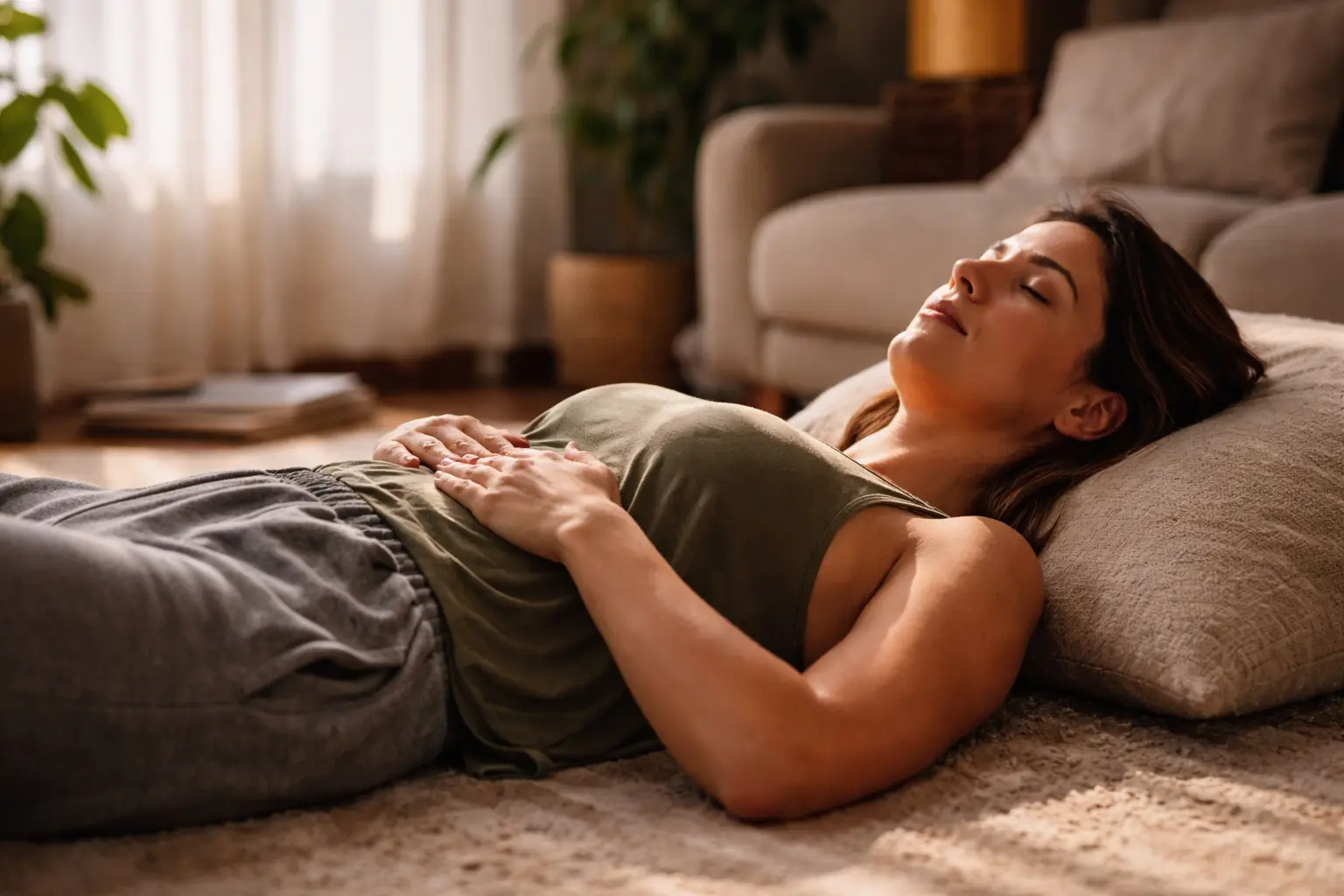
Your chest tightens, your shoulders creep up to your ears, and that nagging worry just won’t quit, but the progressive muscle relaxation technique is the simple, drug-free way to finally tell your body it’s safe to let go.
Understanding progressive muscle relaxation
Progressive muscle relaxation is a straightforward yet powerful technique that works by having you deliberately tense specific muscle groups for a few seconds, then release them and notice the difference. Think of it as teaching your body the contrast between tension and calm. When you tense your forearms for five seconds and then let go, you become acutely aware of what relaxation actually feels like in that area. For seniors, this awareness is crucial because anxiety often lives in the body without us realizing it. Your jaw might be clenched, your neck rigid, your hands balled into fists. By systematically moving through each muscle group from your toes to your head, you break the cycle of unconscious tension. The technique was developed decades ago and remains one of the most evidence-backed relaxation methods available. It requires no special equipment, no pills, and no complicated setup. You simply need a quiet space and about 15 minutes of your time.
- Increases awareness of muscle tension and relaxation
- Promotes a sense of calmness and relaxation
- Enhances overall well-being and reduces stress levels
Getting started with progressive muscle relaxation
Begin by finding a comfortable, quiet space where you won’t be interrupted. This might be your bedroom, a living room chair, or even a peaceful spot in your garden. Wear loose clothing that won’t restrict movement, and either sit in a supportive chair or lie down on your back. Start with your feet and toes. Curl your toes downward for about five seconds, really feeling the tension build, then release and notice the warmth and heaviness that follows. Move to your calves next, tensing them by pointing your toes away from you, holding, then releasing. Continue this pattern upward through your thighs, buttocks, abdomen, chest, hands, arms, shoulders, neck, and face. For your face, you might scrunch all your facial muscles together, hold for a few seconds, then let everything go soft. The key is to move slowly and deliberately, spending time with each muscle group. Don’t rush. Many seniors find it helpful to practice in the evening before bed, as the technique naturally prepares your body for sleep.
📘 Fix your day in under 2 minuteschoose where to begin:
Benefits for seniors
For seniors managing anxiety, progressive muscle relaxation offers multiple layers of benefit that go beyond simple stress relief. Regular practice can improve sleep quality significantly, which is often disrupted by worry and physical tension. You’ll likely notice that muscle aches and stiffness decrease as you become more aware of and able to release chronic tension patterns. Beyond the physical benefits, many seniors report feeling more in control of their anxiety. Instead of feeling helpless when worry arises, you have a concrete tool you can use anytime, anywhere. The technique also improves your mind-body connection, helping you recognize earlier when tension is building so you can address it before anxiety spirals. Some seniors find that consistent practice enhances their overall mood and emotional resilience. They sleep better, feel less irritable, and approach daily challenges with greater calm. The practice is also empowering because it puts the control back in your hands, literally and figuratively.
Tips for effective practice
Consistency matters more than perfection. Aim to practice daily for 10 to 15 minutes, ideally at the same time each day so it becomes part of your routine. Your breathing is your anchor throughout the practice. Breathe naturally and slowly, perhaps inhaling as you tense and exhaling as you release. This pairing of breath with movement deepens the relaxation response. Be gentle with yourself, especially if you have arthritis or other conditions that limit movement. You can modify the technique by tensing muscles less intensely or focusing only on the muscle groups that don’t cause discomfort. Some seniors use guided audio recordings, which can help you stay focused and maintain proper pacing. Keep a notebook nearby to jot down what you notice after each session. Did you feel calmer? Did any particular muscle group hold more tension than usual? These observations help you understand your body better over time. Don’t expect instant results. Most people notice meaningful changes after two to three weeks of regular practice.
Seeking professional guidance
While progressive muscle relaxation is an excellent self-help tool, it’s not a replacement for professional care if you’re experiencing severe anxiety. If your anxiety is significantly impacting your daily life, causing panic attacks, or accompanied by depression, reach out to your doctor or a mental health professional. They can assess your situation and determine whether additional support like therapy or medication is needed. A therapist can also teach you the technique in person, ensuring you’re doing it correctly and addressing any specific concerns related to your health. Some seniors benefit from combining progressive muscle relaxation with other approaches like cognitive behavioral therapy, meditation, or gentle exercise. Your healthcare provider can help you create a comprehensive plan tailored to your needs. There’s no shame in seeking help. In fact, taking action to manage your anxiety is a sign of strength and self-care.
Progressive muscle relaxation is a valuable technique for seniors to reduce anxiety and promote relaxation by increasing muscle awareness, enhancing overall well-being, and improving stress management. Daily practice and professional guidance can optimize the benefits of this relaxation method.
Can progressive muscle relaxation help seniors with insomnia?
Yes, progressive muscle relaxation can help seniors improve sleep quality by reducing muscle tension and promoting relaxation, making it a beneficial practice for managing insomnia.
Is progressive muscle relaxation suitable for seniors with mobility issues?
Yes, progressive muscle relaxation can be adapted to suit seniors with mobility limitations. Modifications can be made to practice the technique while sitting or focusing on smaller muscle groups for those with restricted mobility.
Others also read:
Disclaimer: This article is for informational purposes only and is not a substitute for professional medical advice. Always consult a healthcare professional for personal guidance.
This guide has been prepared and reviewed by the GlobalHealthBeacon editorial team and reflects current medical research as of 2026. It provides structured, evidence-based information to support informed health decisions.
← Go to the progressive muscle relaxation technique main guide
