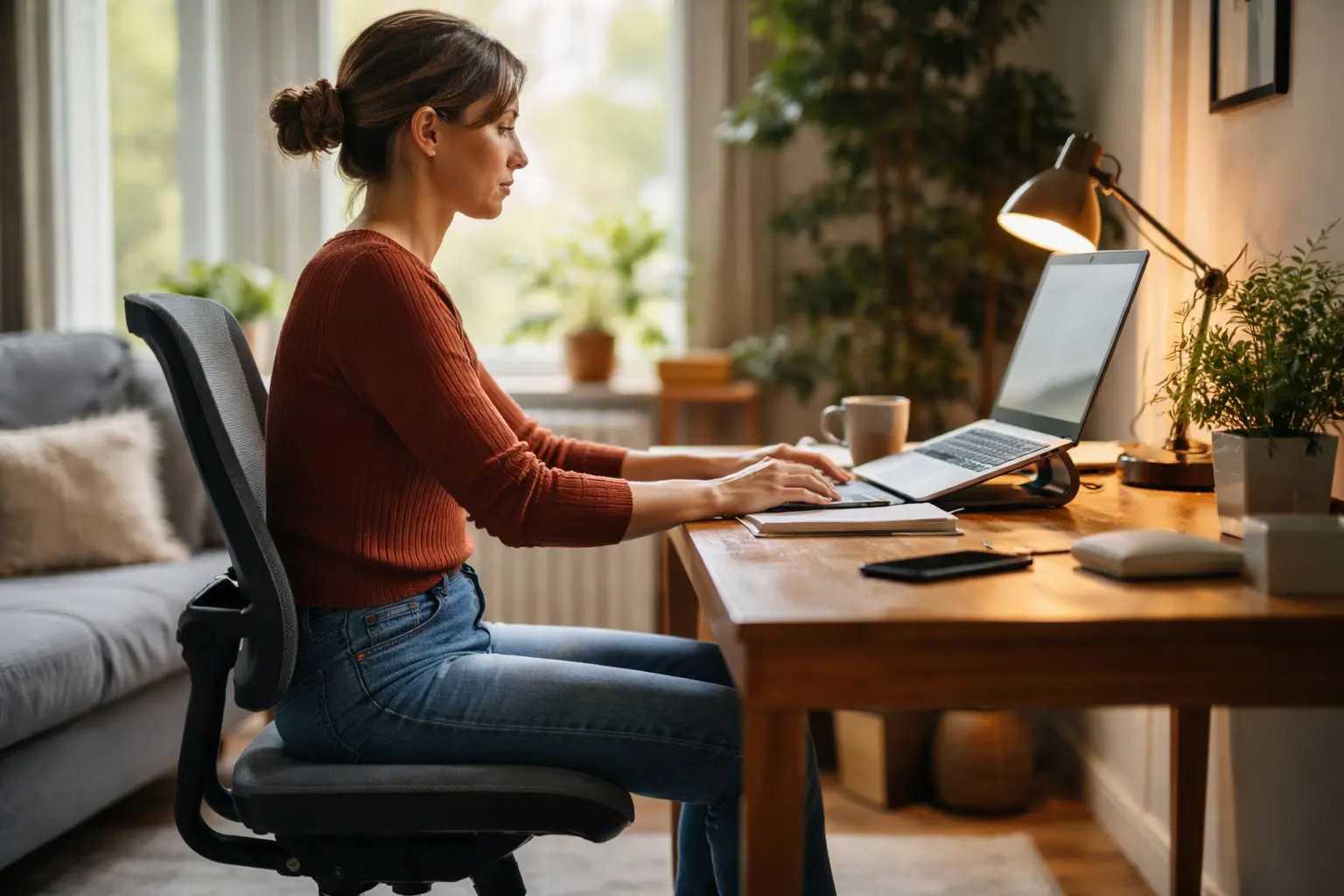
If you’re spending hours hunched over your desk and waking up with a stiff, aching back that makes you feel ten years older than you are, proper sitting posture for home working isn’t just a nice-to-have, it’s the difference between staying mobile and watching your independence slip away.
The impact of poor posture on aging spines
Picture this: you sit down at your desk at 9 AM, and by noon your lower back is screaming. This isn’t just discomfort, it’s your spine telling you something has shifted. As we age, our spines naturally lose flexibility and the muscles supporting them weaken, making them more vulnerable to strain. When you slouch or lean forward while working, you’re essentially asking already-compromised structures to work harder than they should. Over weeks and months, this compounds. The discs between your vertebrae experience uneven pressure, muscles tighten to compensate, and what started as occasional stiffness becomes chronic pain that affects your ability to garden, play with grandchildren, or even enjoy a simple walk. The research is clear: poor posture accelerates age-related spinal degeneration and increases injury risk significantly.
Importance of ergonomics for seniors
Ergonomics isn’t about luxury or comfort, though that matters too. It’s about working with your body’s biomechanics rather than against them. When your workspace is properly set up, your spine can maintain its natural curves without constant muscular effort. Think of it like this: a well-designed chair with lumbar support does the work your muscles would otherwise have to do all day. Your monitor at eye level means your neck stays neutral instead of craning forward, which can add fifteen pounds of pressure on your cervical spine with each inch of forward lean. The desk height, chair position, keyboard placement, and even your footrest all work together to create an environment where good posture becomes the path of least resistance. For seniors, this isn’t optional, it’s foundational to maintaining quality of life and independence.
Key steps to optimize desk posture for seniors
Getting your workspace right takes intention, but it’s straightforward once you know what to look for. Start by sitting in your chair and checking that your feet rest flat on the floor with knees at roughly ninety degrees. If your feet dangle, you need a footrest or lower chair. Your monitor should be directly in front of you at eye level, about an arm’s length away, so your gaze naturally looks slightly downward without tilting your head. Your elbows should bend at ninety degrees when your hands rest on the keyboard, which means your desk height matters enormously. Many seniors make the mistake of positioning their monitor too low or too far away, forcing them into a forward head posture that strains the neck and upper back. Taking breaks every thirty minutes isn’t laziness, it’s essential maintenance. During these breaks, stand up, walk around, and do gentle stretches. A lumbar support cushion maintains the natural inward curve of your lower back, preventing the flattening that happens when you slouch. Finally, incorporate simple movements like neck rolls and shoulder shrugs throughout the day to keep muscles engaged and prevent the stiffness that comes from static positions.
- Adjust the chair height to ensure feet are flat on the floor and knees are at a 90-degree angle.
- Position the monitor at eye level to avoid straining the neck and slouching.
- Take short breaks every 30 minutes to stand, stretch, and walk around to relieve tension.
- Use a lumbar support cushion to maintain the natural curve of the lower back.
- Incorporate gentle exercises like neck rolls and shoulder shrugs throughout the day to prevent stiffness.
🔬 Science-backed benefits in 2 minuteschoose where to begin:
Benefits of proper posture for aging spines
When you get posture right, the changes are noticeable and meaningful. Many seniors report that back pain diminishes within weeks of setting up their workspace properly and committing to good habits. Your breathing improves because your chest isn’t compressed by slouching, which means better oxygen delivery throughout your body. Circulation improves, reducing the numbness and tingling that can come from prolonged poor positioning. Your energy levels often increase because your muscles aren’t constantly working overtime to compensate for misalignment. Beyond the physical, there’s a psychological shift. You feel more capable, more in control of your body, and less anxious about whether pain will limit your activities. Productivity often improves too, because you’re not distracted by discomfort or taking frequent breaks to stretch out tight muscles. For seniors, these benefits translate directly into maintaining independence, staying engaged with work or hobbies, and preserving quality of life.
Creating healthy habits for long-term spinal health
Your workspace setup is just the beginning. The real magic happens when good posture becomes automatic, something you don’t have to think about. This takes consistency. Start by setting a phone reminder to check your posture every hour, asking yourself: are my shoulders relaxed, is my head over my shoulders, is my lower back supported? After a few weeks, this becomes habit. Stretching shouldn’t feel like exercise, just gentle movement. A simple routine of touching your toes, gentle twists, and neck stretches takes five minutes and makes an enormous difference. Strengthening your core muscles, even with gentle exercises like wall push-ups or modified planks, provides the muscular support your spine needs. Many seniors underestimate how much core strength matters. Your core isn’t just your abs, it’s the deep muscles that stabilize your spine. Walking is one of the best things you can do for spinal health because it engages these muscles naturally while improving flexibility. The key is consistency over intensity. Small, regular habits compound into significant long-term benefits.
Seeking professional guidance for spine health
If you’re dealing with persistent back pain, numbness, or mobility issues that don’t improve with posture changes and stretching, it’s time to consult a healthcare provider or physical therapist. These professionals can assess your specific situation, identify whether there are underlying structural issues, and create a personalized plan. A physical therapist can teach you exercises tailored to your needs and monitor your progress. They can also identify movement patterns that might be contributing to your pain. For some seniors, conditions like osteoarthritis or degenerative disc disease require specialized approaches that go beyond posture alone. Getting professional evaluation isn’t admitting defeat, it’s being smart about your health. Early intervention often prevents minor issues from becoming major limitations. Your healthcare provider can also rule out other causes of back pain and ensure that your approach to spinal health is appropriate for your overall health status.
Maintaining proper desk posture is crucial for seniors to support spine health and prevent discomfort and injuries. By prioritizing ergonomics, implementing healthy habits, and seeking professional guidance, seniors can optimize their workspace for long-term well-being.
How often should seniors take breaks from sitting at their desks?
Seniors should aim to take short breaks every 30 minutes while working at their desks to stand, stretch, and move around. Regular breaks help prevent stiffness and improve circulation, supporting spine health.
Is it necessary for seniors to use ergonomic chairs for proper desk posture?
Ergonomic chairs can significantly benefit seniors by providing proper support and promoting good posture. Using an ergonomic chair with adjustable features can help seniors maintain a neutral spine position and reduce the risk of back strain.
Others also read:
Disclaimer: This article is for informational purposes only and is not a substitute for professional medical advice. Always consult a healthcare professional for personal guidance.
This article has been prepared and reviewed by the GlobalHealthBeacon editorial team and is based on current medical research and published scientific literature available in 2026. It provides structured, evidence-based information to support informed health decisions.
← Back to the Main page on: proper sitting posture for home working
